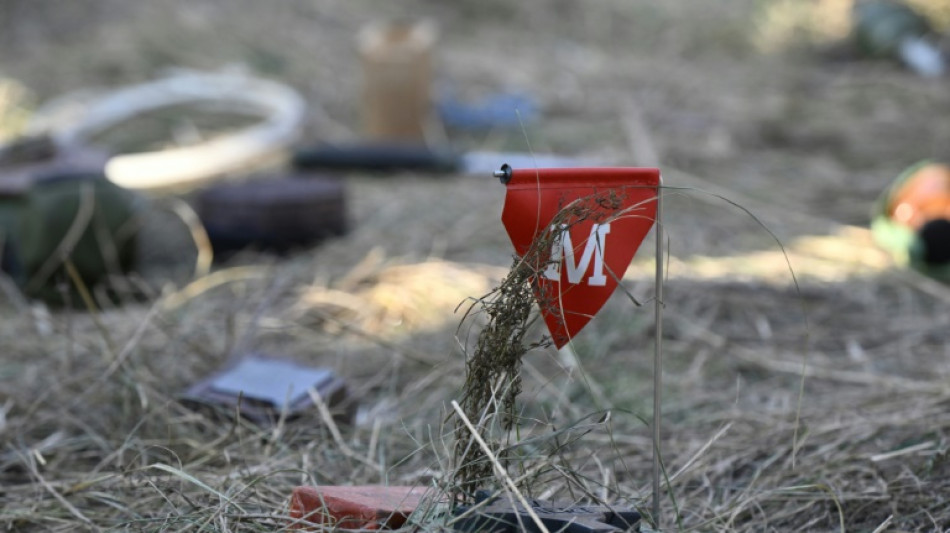
Finland to withdraw from anti-personnel mine ban treaty / Photo: Genya SAVILOV - AFP/File

 Amazon surges as US stocks shrug off bond yield worries
 Google rolls back new satellite image AI tool after backlash

 Ryu leads in bid for third straight major at women's British Open
 Fire-hit France region 'coming up for air' as main blaze calms
 Wembanyama to get signature shoe in Nike contract extension: reports
 Oil giants report blowout profits on war, warn high gas prices could persist
 Google launches new satellite image AI tool, alarming researchers
 Eddie Howe resigns as Newcastle boss to 'recharge'
 High winds hamper firefighting efforts in western Turkey
 Howe resigns as Newcastle boss
 Full-scale tour will benefit All Blacks, says coach Rennie

 US Fed dissenters call for rate hikes over sustained inflation
 Trump and far-right seize on Spanish migration crisis

 Hamas agrees to disarm under Trump plan
 French, Italian winegrowers face earliest ever harvest
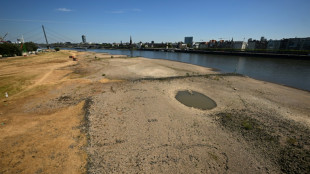 Alarm over climate-linked low level of German waterways
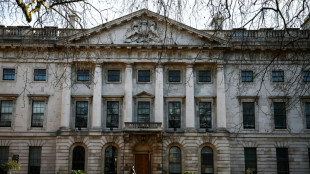 UK court rejects challenge against new Chinese embassy in London
 New York sues online prediction markets giant Kalshi
 Commerzbank agrees to talks with UniCredit after two-year standoff
 A rumour, a rush: chaos at Morocco border with Spain's Ceuta
 Fornaro Legal Releases Guidance to Help Businesses Maintain Clear Ownership Records During Growth
 Hamas agrees to disarm: what are the challenges ahead?
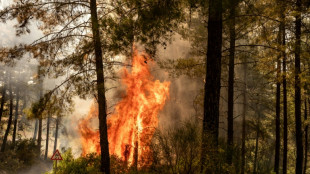 Turkey fights to last major blaze inland from Bodrum

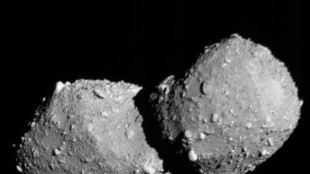 Japan probe made closest-ever asteroid flyby: space agency

 Wildberries: 'Russia's Amazon' targeted by Ukraine
Finland's prime minister said Tuesday the country plans to withdraw from the international treaty banning anti-personnel mines, the latest signatory moving to ditch the ban over threats from Russia.
Prime Minister Petteri Orpo said a fundamentally changed security environment in Europe prompted the decision by Finland -- a NATO member bordering Russia -- to pull out of the 1997 Ottawa Treaty.
"Finland and Europe need to evaluate all measures to strengthen our deterrence and defence capabilities, individually and in NATO," Orpo said at a press conference.
"We also propose that Finland starts to prepare for withdrawal from the Ottawa agreement," he added.
The announcement comes two weeks after four other NATO countries on the military alliance's eastern flank -- Poland, Lithuania, Latvia and Estonia -- took a first step towards also quitting the treaty.
All pointed to the increased security threat from Russia.
Finland's parliament needs to back the government's decision, with the withdrawal going into effect six months after parliamentary approval.
According to Iro Sarkka, a senior researcher at the Finnish Institute of International Affairs, the move from the Finnish government signalled that Finland -- which became a NATO frontline country when it joined the alliance in 2023 -- was ready to use all means to protect its national security, even if it meant compromising on international law.
"While it is not the optimal solution from the viewpoint of international law, it will maximise military capability, and it is a cost-effective solution that maximises Finland's security," she told AFP.
Finland shares a 1,340-kilometre (830-mile) border with Russia, and has been ramping up its defence and border security since Russia's 2022 invasion of Ukraine.
In the wake of the invasion, the Nordic country dropped decades of military non-alignment and applied for NATO membership.
Finland shut its eastern border with Russia in mid-December 2023 after the arrival of around 1,000 migrants without visas, with Helsinki claiming the surge was orchestrated by Russia -- a claim Moscow denied.
Finland's Foreign Minister Elina Valtonen told reporters Finland was committed to its humanitarian responsibilities and the responsible use of mines, as well as to international agreements, but added: "Unfortunately, we have a neighbour who does not respect international agreements".
- Eastern flank -
Lithuanian Defence Minister Dovile Sakaliene welcomed Finland's plan to withdraw from the Ottawa Treaty, saying in a Facebook post it was "a clear sign that the region is serious about strengthening defence and deterrence".
"The long-awaited and negotiated regional decision is now complete -- NATO countries bordering Russia are taking all the necessary measures to ensure that never again will the dirty boot of a Russian soldier cross our border," she said.
Sarkka said the five countries' announcements of preparing an exit from the Ottawa Treaty indicated that "NATO's frontline countries are converging in terms of their defence policy in relation to Russia".
The Ottawa Treaty prohibits the use, stockpiling, production and transfer of anti-personnel landmines.
More than 160 countries and territories are party to the treaty, including Ukraine. Neither the United States nor Russia are signatories.
Finland abandoned anti-personnel mines in 2012 when it joined the treaty, and subsequently destroyed more than a million mines.
Orpo also said that Finland would boost its defence spending to at least three percent of GDP by 2029 and launch a reform of its defence forces to tackle a deteriorating security situation.
"With these solutions, we will ensure that Finland's defence is in good shape for years to come. I am very pleased that these solutions have broad parliamentary support," he said.
S.Jackson--AT