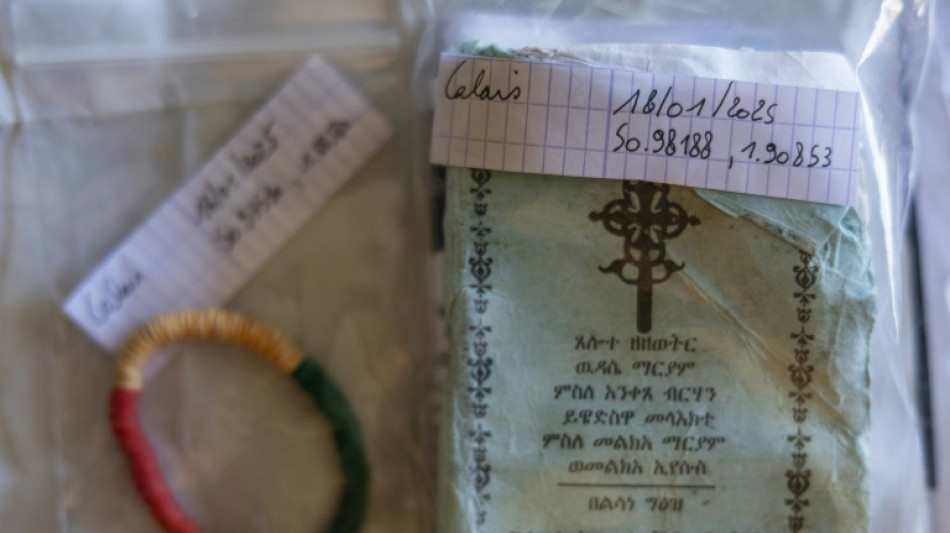
Beachcomber in France hunts fragments of migrant lives / Photo: Sameer Al-DOUMY - AFP

 Amazon surges as US stocks shrug off bond yield worries

 Google rolls back new satellite image AI tool after backlash

 Ryu leads in bid for third straight major at women's British Open

 Fire-hit France region 'coming up for air' as main blaze calms
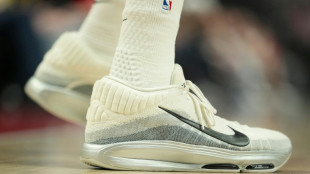 Wembanyama to get signature shoe in Nike contract extension: reports
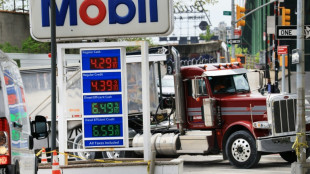 Oil giants report blowout profits on war, warn high gas prices could persist
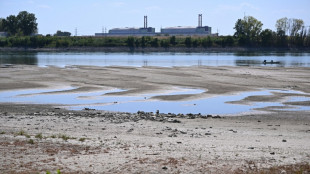
 Google launches new satellite image AI tool, alarming researchers

 Eddie Howe resigns as Newcastle boss to 'recharge'

 High winds hamper firefighting efforts in western Turkey

 Howe resigns as Newcastle boss
 Full-scale tour will benefit All Blacks, says coach Rennie

 US Fed dissenters call for rate hikes over sustained inflation
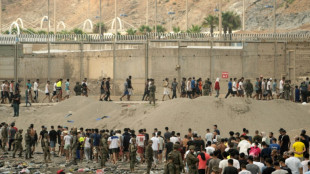
 Trump and far-right seize on Spanish migration crisis

 Hamas agrees to disarm under Trump plan
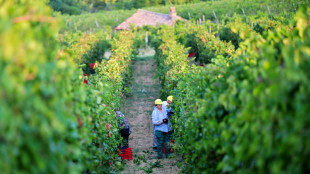 French, Italian winegrowers face earliest ever harvest

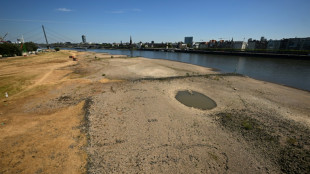 Alarm over climate-linked low level of German waterways
 UK court rejects challenge against new Chinese embassy in London

 New York sues online prediction markets giant Kalshi

 Commerzbank agrees to talks with UniCredit after two-year standoff
 A rumour, a rush: chaos at Morocco border with Spain's Ceuta
 Fornaro Legal Releases Guidance to Help Businesses Maintain Clear Ownership Records During Growth
 Hamas agrees to disarm: what are the challenges ahead?
 Turkey fights to last major blaze inland from Bodrum

 Japan probe made closest-ever asteroid flyby: space agency

 Wildberries: 'Russia's Amazon' targeted by Ukraine

The sand-covered notes outlining a migrant's travel plan to a better life read like an itinerary of hope: from Ethiopia to Sudan, Libya, Italy, on to France and finally, England.
The document had travelled thousands of kilometres by the time it was picked up on a beach in Gravelines on France's North Sea coast by a Belgian who likes to scour the beach in search of interesting things to collect.
Aaron Fabrice de Kisangani, 27, who calls himself a "beachcomber" and a "citizen scientist", carefully unfolded the piece of paper that was soaked, dirty and covered in sand fleas, hoping for clues to the owner's life.
The item is one of many objects migrants leave behind when they board one of the small boats they hope will carry them to the English coast. Sometimes they lose things in the hurry, and sometimes they throw them away deliberately, to travel light.
This is how shoes, clothes, bags and documents belonging to migrants end up strewn on northern French beaches, along with things left by fishermen and visitors.
Over the past two decades, Fabrice de Kisangani has made some unusual finds, including exotic plant seeds and shark teeth. He never used to pay attention to objects left by migrants, until about a year ago.
"I started to think, why don't I take them, because otherwise they will be lost," he told AFP.
The written notes he found probably belonged to an Ethiopian woman called Rose I., at least that is the name scribbled at the top of the page.
Rose meticulously listed cities, journey times and means of transport, drawing arrows between each entry.
The itinerary starts with "A.A." for Addis Ababa, the Ethiopian capital. Eight hundred kilometres (500 miles) and 17 hours by car later comes Metema, on the Sudanese border. "Ten minutes on foot", Rose predicted, would take her to Gallabat on the other side.
- 'Humanise those people again' -
Then on to Khartoum, the capital of Sudan, followed by thousands of kilometres across sand, marked simply as "desert", to Tripoli, in Libya.
Next came the voyage across the sea to Italy, followed by a train journey to France. And then, at last, the final destination: "UK".
Fabrice de Kisangani found many other fragments of exile life during his morning search: a summons for a March 18 expulsion hearing for an Albanian in detention, or tickets from the Romanian capital Bucharest by plane to Paris, and then by train to Dunkerque in northern France.
These objects could help "humanise those people again", because they tell "their story", said Fabrice de Kisangani.
"I want to show the problem from another angle, as a beachcomber," he said, admitting however that he has not worked out yet what exactly to do with the objects.
But in the meantime, the finds taught him "a lot" about the migrants, "about how they travel and how fast", the beachcomber said, adding he often does research to find out more about their home countries and "why they are fleeing to the UK".
Walking back to his car, Fabrice de Kisangani saw a scene playing out in the distance that has become commonplace around here: dozens of migrants emerging from the dunes and running towards a boat waiting in the water. At first they were stopped by police but, in another attempt a few minutes later, most managed to climb aboard.
A child could be heard crying. A man, one of three members of a family who didn't make it, urged his mother to climb back off the boat, without success.
Such existential scenes, illustrating the undertaking's fragility, are never documented in the objects jettisoned on the beach. The final pieces of the puzzle remain elusive.
Did Rose, the travel plan author, ever make it to England? Did she stick to her itinerary?
On this, the notes are silent.
P.A.Mendoza--AT