
In Turkey, new technologies reinforce repression / Photo: Yasin AKGUL - AFP

 Amazon surges as US stocks shrug off bond yield worries

 Google rolls back new satellite image AI tool after backlash

 Ryu leads in bid for third straight major at women's British Open

 Fire-hit France region 'coming up for air' as main blaze calms
 Wembanyama to get signature shoe in Nike contract extension: reports
 Oil giants report blowout profits on war, warn high gas prices could persist
 Google launches new satellite image AI tool, alarming researchers
 Eddie Howe resigns as Newcastle boss to 'recharge'
 High winds hamper firefighting efforts in western Turkey

 Howe resigns as Newcastle boss
 Full-scale tour will benefit All Blacks, says coach Rennie

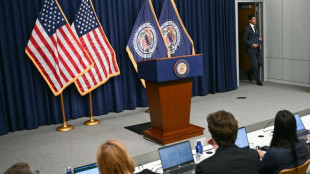 US Fed dissenters call for rate hikes over sustained inflation
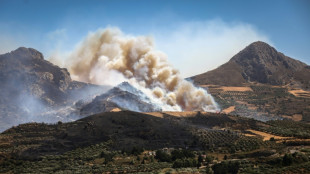
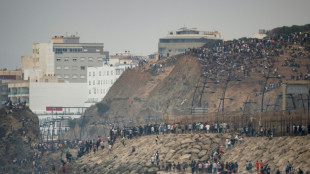 Trump and far-right seize on Spanish migration crisis

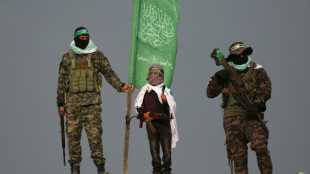 Hamas agrees to disarm under Trump plan
 French, Italian winegrowers face earliest ever harvest

 Alarm over climate-linked low level of German waterways
 UK court rejects challenge against new Chinese embassy in London

 New York sues online prediction markets giant Kalshi

 Commerzbank agrees to talks with UniCredit after two-year standoff
 A rumour, a rush: chaos at Morocco border with Spain's Ceuta
 Fornaro Legal Releases Guidance to Help Businesses Maintain Clear Ownership Records During Growth
 Hamas agrees to disarm: what are the challenges ahead?
 Turkey fights to last major blaze inland from Bodrum
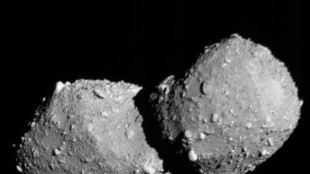 Japan probe made closest-ever asteroid flyby: space agency

 Wildberries: 'Russia's Amazon' targeted by Ukraine

With anti-government protests sweeping across Turkey, the authorities have used all technological means to try to curb them, from restricting internet access to using facial recognition to identify protesters, who have been forced to adapt.
Amid a ban on protests, nearly 2,000 people have been arrested in connection with the demonstrations that erupted on March 19 following the detention of Istanbul's mayor Ekrem Imamoglu on graft charges.
As well as those apprehended in the streets, many others have been arrested in pre-dawn raids at their homes after being identified from footage or photos taken by the police during the demonstrations.
So far, 13 Turkish journalists have been detained for covering the protests, including AFP photographer Yasin Akgul, who was charged with "taking part in illegal rallies and marches" on the basis of images shot by the police.
For Orhan Sener, a digital technologies expert, the use of technology marks a major departure from 2013, when a small protest against plans to demolish Gezi Park in central Istanbul snowballed into a wave of national unrest over the rule of Recep Tayyip Erdogan, who was prime minister at the time.
"The security forces' information technology capabilities have increased considerably since then," Sener said.
"During the Gezi movement, the protesters dominated social networks and the police weren't able to identify them," he said.
"But today, when you join a demonstration in Turkey, your face is recognised by a camera and the system cross-references it with your profile on social networks."
- Faces masked -
Faced with such a risk, many demonstrators are now covering their heads and faces with hats, masks and scarves.
In Istanbul, police have frequently surrounded protesters and ordered them to uncover their faces so they can be filmed, refusing to let them go if they do not, generating widespread distress for many young people, AFP correspondents said.
"Every means of pressure generates a countermeasure. We will soon see greater use of different clothing, glasses or make-up to thwart facial recognition technologies," said Arif Kosar, who specialises in the impact of new technologies.
"But I don't think facial recognition technology is the main source of pressure today. The use of disinformation to smear the protests, or neutralise and divide them, plays a more important role," he said.
Erdogan has denounced the protests as "street terror", accusing participants of "vandalising" a mosque and a cemetery, charges the opposition has denied.
"Authoritarian regimes now know how to use the internet to their advantage. They have found ways of censoring it," Sener said.
"But above all, they use it for their own propaganda."
- 'Moving towards a surveillance state' -
Immediately after Imamoglu's arrest in a pre-dawn raid, which he recounted on X before being taken away, the authorities started reducing bandwidth for internet users in Istanbul, rendering access to social networks impossible for 42 hours.
They also asked the social media platform X to close more than 700 accounts belonging to journalists, news organisations, political figures and students among others, the platform said.
"There was no court decision behind the bandwidth reduction or the bid to block X accounts. These measures were put in place arbitrarily," said Yaman Akdeniz, a law professor and head of Turkey's Freedom of Expression Association (IFOD).
He said there was legislation being prepared that would require messaging services such as WhatsApp, Signal and Telegram to open offices in Turkey and disclose users' identities to the authorities.
"We are moving towards a surveillance state," Akdeniz said.
Since 2020, internet service providers have provided data on online activities and the identity of internet users to the Information and Communication Technologies Authority (BTK), the opposition news website Medyascope revealed in 2022.
"By law, the BTK can only keep the data collected for two years. However, we have seen data going back 10 years being provided to prosecutors during the investigation into the Istanbul mayor," Akdeniz said.
"This data retention, despite the law, for purposes which are unknown, opens the way for arbitrary practices," he said.
For Sener, activism in the real world and online "used to be two different worlds, but now they are intertwined".
With facial recognition, "the government is trying to discourage people from joining demonstrations, while hindering their mobilisation through social networks," he said.
H.Gonzales--AT