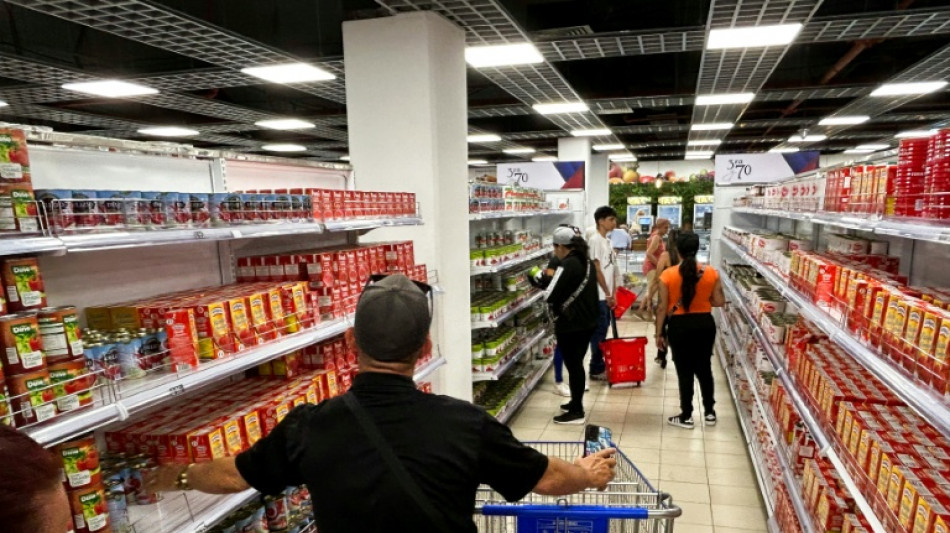
Cuba resurrects dollar-only stores, a symbol of inequality / Photo: YAMIL LAGE - AFP

 Wembanyama to get signature shoe in Nike contract extension: reports
 Oil giants report blowout profits on war, warn high gas prices could persist

 Google launches new satellite image AI tool, alarming researchers

 Eddie Howe resigns as Newcastle boss to 'recharge'

 High winds hamper firefighting efforts in western Turkey

 Howe resigns as Newcastle boss

 Full-scale tour will benefit All Blacks, says coach Rennie

 US Fed dissenters call for rate hikes over sustained inflation

 Trump and far-right seize on Spanish migration crisis

 Hamas agrees to disarm under Trump plan
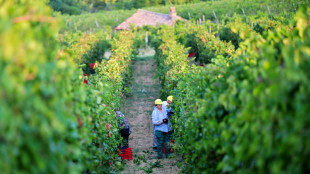 French, Italian winegrowers face earliest ever harvest

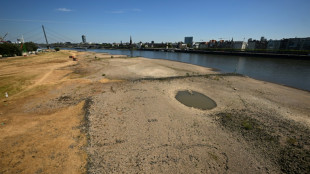 Alarm over climate-linked low level of German waterways

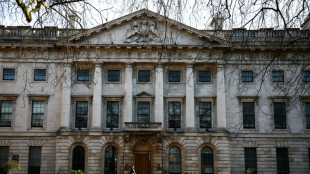
 UK court rejects challenge against new Chinese embassy in London

 New York sues online prediction markets giant Kalshi

 Commerzbank agrees to talks with UniCredit after two-year standoff
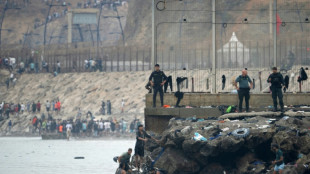
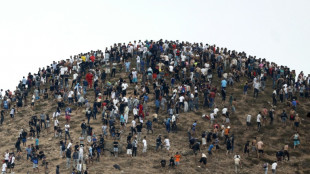 A rumour, a rush: chaos at Morocco border with Spain's Ceuta
 Fornaro Legal Releases Guidance to Help Businesses Maintain Clear Ownership Records During Growth

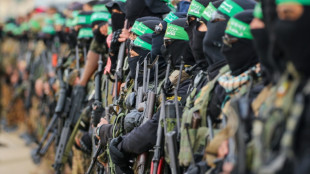 Hamas agrees to disarm: what are the challenges ahead?
 Turkey fights to last major blaze inland from Bodrum
 Japan probe made closest-ever asteroid flyby: space agency

 Wildberries: 'Russia's Amazon' targeted by Ukraine

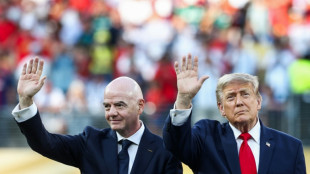 FIFA plan hit by senior advisor resigning, AFC opposition

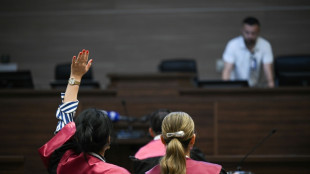 Kosovo war crimes trial opens against fugitive Serbs

 Bodies of four climbers recovered near northern Pakistan avalanche site, police say

 Thousands cross into Spain's north Africa enclave in new migrant crisis

In communist Cuba, some customers are more equal than others, as a 40-year-old math teacher who was out shopping recently in Havana with his son discovered.
The pair passed a spanking new shop situated on the ground floor of a luxury hotel in the upmarket Miramar neighborhood.
But "we had barely put a foot inside when they told me it (payment) was in dollars," Michael, the teacher, who declined to give his surname, told AFP.
"Let's go, this isn't for us," he told his son, making a beeline for the door.
The state-owned supermarket, which opened in January, is the first of several dollar-denominated stores set to open across the island, as part of a bid to boost the island's battered economy.
Prime Minister Manuel Marrero said the move was a "necessary process" for the state to get its hands on some of the dollars circulating "illegally" on the black market.
The Caribbean nation of 9.7 million is experiencing its worst economic crisis in 30 years, marked by shortages of food and fuel, recurring blackouts and a critical shortage of hard currency.
Remittances from Cuban migrants are the island's second-biggest source of precious dollars, after the payments it receives from loaning tens of thousands of doctors to around 60 countries, including Venezuela and Brazil.
But many Cubans have no access to greenbacks. That leaves the country divided between the haves, who can purchase plentiful goods in dollar-payment stores, and the have-nots like Michael, who is paid in Cuban pesos -- which he then converts into MLC, a virtual currency introduced in 2019 that has lost much of its value.
- 'The prince and the pauper' -
As Michael was leaving the dollar-denominated store, customers were emerging with trolleys piled high with goods -- a rare sight of plenty in Cuba, where store shelves are often empty.
The shortages, coupled with paltry wages (the average monthly salary is around 5,000 pesos, or $42), mean that people can rarely manage to fill their carts.
"Here we've always found what we're looking for," said Enzo Puebla, a 24-year-old engineer. He receives dollars from relatives overseas, using them to buy eggs, cooking oil and meat -- goods rarely stocked in the MLC-payment store across the street.
Such is the contrast between the two stores that Cubans have nicknamed them "the prince and the pauper."
"The main problem of dollarization is that it's partial," Cuban economist Mauricio de Miranda told AFP, noting that while consumer goods may be available in dollars, salaries are not.
"This naturally leads to the exclusion of people who have no way of obtaining dollars," Miranda, a researcher at Javierana University in the Colombian city of Cali, said.
- When dollars meant jail -
Cuba has a long, turbulent relationship with the dollar.
After the nationalist revolution that brought Fidel Castro to power in 1959, the dollar was strictly banned.
Being in possession of a single greenback could land a person in prison for a year.
It took the collapse of the Soviet Union, Cuba's main ally and financial backer, to bring a change of heart.
In 1993, Castro finally decriminalized possession of dollars, and the first stores accepting greenbacks were opened.
But a decade later, amid a row with the United States, the dollar was scrapped as legal tender.
- Drop in tourism -
Cuba blames its current economic woes on a tightening, during Donald Trump's first presidency, of the six-decade-long US trade embargo.
But it is also reeling from a decline in tourists, who are put off by the widespread shortages and blackouts, and a failed monetary reform in 2021 that drove up the price of dollars on the black market.
The government has billed its partial dollarization strategy as a temporary measure aimed at reviving the economy -- and says its ultimate goal is to wean Cubans off the US currency altogether.
For Tamarys Bahamonde, a Cuban economist at the American University in Washington, it's an illusory goal.
Cuba, she argued, is a "nearly textbook case of the difficulties you face when you try to de-dollarize an economy."
F.Wilson--AT