Trump, Macron and Zelensky lead wave of new 'mobile phone diplomacy' / Photo: Ludovic MARIN - POOL/AFP

 Residents defend Spain’s ancient 'El Abuelo' tree from flames
 Forever chemicals and pesticides: what to know

 Spaniard Santi Denia takes over as Czech Republic coach

 EU races to contain new migrant crisis as thousands cross into Spain's N. Africa enclave
 Profits surge at US oil giant amid Iran war supply shock
 Bodies of four climbers found near Pakistan avalanche site: police
 UK court dismisses challenge against new Chinese embassy in London

 Stock markets rally on tech rebound

 Tyla drops Lagos show as South Africa, Nigeria row over immigration

 BP seeks to sell North Sea business as UK faces drilling dilemma
 Pro-Kremlin commentator denounces 'censorship' in France
 AC Milan 'in tears' at death of Italian football legend Baresi

 France, Spain assess scorched terrain as new wildfires threaten other regions

 Нооша Аубель під тиском: мерія Потсдама між самостійними кроками та скандалом із дитячими садками

 Missing climber Nirmal Purja redefined mountaineering
 British oil giant BP aims to sell North Sea business

 Sony hikes profit outlook on strong gaming earnings

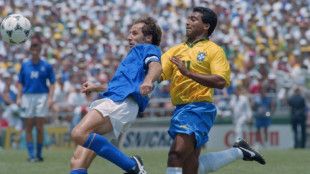 Baresi -- the 'Johan Cruyff of defenders'
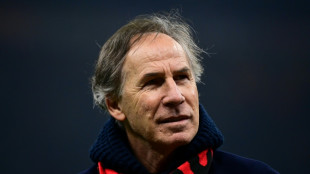 Legendary Italian football defender Franco Baresi has died: AC Milan

 Drugged Malaysian pilot risks death penalty for smuggling in Indonesia
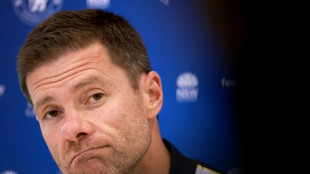 World Cup must be kept out of private hands: Chelsea manager Alonso

 Greek visa scheme gives Turks easier entry to islands in EU

 Ferrand-Prevot bids to defend Tour de France Femmes title

 China factory activity slides as leaders seek spending boost
 Far right and far left battle for power in polarised Berlin

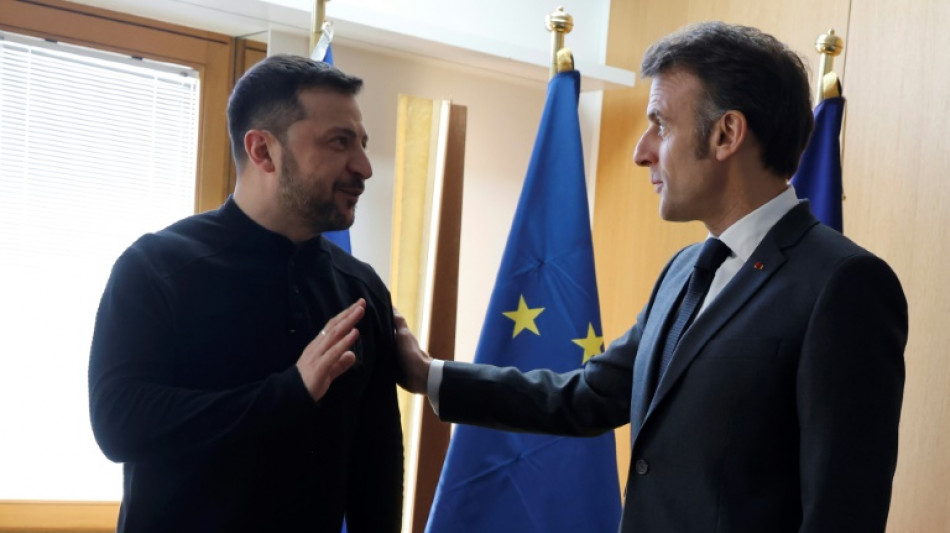
When Ukrainian President Volodymyr Zelensky interrupted a press conference he was holding to answer a telephone call from his French counterpart Emmanuel Macron, he opened a window into a new world of geopolitical diplomacy.
"Can I call you back in 15 to 20 minutes," Zelensky asked Macron before returning to reporters' questions.
He then revealed that he spoke to Macron "once a day".
Mobile phone exchanges between world leaders are "a new diplomacy" that is "more direct and spontaneous" and allows for "more frequent, quicker" contact, a Macron aide told AFP.
The French president speaks to both Zelensky and US President Donald Trump "almost every day", a member of his team said.
The same goes for British Prime Minister Keir Starmer.
Mobile phone diplomacy is having knock-on effects, though, sidelining diplomats who are now no longer essential mediums of geopolitical communication.
And these mobile phone exchanges have become more frequent since Trump returned to the White House with his unorthodox style of leadership.
Whereas once, telephone contact between two leaders was organised in advance by aides and took place in their presence, these days such contact can be much less formal.
Macron has spoken about how Trump sometimes contacts him "directly" without warning, even forcing him to leave meetings for a quick chat.
In the corridors of power at the Elysee Palace in Paris, that is considered a necessary occupational hazard in a bid to exert influence on Trump.
Such designs have become even more pressing for Ukraine and its European allies given the US president's abrupt foreign policy U-turn and softening of its stance towards Russia's Vladimir Putin.
- 'Dangerous' -
Such exchanges are not entirely new however, while their use can also depend on the different individuals involved.
Trump prefers direct contact without intermediaries, whereas his predecessor Joe Biden stuck to classical bureaucracy, an ex-diplomat said.
"Things have picked up pace. There has been a change in rhythm which has provoked a change in the nature of relationships," French former ambassador Michel Duclos, now an expert at the Institut Montaigne think tank, told AFP.
In a French sense, that means that foreign policy has been increasingly concentrated in the presidency, Duclos added.
Zelensky began direct mobile phone diplomacy as soon as Russia invaded Ukraine in February 2022.
Initially that was with Polish President Andrzej Duda, and sometimes even to discuss "topics that are much below the level of presidents, like some logistical and bureaucratic issues at the border", a source close to Zelensky told AFP.
These kinds of calls aimed "to simplify and speed up everything as much as possible".
The downside, according to Duclos, is that if the leader does not brief his aides soon after such calls, they could be left "out in the cold".
The use of mobile phones is not exclusive and regular diplomatic channels are still in operation.
While Trump has given his mobile phone number to Zelensky, the Ukrainian president has never called it.
And despite his unorthodox approach, when Trump recently held two telephone calls with Putin -- bringing the Russian leader in from the cold of his relative international isolation -- he seems to have used conventional channels.
But the former reality TV star has also boasted of holding many other telephone conversations with Putin of which there are no official records.
Such covert conversations are "dangerous", said Duclos, who believes that Putin is a master at "manipulating" others.
For Ian Bremmer, president of the political risk consultancy Eurasia Group, such contact would be "a strong advantage if it was between two leaders who trust each other, in the context of a stable functional relationship."
But that's not the case with Trump, Bremmer told AFP.
There is also the question of confidentiality.
Diplomatic sources say that leaders speak to each other over encrypted platforms, such as Signal.
But that was the medium by which an American journalist was apparently accidentally given access to a group in which top figures in Trump's administration discussed military plans.
vl-ant-dk-fff/jmt/ybl/bc/sbk
H.Romero--AT