EU unveils critical material projects to cut China dependence / Photo: Hassan AYADI - AFP

 Residents defend Spain’s ancient 'El Abuelo' tree from flames
 Forever chemicals and pesticides: what to know
 Spaniard Santi Denia takes over as Czech Republic coach
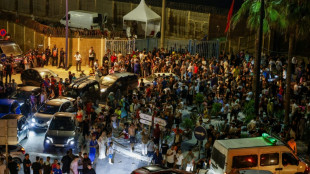
 EU races to contain new migrant crisis as thousands cross into Spain's N. Africa enclave
 Profits surge at US oil giant amid Iran war supply shock
 Bodies of four climbers found near Pakistan avalanche site: police
 UK court dismisses challenge against new Chinese embassy in London
 Stock markets rally on tech rebound
 Tyla drops Lagos show as South Africa, Nigeria row over immigration

 BP seeks to sell North Sea business as UK faces drilling dilemma
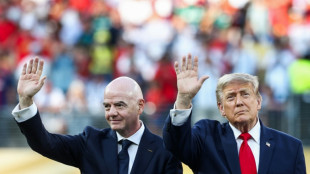
 Pro-Kremlin commentator denounces 'censorship' in France
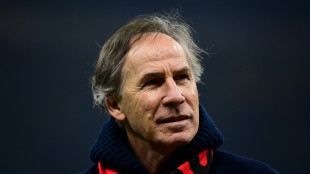 AC Milan 'in tears' at death of Italian football legend Baresi

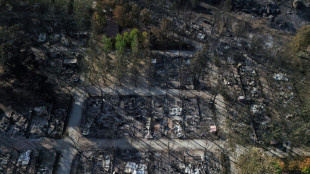 France, Spain assess scorched terrain as new wildfires threaten other regions
 Нооша Аубель під тиском: мерія Потсдама між самостійними кроками та скандалом із дитячими садками
 Missing climber Nirmal Purja redefined mountaineering

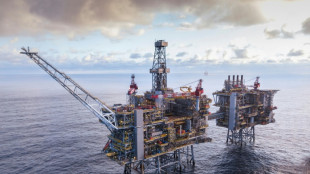 British oil giant BP aims to sell North Sea business
 Sony hikes profit outlook on strong gaming earnings
 Baresi -- the 'Johan Cruyff of defenders'
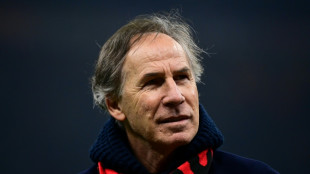 Legendary Italian football defender Franco Baresi has died: AC Milan

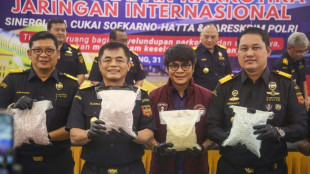 Drugged Malaysian pilot risks death penalty for smuggling in Indonesia
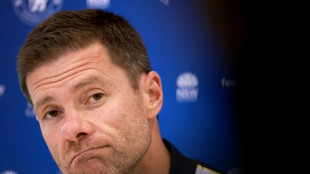 World Cup must be kept out of private hands: Chelsea manager Alonso
 Greek visa scheme gives Turks easier entry to islands in EU
 Ferrand-Prevot bids to defend Tour de France Femmes title

 China factory activity slides as leaders seek spending boost
 Far right and far left battle for power in polarised Berlin
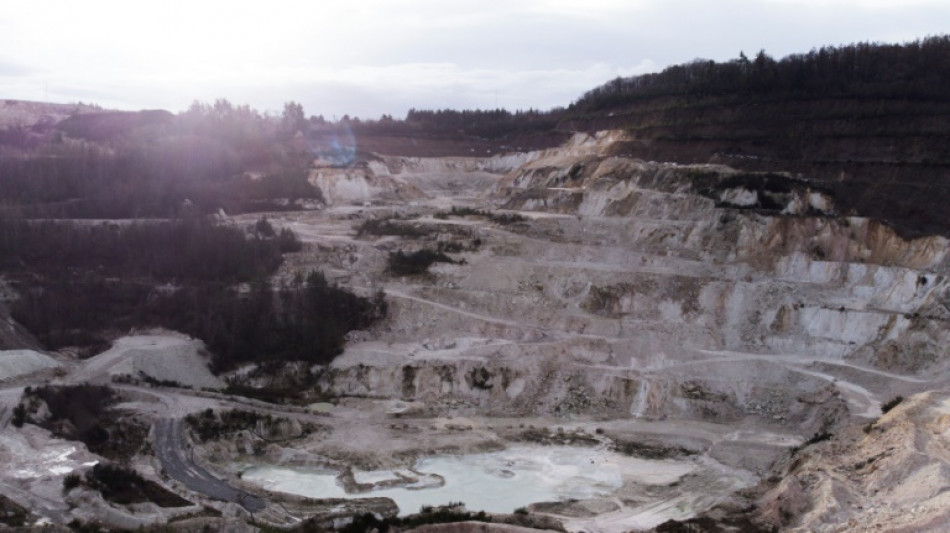
The EU unveiled dozens of projects Tuesday to ramp up extraction of critical raw materials in Europe as the bloc seeks to reduce its over-reliance on China.
The Covid pandemic and Russia's invasion of Ukraine exposed the European Union's reliance on foreign supply chains for the materials, forcing Brussels to confront the need for greater production in Europe to avoid future shocks.
"Chinese lithium cannot become tomorrow's Russian gas," warned EU industry chief Stephane Sejourne.
When Moscow attacked Ukraine in 2022, the EU cut energy imports from Russia, leading to spiralling energy prices and sky-high inflation.
Heeding past lessons, Brussels is now scrambling to secure critical minerals and rare earth elements, which are essential for electronic goods such as batteries and needed for the green transition.
The EU believes it must act fast as geopolitical tensions spike following the re-election of US President Donald Trump.
"There is a sense of urgency that wasn't there three or four months ago," Sejourne told reporters in Brussels.
The European Commission published a list of 47 "strategic projects" that include opening mines for lithium -- needed for electric cars -- and tungsten.
Spread across 13 EU member states, they will benefit from easier access to European Union financing as well as simpler and faster permitting processes.
"Let's be clear: we are obliged to open new mines in Europe," Sejourne said, adding that the EU could be "wholly self-sufficient in lithium" within five years.
- Diversifying supplies -
The projects are designated under the Critical Raw Materials Act (CRMA), a major law the EU hopes will protect the green tech industry and maintain production in Europe.
It stipulates that by 2030, the EU must meet 10 percent of its extraction needs, 40 percent of its processing and 25 percent of its recycling needs for each material.
The act also states that the bloc must not rely on any one non-EU country for more than 65 percent of its strategic raw material needs.
According to EU data, China provides 100 percent of the bloc's supply of heavy rare earth elements, and Turkey provides 98 percent of the EU's supply of boron.
"There is no decarbonisation possible without gallium to build solar panels, without copper to transport electricity. No defence industry without the rare earth elements that are used in the composition of our radars, our sonars, our targeting systems," Sejourne said.
The materials are also vital for munitions as the EU seeks to ramp up defence spending.
The EU plan is made up of different elements: extracting, processing and recycling more raw materials in Europe; diversifying overseas suppliers; joint purchases to reduce costs; and building up strategic stocks.
Up to two billion euros ($2.1 billion) in financing will be available in the form of loans, guarantees and grants, Sejourne said.
Permits must be granted within 27 months for extraction projects and 15 months for processing or recycling projects, the commission said.
The EU received 170 project applications, 49 of which are outside the EU, including in Greenland and Ukraine.
A further raft of projects outside the EU will be announced in the coming weeks.
Th.Gonzalez--AT