
Aid freeze silences Latin America media scrutiny of US foes / Photo: Federico PARRA - AFP/File

 Spaniard Santi Denia takes over as Czech Republic coach
 EU races to contain new migrant crisis as thousands cross into Spain's N. Africa enclave
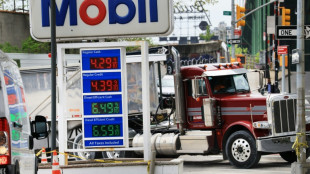 Profits surge at US oil giant amid Iran war supply shock
 Bodies of four climbers found near Pakistan avalanche site: police
 UK court dismisses challenge against new Chinese embassy in London
 Stock markets rally on tech rebound
 Tyla drops Lagos show as South Africa, Nigeria row over immigration
 BP seeks to sell North Sea business as UK faces drilling dilemma
 Pro-Kremlin commentator denounces 'censorship' in France
 AC Milan 'in tears' at death of Italian football legend Baresi
 France, Spain assess scorched terrain as new wildfires threaten other regions
 Нооша Аубель під тиском: мерія Потсдама між самостійними кроками та скандалом із дитячими садками
 Missing climber Nirmal Purja redefined mountaineering
 British oil giant BP aims to sell North Sea business
 Sony hikes profit outlook on strong gaming earnings
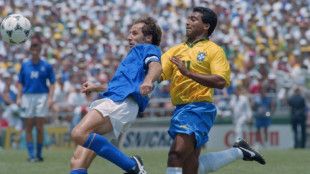 Baresi -- the 'Johan Cruyff of defenders'
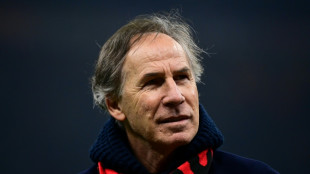 Legendary Italian football defender Franco Baresi has died: AC Milan
 Drugged Malaysian pilot risks death penalty for smuggling in Indonesia
 World Cup must be kept out of private hands: Chelsea manager Alonso
 Greek visa scheme gives Turks easier entry to islands in EU
 Ferrand-Prevot bids to defend Tour de France Femmes title
 China factory activity slides as leaders seek spending boost
 Far right and far left battle for power in polarised Berlin
 Hamas agrees to deal for disarmament, Israel's withdrawal from Gaza
 Cables and cooling bring AI windfall to Indian suppliers
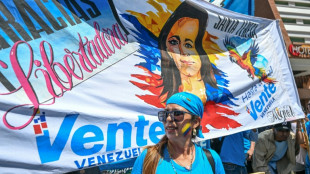
A choke on US aid threatens to smother media exposing abuses in Cuba, Nicaragua and Venezuela, to the unconcealed delight of the very leaders Washington once wanted held accountable.
It was one of President Donald Trump's first acts on his return to the White House: curbing the US Agency for International Development (USAID) and other bodies that fund humanitarian and democratization projects.
And, while a judge has since ruled the action was probably unconstitutional, a dark cloud hangs over aid projects, including some $268 million budgeted for "independent media" in 30 countries in 2025, according to Reporters Without Borders (RSF).
Dozens of Latin American outlets have cut staff. Some have closed altogether.
At the same time, the Trump administration has dismantled state-run American media with a global audience, such as Radio Y Television Marty -- founded in Florida in the 1980s to counter the Cuban Communist Party's monopoly on information -- and the Voice of America.
"It is regrettable that what had been one of the most reliable partners for the independent media sector and Cuban civil society has decided to so freely give the authoritarians cause for celebration," Jose Nieves, editor of the Miami-based Cuban news portal El Toque told AFP of the US retreat.
"As we are seeing these days, the dictatorships in the region openly organize their propaganda apparatus, using resources they are not allocating to all the humanitarian crises we are experiencing," he added.
- 'Subversion' -
Cuba's President Miguel Diaz Canel, who describes critical journalists as Washington-backed "mercenaries," has welcomed the Donald Trump administration's cut to funding for non-state media that operate mostly from abroad, including Miami.
USAID-funded projects for "so-called independent media and NGOs," he wrote on X last month, amounted to nothing other than multi-million dollar "subversion."
In Cuba, most media outlets belong to the state, their narrative controlled by the Communist Party.
Some non-state digital sites have emerged in recent years, many operating from abroad and accessible only to Cubans with a VPN.
El Toque, which received money from the National Endowment for Democracy -- a non-profit foundation funded largely by appropriations from the US Congress -- has had to lay off half its staff as its budget was slashed, said Nieves.
The resulting "paralysis" of critical media "will only contribute to a more misinformed populace subjected to the lies of the enemies of freedom and democracy," the editor said.
- 'Information blackout' -
For journalists in Nicaragua and Venezuela -- countries which, like Cuba, are under US sanctions for anti-democratic actions -- the aid cuts have also been devastating.
"It put us in a state of emergency," Carlos Herrera, co-founder of the Nicaraguan news site Divergentes told AFP.
Divergentes, which operates from Costa Rica, cut its payroll in half and Herrera fears "a total information blackout" in Nicaragua.
Several journalists have been banished or stripped of their nationality by Daniel Ortega's government in recent years.
At least 300 Nicaraguan journalists have left the country, and four were arrested in the last 12 months, according to RSF.
Nicaragua "no longer has independent media" operating within the country, where only state-run and media groups in "total self-censorship" survive, said Herrera.
- "USAIDcalypse" -
In Venezuela, the media industry is "suffocating, drowning, and we can't even scream for help," said the editor of an online paper who requested anonymity for fear for his safety.
More than 200 media outlets in the South American country have closed since the 1999-2013 presidency of socialist leader Hugo Chavez, according to the rights NGO Espacio Publico.
Several journalists are under investigation for receiving foreign funds, suspected of being anti-government "agents."
"Traditional media have stopped fulfilling their informational role in a climate of self-censorship and brutal censorship," said Rodolfo Rico, a Venezuelan free press activist.
Whatever critical media remains depend on foreign funding due to domestic advertisers' fear of reprisals, and for them, Washington's withdrawal amounts to a "USAIDcalypse," added Rico.
"Journalists have less and less space to practice their profession, and people have fewer ways to stay informed," a Venezuelan reporter who recently lost his job told AFP, also declining to be named.
lp-jb-mis-erc/nn/mlr/dc
A.O.Scott--AT