Canada PM Carney announces deal with Australia to boost Arctic radar / Photo: Cole Burston/ - AFP

 Thailand extends activist's jail term to more than 34 years
 China denies spying on Nvidia's Jensen Huang
 BP net profit quadruples on higher oil prices
 Kiss backs 'hungry' Beale to push for Wallabies game time
 World number one Rybakina withdraws in Tokyo with injury
 Malawi's fuel shortages, record prices deepen economic crisis

 Rubio hosts G20 ministers as Iran, Ukraine wars divide members

 From minerals to AI, EU and Canada to forge new alliance

 Fire pollution killed 3,560 people in Indonesia in September: report

 Ian Wright and Jamie Carragher split on Liverpool-Arsenal prediction

 The Duskbloods delayed as Nintendo Switch 2 release moves to 2027
 Russia turns to NATO countries for prosthetics amid war-related shortages

 Researchers on island encounter giant spider legs emerging from a burrow

 Britain's King Charles lands in ex-colony Guyana

 Arsenal assess Bukayo Saka fitness concerns before Liverpool meeting
 £10,000 garden project transforms a UK home into a miniature Greece

 Forest destruction tests Armenia-Azerbaijan peace push

 Deal still eludes nations on final day of UN nature talks
 Teen rallies take to the streets across Italy

 Netanyahu bloc finishes ahead in Israel vote, but well short of majority

 Rural US hospitals, collateral victims of Trump politics
 How Trump could interfere in US midterm elections
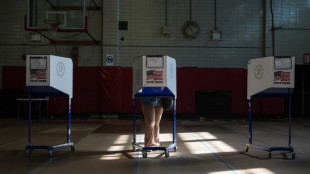 As Republicans downplay abortion for midterms, four US states to vote
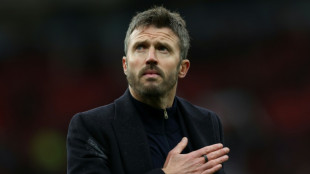
 No. 4 Indiana looks to revive offense against improving Minnesota

 Police close investigation into Hayden Panettiere death after coroner ruling
Prime Minister Mark Carney announced Tuesday a Can$6 billion (US$4.2 billion) deal with Australia to develop an Arctic radar system, warning that Canada must take more responsibility for its defence as US priorities shift.
Carney made the announcement in Iqaluit, capital of the Nunavut territory in the Canadian Arctic, on the final leg of his first official trip as prime minister since taking over from Justin Trudeau last week.
Carney -- who has previously described the United States under President Donald Trump as a country Canada "can no longer trust" -- characterized the radar deal as part of a broader effort to assert Canadian sovereignty over the Arctic.
"The world is changing," Carney said in Iqaluit, where he made a domestic stop after visits to Paris and London.
"International institutions and norms that have kept Canada secure are now being called into question. And the United States's priorities, our ally, once closely aligned with our own, are beginning to shift," he said.
"We cannot and should not look first to others to defend our nation."
Australia is a leader in "over-the-horizon" radar, an advanced system that allows for continuous threat-tracking over a vast area.
"The radar system's long-range surveillance and threat tracking capabilities will detect and deter threats across the North," Carney's office said in a statement announcing the deal.
The new network will replace an ageing Cold War-era North Warning System, which relies on radar stations from Alaska to northern Quebec that are incapable of responding to modern missile threats.
Ottawa will also invest an additional Can$420 million to boost Canada's year-round military presence in the far north.
"Securing Canada is an absolute strategic priority of this government," Carney said. "We will need to do more."
Funding for enhanced Arctic radar was announced under Trudeau, but the decision to partner with Australia was unveiled Tuesday.
Canada made Arctic security a priority before Trump returned to office, amid concern about possible Russian aggression as melting ice caused by climate change increasingly opens the region for resource extraction.
But Trump's repeated questioning of Canadian sovereignty has sparked renewed focus on national defence in Canada, which once viewed its security ties with Washington as iron-clad.
Canada's Defence Minister Bill Blair earlier this month announced plans for three new Arctic military hubs with airstrips and equipment depots.
New Canadian prime ministers typically make calling the American president a first priority after taking office, but with the countries currently fighting a trade war initiated by Trump's tariffs it remains unclear when Carney and Trump will speak.
Carney said Tuesday he would have a "comprehensive" discussion with Trump about trade "at the appropriate time."
M.King--AT