Poland, Baltics signal plans to withdraw from landmines treaty / Photo: YASUYOSHI CHIBA - AFP

 Thailand extends activist's jail term to more than 34 years

 China denies spying on Nvidia's Jensen Huang
 BP net profit quadruples on higher oil prices

 Kiss backs 'hungry' Beale to push for Wallabies game time
 World number one Rybakina withdraws in Tokyo with injury
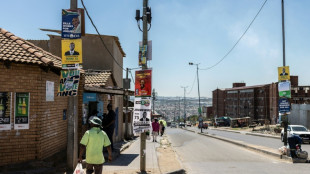
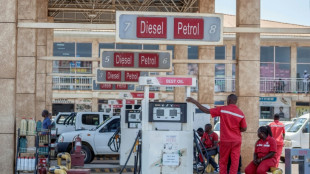 Malawi's fuel shortages, record prices deepen economic crisis

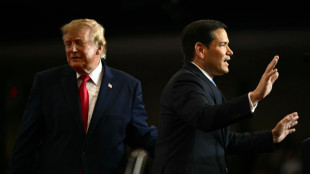 Rubio hosts G20 ministers as Iran, Ukraine wars divide members

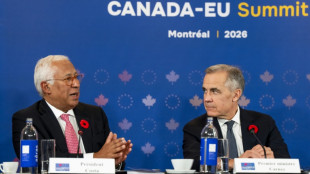 From minerals to AI, EU and Canada to forge new alliance

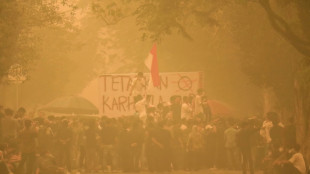 Fire pollution killed 3,560 people in Indonesia in September: report

 Ian Wright and Jamie Carragher split on Liverpool-Arsenal prediction

 The Duskbloods delayed as Nintendo Switch 2 release moves to 2027

 Russia turns to NATO countries for prosthetics amid war-related shortages

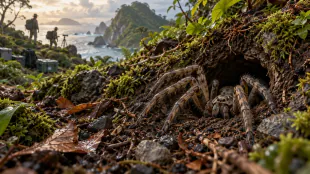 Researchers on island encounter giant spider legs emerging from a burrow

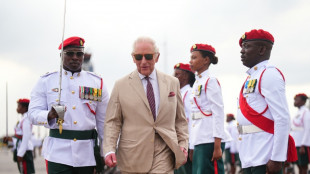 Britain's King Charles lands in ex-colony Guyana

 Arsenal assess Bukayo Saka fitness concerns before Liverpool meeting
 £10,000 garden project transforms a UK home into a miniature Greece

 Forest destruction tests Armenia-Azerbaijan peace push

 Deal still eludes nations on final day of UN nature talks

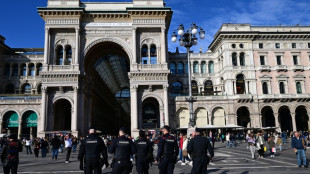 Teen rallies take to the streets across Italy

 Netanyahu bloc finishes ahead in Israel vote, but well short of majority

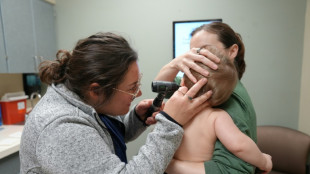 Rural US hospitals, collateral victims of Trump politics

 How Trump could interfere in US midterm elections
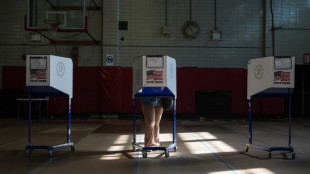 As Republicans downplay abortion for midterms, four US states to vote

 No. 4 Indiana looks to revive offense against improving Minnesota

 Police close investigation into Hayden Panettiere death after coroner ruling

Poland and the Baltic states on Tuesday took a first step towards quitting a treaty banning anti-personnel mines, citing an increased security risk from Russia following its invasion of Ukraine.
The four EU and NATO member states have ramped up defence spending and training since Moscow's troops invaded Ukraine in 2022, voicing fears that Russia could target them next.
The defence ministers for the four countries, all neighbours of Russia, said in a joint statement they recommended withdrawing from the anti-landmine Ottawa Convention over "increased" military threats.
"In light of this unstable security environment marked by Russia's aggression... it is essential to evaluate all measures to strengthen our deterrence and defence capabilities," the statement said.
Poland's Defence Minister Wladyslaw Kosiniak-Kamysz hailed the move as "a very strong political declaration showing how determined we are to defend our homeland."
"Finland is also considering such a decision, so I think that soon all the countries... in the northeastern region of NATO's flank will make a similar decision," Kosiniak-Kamysz told reporters.
The Latvian government on Tuesday officially launched the process of pulling out from the convention.
"This would be the first time when Latvia would step out of any international convention we've ever signed," Prime Minister Evika Silina said Tuesday after the cabinet meeting.
More than 160 countries and territories are signatories to the Ottawa Convention, including Ukraine but not the United States or Russia.
The treaty bans signatories from acquiring, producing, stockpiling or using anti-personnel mines, which are designed to be buried or hidden on the ground.
They often mutilate victims, who are not immediately killed, and aid groups decry their long-term impact on civilians.
The four countries pledged to, despite the withdrawal, "remain committed to international humanitarian law, including the protection of civilians during an armed conflict."
Lithuania earlier this month quit another treaty banning cluster bombs citing security concerns over the threat from Moscow, sparking outrage from human rights watchdogs.
Amnesty International called the move "disastrous", while Human Rights Watch said it was "alarming", and the International Committee of the Red Cross (ICRC) warned it "weakens vital protections for civilians".
- 'Range of options' -
Lithuanian Defence Minister Dovile Sakaliene said on Tuesday her country was already considering what type of mines -- and how many of them -- it should buy.
"I think we will certainly have a range of options: both anti-tank and anti-personnel mines have been considered," Sakaliene said.
Lithuania's parliament speaker Saulius Skvernelis said that the decision on mines was necessary "given the length of the border with countries that are not friendly to us and what is happening in Ukraine".
Lithuania shares a border with Russia and its ally Belarus.
Belarus was used by Russian troops as a launch point for the invasion of Ukraine.
"The enemy that is fighting, unfortunately, is not bound by any conventions," Skvernelis said.
Latvia in a statement said that it could produce mines but "any possible acquisition, deployment and use of unguided anti-personnel mines will be based on military logic and defence capability development priorities".
Estonian Defence Minister Hanno Pevkur said his country currently had no plans to use anti-personnel mines at the moment.
"Estonia and our regional allies remain committed to upholding international humanitarian law and the protection of civilians, even after withdrawing from the Ottawa Convention," he added.
Withdrawal from the convention needs to be approved by national parliaments before other signatories are notified.
The withdrawal comes into effect six months after parliamentary approval.
W.Moreno--AT