Colombia warns Trump against drug blacklisting / Photo: Raul ARBOLEDA - AFP

 Chase sparks Bangladesh collapse as West Indies on top in Mirpur

 BP net profit quadruples as Mideast war lifts oil prices

 Kulusevski says 'nervous system changes' behind Spurs return

 Marquez crashes, then tops second practice in Malaysia

 New home for orangutans rescued from Indonesia's burning forests

 Independent Russian newspaper Novaya Gazeta shuts under Kremlin pressure
 Thailand extends activist's jail term to more than 34 years

 China denies spying on Nvidia's Jensen Huang
 BP net profit quadruples on higher oil prices

 Kiss backs 'hungry' Beale to push for Wallabies game time
 World number one Rybakina withdraws in Tokyo with injury
 Malawi's fuel shortages, record prices deepen economic crisis

 Rubio hosts G20 ministers as Iran, Ukraine wars divide members

 From minerals to AI, EU and Canada to forge new alliance

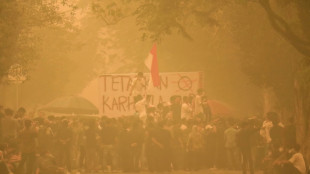 Fire pollution killed 3,560 people in Indonesia in September: report

 Ian Wright and Jamie Carragher split on Liverpool-Arsenal prediction

 The Duskbloods delayed as Nintendo Switch 2 release moves to 2027
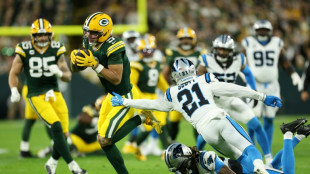
 Russia turns to NATO countries for prosthetics amid war-related shortages

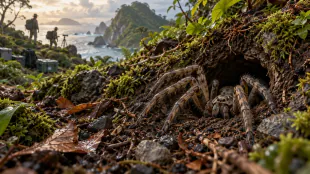 Researchers on island encounter giant spider legs emerging from a burrow

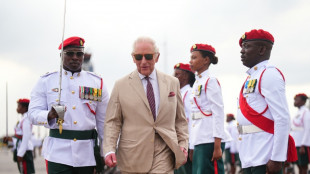 Britain's King Charles lands in ex-colony Guyana

 Arsenal assess Bukayo Saka fitness concerns before Liverpool meeting

 £10,000 garden project transforms a UK home into a miniature Greece
 Forest destruction tests Armenia-Azerbaijan peace push
 Deal still eludes nations on final day of UN nature talks
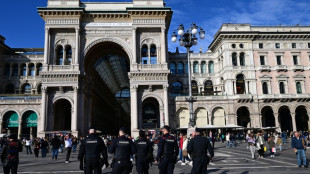 Teen rallies take to the streets across Italy

Colombia's defense minister on Sunday warned Donald Trump's administration against blacklisting his country for failing to curb drug exports, saying the decision would bring yet more cocaine to the United States.
Washington is currently weighing whether to "decertify" Colombia as a partner in the battle against drugs, a move that could restrict millions in US military aid and be a hammer blow to Colombia's reputation.
In an interview with AFP, recently appointed defense minister Pedro Sanchez said decertification would mean "we simply lose the ability to contain the threat."
"Not being able to contain it would go against the interests of the United States. Because more cocaine would arrive and the United States would not be stronger, more prosperous, or safer."
"Fracturing relations and cooperation between our states is an opportunity for drug trafficking," Sanchez insisted.
Colombia has launched a diplomatic offensive to avoid blacklisting ahead of a September US review.
But many officials are privately pessimistic that blacklisting can be avoided, putting at risk nearly half a billion dollars in annual US funding.
Since President Gustavo Petro came to power in 2022, the area under coca cultivation has increased by about 70 percent, according to Colombian government and UN estimates.
Trump has taken a hardline stance against drugs entering the United States from Mexico and Canada, hitting both countries with tariffs as apparent punishment.
And there is no love lost between Trump and Colombia's similarly pugilistic president Petro.
The pair recently got into a spat on social media over migrant deportations, prompting Trump to threaten sanctions on Colombia.
- Plan Colombia -
The United States has poured billions of dollars into Colombia's security forces over decades, helping to beat back insurgent groups and cartels that produce 90-plus percent of cocaine in the United States.
But Petro's signature policy of "total peace" has led to fewer military operations against drug-running militias and an abandonment of forced coca eradication.
Sanchez admitted that "total peace" had led to an increase in the strength of some armed groups.
"They grew because they betrayed the goodwill of the national government," he said.
He revealed that armed fighters had increased by about 1,500 in the last year alone.
Decertification would be a major blow to the Colombian military, just as it tries to rebuild strength and retake territory from insurgent leftist guerrilla groups.
Sanchez said the military's capabilities had been degraded in recent years, as military spending had been cut.
"They are weaker in certain capabilities, in intelligence, for example. We have fallen a little short in advancing rapidly in disruptive technology, such as drones and anti-drone weapons," he said.
"We don't have the same aircraft flying that we had 10 years ago."
The United States decertified Colombia once before, during the presidency of Ernesto Samper, whose 1994 campaign was accused of receiving money from the Cali cartel.
Some vital aid was frozen and foreign investment to Colombia dipped.
Eventually, the US resumed funding and, with a new government in Bogota, established "Plan Colombia" -- a billion-dollar US plan to overhaul the Colombian security services.
Despite today's challenges, Sanchez said the military's goal was to assert territorial control over all Colombia.
ELN guerrillas currently control a swathe of land near the Venezuelan border, where fighting has displaced about 56,000 people.
In a recent interview with AFP, ELN commanders vowed to repel a government counteroffensive and said years of "total peace" risk turning into "total war."
Sanchez dismissed the ELN as a "narco-criminal group" and vowed they would be met with "full force."
He also pledged to retake a major coca-growing region in the south of the country, a virtual microstate run by the Estado Mayor Central (Central General Staff).
Sanchez admitted retaking territory was a "wicked problem," but said it would be achieved.
"We're going to have to make a lot of sacrifice, we're even going to have tears, but in the end, we're going to achieve it."
O.Gutierrez--AT