Carbon capture industry tweaks message for the Trump era / Photo: Ryan LIM - AFP/File

 Chase sparks Bangladesh collapse as West Indies on top in Mirpur

 BP net profit quadruples as Mideast war lifts oil prices

 Kulusevski says 'nervous system changes' behind Spurs return

 Marquez crashes, then tops second practice in Malaysia

 New home for orangutans rescued from Indonesia's burning forests

 Independent Russian newspaper Novaya Gazeta shuts under Kremlin pressure
 Thailand extends activist's jail term to more than 34 years

 China denies spying on Nvidia's Jensen Huang

 BP net profit quadruples on higher oil prices

 Kiss backs 'hungry' Beale to push for Wallabies game time
 World number one Rybakina withdraws in Tokyo with injury

 Malawi's fuel shortages, record prices deepen economic crisis

 Rubio hosts G20 ministers as Iran, Ukraine wars divide members

 From minerals to AI, EU and Canada to forge new alliance

 Fire pollution killed 3,560 people in Indonesia in September: report

 Ian Wright and Jamie Carragher split on Liverpool-Arsenal prediction

 The Duskbloods delayed as Nintendo Switch 2 release moves to 2027

 Russia turns to NATO countries for prosthetics amid war-related shortages

 Researchers on island encounter giant spider legs emerging from a burrow

 Britain's King Charles lands in ex-colony Guyana

 Arsenal assess Bukayo Saka fitness concerns before Liverpool meeting
 £10,000 garden project transforms a UK home into a miniature Greece

 Forest destruction tests Armenia-Azerbaijan peace push

 Deal still eludes nations on final day of UN nature talks

 Teen rallies take to the streets across Italy

Backers of carbon capture and storage are emphasizing compatibility with President Trump's energy development goals as they seek to protect hard-won US policies from the administration's climate chopping block.
At the CERA Week energy conference this week, supporters of CCS, a climate mitigation strategy long favored by oil companies, described the industry as poised for potentially significant growth.
But that outcome rests on the survival of a key CCS tax credit updated most recently in the Inflation Reduction Act (IRA) of 2022, a signature Joe Biden climate law frequently mocked by Trump.
The lobbying strategy is to frame CCS as "an economic competitiveness and American leadership issue," said Jessie Stolark, executive director of the Carbon Capture Coalition.
That messaging pivot is also being practiced to make the IRA's hydrogen provisions more "palatable" given Trump's disdain for the renewable energy and net-zero emissions initiative known as the Green New Deal, said Frank Wolak, president of the Fuel Cell and Hydrogen Energy Association.
The IRA's provisions supported hydrogen renewable energy and fossil fuels, the latter of which "wasn't completely of interest to those who were promoting a Green New Deal," Wolak said.
CCS supporters view the federal incentive, called the 45Q US tax credit, as essential to the economic case in the United States, which has no carbon pricing structure.
Stolark's coalition -- composed of oil companies, environmentalists, labor unions and other stakeholders -- has pointed to more than 275 CCS projects announced in the US.
"Without the tax credit, pretty much all of those projects go away," Stolark said.
- Slow progress -
CCS involves heavy capital investment to separate carbon dioxide during industrial processes and store the gases deep underground, an endeavour that also involves outreach to communities, where environmental groups have sometimes fought projects over worries that leaks could contaminate drinking water.
CCS has been discussed as a climate mitigation strategy for more than two decades, but progress has come slowly as far as the industrial-scaled storage facilities that supporters have depicted as a climate change solution.
"The policy development to facilitate carbon storage has taken longer than anticipated," said Emmanouil Kakaras, executive vice president at Mitsubishi Heavy Industries, who also cited varying approaches to carbon pricing across markets as a factor.
But Kakaras, who has worked on CCS for almost 30 years, said European decarbonization mandates on heavy industry and the willingness of some consumers to pay premium for "green" steel and concrete was creating opportunity.
"There is a justification to decarbonize the hard-to-abate sectors," he said. "So that is why it's now picking up."
Supporters argue CCS could evolve into big business in America because of geographic space for potential storage and the availability of existing pipelines already used for carbon dioxide, which has long played a role in enhanced oil recovery.
The connection between CCS and oil production is one reason national environmental groups that accept CCS as an aspect of climate mitigation don't usually champion it with as much gusto as renewable energy and other solutions.
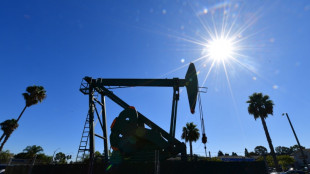
At CERA Week, Vicki Hollub, chief executive of Occidental Petroleum, described carbon dioxide gas as a vital tool to boosting output from oil reservoirs. She said it extracts oil when pumped in much better than water, "which just goes past" the crude without loosening it.
This use of carbon dioxide has permitted Occidental to recover 75 percent of the oil in conventional wells, compared with 50 percent before.
Hollub urged policy makers not only to maintain the existing 45Q tax credit, but to tweak it so the credit for carbon dioxide used in enhanced oil recovery is at parity. Right now the credit is higher if the carbon dioxide is stored than if it is used in enhanced oil recovery.
More lawmakers are on board "because they recognize that we really need the carbon dioxide to create incremental oil for the United States," she said.
T.Wright--AT