Sudanese seek refuge underground in besieged Darfur city / Photo: Muammar Ibrahim - AFP

 Missing climber Nirmal Purja redefined mountaineering

 British oil giant BP aims to sell North Sea business

 Sony hikes profit outlook on strong gaming earnings
 Baresi -- the 'Johan Cruyff of defenders'
 Legendary Italian football defender Franco Baresi has died: AC Milan

 Drugged Malaysian pilot risks death penalty for smuggling in Indonesia
 World Cup must be kept out of private hands: Chelsea manager Alonso
 Greek visa scheme gives Turks easier entry to islands in EU
 Ferrand-Prevot bids to defend Tour de France Femmes title
 China factory activity slides as leaders seek spending boost
 Far right and far left battle for power in polarised Berlin

 Hamas agrees to deal for disarmament, Israel's withdrawal from Gaza
 Cables and cooling bring AI windfall to Indian suppliers

 Oil industry sees war windfall but girds for political blowback

 Spain safari park animals grazed calmly amid 'terror' of fire

 Caledonia Mining Corporation Plc Notification of Relevant Change to Significant Shareholder

 Guardian Metal Resources PLC Announces Total Voting Rights

 Trump announces agreement for disarmament of Hamas
 Amazon beats expectations with cloud and AI growth

 De Minaur beats teen Hewitt in all-Aussie Washington clash
 Davies completes Commonwealth double in 5,000m, LaFond leaps to historic Dominica gold
 Blowout Microsoft results lift US stocks as oil retreats
 De Minaur beats teen Hewitt in Washington all-Aussie clash

 England's Stones joins Inter Milan on free transfer
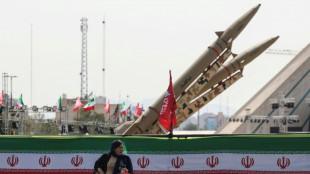 Renewed Iran war raises US missile supply concerns

Beneath the broken earth of the besieged Sudanese city of El-Fasher in the western region of Darfur, Nafisa Malik clutches her five children close.
As shells rain down, the 45-year-old mother tries to shield them in a cramped hole barely big enough to crouch in.
"Time slows down here," Malik said, from her home near El-Fasher's Hajer Gadou market.
"We sit in the darkness, listening, trying to guess when it's over," she told AFP by phone.
For almost two years the paramilitary Rapid Support Forces (RSF) and Sudan's army have waged a war that has killed tens of thousands.
United Nations Secretary-General Antonio Guterres on Friday called it a "crisis of staggering scale and brutality".
El-Fasher, the capital of North Darfur state, is the only major city in Darfur still under army control, making it a strategic prize.
The RSF has tried for months to seize it.
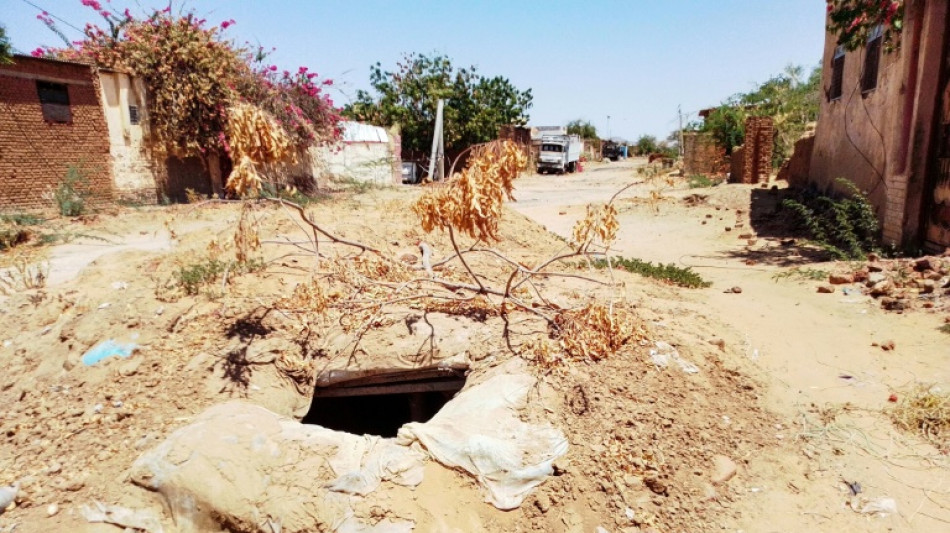
Malik's crude shelter, held up by splintered wooden planks and scraps of rusted metal, is one of thousands in the war-battered city, according to residents.
The army regained much of the capital Khartoum this year, but the RSF has intensified its attacks on El-Fasher.
Desperate for safety from artillery and drone strikes, residents have built makeshift bunkers.
Some are hurriedly excavated foxholes, others are more solid and reinforced with sandbags.
Mohammed Ibrahim, 54, once believed hiding under beds would be enough, "until houses were hit".
"We lost neighbours," he said by phone. "The children were terrified."
Determined to protect his family, Ibrahim dug a hole in his yard. He covered it with sacks of soil with only a narrow entrance.
- Doctors underground -
Despite the RSF's siege cutting off supply lines, the army and an allied coalition of armed groups known as the Joint Forces still hold most of the city.
Yale University's Humanitarian Research Lab, which uses satellite and other data to track the conflict, has identified "clusters of damage".
It details destruction from munitions and fires including near the airport, market and in the city's east and south.
The researchers reported bombardment of "residential structures", and said its findings are consistent with Sudanese army air strikes as well as RSF artillery and ground attacks.
Staff at the Saudi Hospital, one of the last functioning medical facilities in the city, carved out an underground shelter last October.
"We use it as an operating room during the strikes, lit only by our phones," one doctor told AFP, requesting anonymity for his safety.
Every explosion sends tremors through the shelter walls, shaking surgical instruments and rattling nerves.
El-Fasher was historically the seat of the Darfur sultanate and has long been a centre of power in Darfur.
Now, it is all that stands between total RSF control of Darfur, whose gold resources provide the paramilitaries with vital revenue, according to the United States Treasury Department.
The African Union warned last week that Sudan risks partition.
"The army is well entrenched in El-Fasher, making it exceedingly difficult for the RSF to capture the city," said Marc Lavergne, a Sudan expert at France's University of Tours.
Crucial to the army's war effort in El-Fasher is its support from the Zaghawa, a non-Arab ethnic group.
The UN says the Zaghawa are among those targeted by RSF and allied Arab militias, exacting "a horrific toll".
- 'Existential threat' -
Forces from prominent Zaghawa figures, Darfur Governor Minni Minnawi and Finance Minister Gibril Ibrahim, have joined the city's defence after being neutral at the war's beginning.
"The Zhagawa see the fall of El-Fasher as an existential threat," said Sudanese political analyst Kholood Khair.
"They are concerned that the RSF would commit reprisal attacks against them for breaking their neutrality -- if they capture the city," she told AFP.
But as the RSF tightens its grip, the army and its allies face a dilemma: hold the city at immense human cost or risk ceding a stronghold that Khair said could shift the war's balance.
"Holding the city depletes resources," she said. "But losing it would be catastrophic."
A UN-backed assessment declared famine in three displacement camps around El-Fasher. Famine is expected to spread to five more areas, including El-Fasher itself, by May.
Aid is practically nonexistent.
Remaining humanitarian agencies have suspended operations as the RSF attempts to break through, attacking camps and villages around El-Fasher.
"Bringing goods in has become nearly impossible," shop owner Ahmed Suleiman said. "Even if you take the risk, you have to pay bribes at checkpoints, which drives up prices."
Leni Kinzli from the World Food Programme warned of dire consequences.
"If aid continues to be cut off, the fallout will be catastrophic", she said.
E.Hall--AT