
Uncertainty looms for Germany after Scholz coalition collapses / Photo: Odd ANDERSEN - AFP

 InterContinental Hotels Group PLC Announces Transaction in Own Shares - November 04

 No. 22 UCLA defeats No. 5 Arizona 84-75 despite Kharchenkov's 38 points

 Vessel operator seeks witnesses after Vancouver grounding

 US Air Force deploys F-16 fighters to remote Aleutian base for readiness drill

 Bezos grant helps Seattle nonprofit move thousands of families toward housing

 Shrini Srivastava joins crew of Varanasi-Delhi Vande Bharat Sleeper service

 Nearly Half of Australian Workers Overqualified, Survey Finds

 RBI eases export-declaration compliance for individual service exporters

 India proposes more import entry points for drugs and medical devices

 Derek Tierney Outlines Ten-Year Strategy for National Digital Health System

 NBC’s Steve Kornacki Reveals Tech Habits Ahead of Midterm Elections

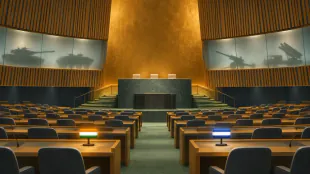 India and Israel oppose UN draft on regional conventional arms control

 BLS Polymers shares open 65.3% above IPO price

 Capital-markets shares rally as Motilal Oswal and Angel One lead gains

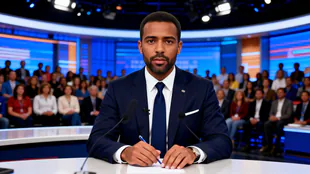 Latino Voters Defy ICE Fears, Turn Out in Record Numbers for Midterms

 ITC shares rise as analysts anticipate gradual cigarette-business recovery

 Reliance rally puts historical one-year return pattern in focus
 Kuwait edges Oman 1-0 in veterans Gulf Cup in Doha

 Saudi Aramco quarterly profit climbs 34.6% amid elevated oil prices
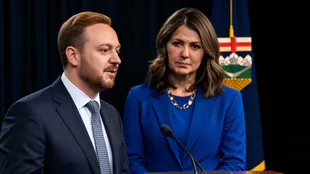
 Washington reports movement in Iran negotiations aimed at preventing escalation

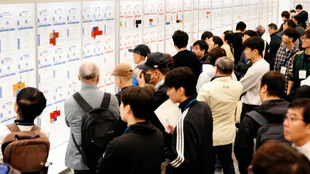 Korea’s Labor Share of GDP Hits Record Low Amid Semiconductor Boom

 littlefish and Halo Dot Partner to Replace Payment Terminals with SoftPOS

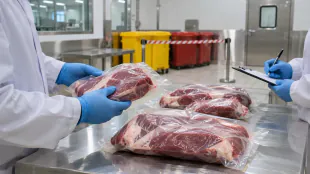 Kuwait inspectors destroy 115 kilograms of unverified meat in Farwaniya

 Egypt Accelerates Construction of 341km Sinai Railway Linking Arish and Taba

 John Schneider Admits Owes Millions in 'Dukes of Hazzard' Divorce Battle
Germany enters a period of political uncertainty Thursday after its fragile three-party ruling coalition collapsed on the same day Donald Trump won the US election.
Chancellor Olaf Scholz -- who announced a January confidence vote, likely followed by snap elections in March -- will seek to reassure his European partners at a summit in Budapest.
Scholz said late Wednesday he would reach out to conservative opposition leader Friedrich Merz, who is leading in opinion polls, for support in passing crucial bills on the economy and defence.
The end of his fractious three-way coalition, which deprives him of a governing majority, could not have come at a worse time for Europe's biggest economy, which is set to shrink for a second year in a row.
"The early end of the coalition leaves Germany somewhat rudderless in what could be an exceptionally turbulent time right after Donald Trump won the US election," wrote Berenberg bank analyst Holger Schmieding.
But Schmieding said a snap election and new leadership in early 2025 may ultimately help as "the constant bickering within the now-defunct three-party coalition had turned into a major obstacle to growth".
Scholz heads to an EU summit in Budapest on Thursday to discuss multiple global crises, chiefly Ukraine's war with Russia and the Middle East conflict, all impacted by the looming change in the White House.
EU leaders are gathering for the talks hosted by Hungarian Prime Minister Viktor Orban, a Trump supporter and one of the EU's main sceptics of support for Kyiv.
- 'Petty political tactics' -
After months of bitter infighting, the three-way coalition between Scholz's Social Democrats (SPD), the Greens and the business-friendly Free Democrats (FDP) finally broke apart on Wednesday night.
In a shock power move, Scholz sacked his troublesome finance minister Christian Lindner, forcing the FDP out of the coalition and leaving the SPD and the Greens ruling in a precarious minority government.
The German leader said he would seek a vote of confidence by January 15 so lawmakers can decide whether to call early elections which could be held six months earlier than a previously scheduled September vote.
Until then, the minority government will only be able to pass some laws, on a case-by-case basis, if it wins opposition backing.
The usually softly spoken Scholz on Wednesday had strong words for Lindner, declaring there was no longer any "basis of trust" between them.
He bitterly attacked the ousted finance minister for his "petty political tactics" and accused him of a level of egoism that is "completely incomprehensible".
The FDP, the smallest party in the coalition, had long disagreed with the SPD and the Greens on a range of issues, most strikingly how to carve up a tight budget and jumpstart the troubled German economy.
Lindner had repeatedly flirted with bolting the unhappy coalition and warned of "an autumn of decisions" as a deadline loomed for for difficult fiscal negotiations next week.
Scholz declared that "we now need clarity on how we can soundly finance our security and defence in the coming years without jeopardising the cohesion of the country".
"With a view to the election in America, this is perhaps more urgent than ever."
- 'No tactical delays' -
Scholz said he had offered Lindner a plan with steps to bring down energy costs and boost investment for German companies, secure auto industry jobs and keep up support for Ukraine.
But Lindner -- a fiscal hawk and strong opponent of raising new debt -- had shown "no willingness" to accept it, Scholz said, adding that "I no longer want to subject our country to such behaviour".
Scholz and his mutinous coalition partners have drawn withering fire from Merz, the leader of the opposition CDU-CSU alliance, which has long demanded early elections.
"We cannot afford to argue for another year," CDU lawmaker Norbert Roettgen said after Trump's victory and before the coalition bust-up. "Germany is important in Europe, and if the government can't live up to that, then it must make way now."
On Wednesday, the head of the CSU in the southern state of Bavaria, Markus Soeder, demanded an immediate vote of confidence, warning that "there must be no tactical delays".
Recent opinion polls give the CDU/CSU alliance around 32 percent support -- more than the combined total of the SPD with 16 percent, the Greens with 11 percent and the FDP with only about four percent.
The far-right Alternative for Germany (AfD) has recently scored close to 20 percent, but so far all other parties have vowed not to cooperate with it.
On current trends, the conservatives, if they win, would still need a coalition ally for a majority.
This raises the longer-term prospect that they could bring the SPD back on board in a left-right "grand coalition" of the two traditional big-tent parties.
W.Nelson--AT