
Is the US election really so close? / Photo: Brendan SMIALOWSKI, CHANDAN KHANNA - AFP/File

 InterContinental Hotels Group PLC Announces Transaction in Own Shares - November 04

 No. 22 UCLA defeats No. 5 Arizona 84-75 despite Kharchenkov's 38 points

 Vessel operator seeks witnesses after Vancouver grounding

 US Air Force deploys F-16 fighters to remote Aleutian base for readiness drill

 Bezos grant helps Seattle nonprofit move thousands of families toward housing

 Shrini Srivastava joins crew of Varanasi-Delhi Vande Bharat Sleeper service

 Nearly Half of Australian Workers Overqualified, Survey Finds

 RBI eases export-declaration compliance for individual service exporters

 India proposes more import entry points for drugs and medical devices

 Derek Tierney Outlines Ten-Year Strategy for National Digital Health System

 NBC’s Steve Kornacki Reveals Tech Habits Ahead of Midterm Elections

 India and Israel oppose UN draft on regional conventional arms control
 BLS Polymers shares open 65.3% above IPO price

 Capital-markets shares rally as Motilal Oswal and Angel One lead gains

 Latino Voters Defy ICE Fears, Turn Out in Record Numbers for Midterms

 ITC shares rise as analysts anticipate gradual cigarette-business recovery

 Reliance rally puts historical one-year return pattern in focus
 Kuwait edges Oman 1-0 in veterans Gulf Cup in Doha

 Saudi Aramco quarterly profit climbs 34.6% amid elevated oil prices
 Washington reports movement in Iran negotiations aimed at preventing escalation

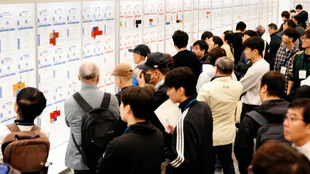 Korea’s Labor Share of GDP Hits Record Low Amid Semiconductor Boom

 littlefish and Halo Dot Partner to Replace Payment Terminals with SoftPOS

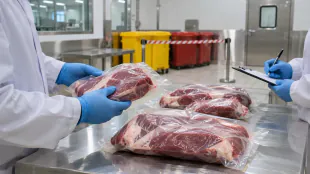 Kuwait inspectors destroy 115 kilograms of unverified meat in Farwaniya

 Egypt Accelerates Construction of 341km Sinai Railway Linking Arish and Taba

 John Schneider Admits Owes Millions in 'Dukes of Hazzard' Divorce Battle
The United States stands on edge as polls suggest one of the closest presidential races in history between former president Donald Trump and Vice President Kamala Harris.
Major polling outlets show the candidates virtually deadlocked.
In battleground states on election eve, polling aggregator FiveThirtyEight reported a 47.8 percent tie in Pennsylvania, near-identical numbers in Nevada, and mere one-point differences in Wisconsin, Michigan, and North Carolina.
But these razor-thin margins may not tell the whole story.
"I wonder, is it really this close?" asked W. Joseph Campbell, professor at American University in Washington.
His questions stems from pollsters' troubled track record in recent elections and a potential overreaction to past failures.
The political establishment was blindsided in 2016 when Trump won despite trailing in polls, while Joe Biden's 2020 victory margin proved much narrower than predicted.
In 2022, Republicans secured only a slim Congressional majority despite forecasts of a "red wave."
"The 2020 presidential election was collectively the worst for pollsters in forty years and an embarrassment for many," Campbell said.
Trump's emergence on the political scene largely explains these polling mishaps. His supporters were consistently undercounted in 2016 and 2020, prompting polling companies to adjust their methodologies.
- 'Traumatic for pollsters' -
History offers an intriguing parallel: In 1980, polls showed incumbent Jimmy Carter neck-and-neck with Ronald Reagan. Reagan ultimately won by 10 points, benefiting from a late surge while Carter lost support to a third-party candidate.
"I'm not saying that's going to be the model in 2024, but it is something to keep in mind," Campbell added.
Leading polling analysts openly acknowledged these challenges.
"No, you can't trust the polls... You can't safely assume that the candidate leading in the polls is going to win," wrote Nate Cohn, the New York Times chief political analyst and polling director.
Cohn explained that pollsters are working to correct systemic biases that emerged in the Trump era.
"It's hard to overstate how traumatic the 2016 and 2020 elections were for many pollsters. For some, another underestimate of Trump could be a major threat to their business and their livelihood."
However, he warned that while adjusting methods to better capture Trump voters, pollsters might now be underestimating Harris.
"On balance, these changes add up to a case for cautious optimism on better accuracy, but there are no guarantees," Cohn concluded.
Some experts suspect pollsters may be falling victim to groupthink, or "herding", adjusting results that deviate significantly from the consensus.
Professors Joshua Clinton and John Lapinski warned to NBC news: "State polls are showing not just an astonishingly tight race, but also an improbably tight race."
They suggest that "a risk-averse pollster who gets a 5-point margin in a race they think is tied may choose to 'adjust' the results to something closer to what other polls are showing, lest their outlier poll adversely affects their reputation..."
They said this raised a crucial question: "Is 2024 going to be as close as 2020 because our politics are stable, or do the polls in 2024 only look like the results of 2020 because of the decisions that state pollsters are making?"
A.O.Scott--AT