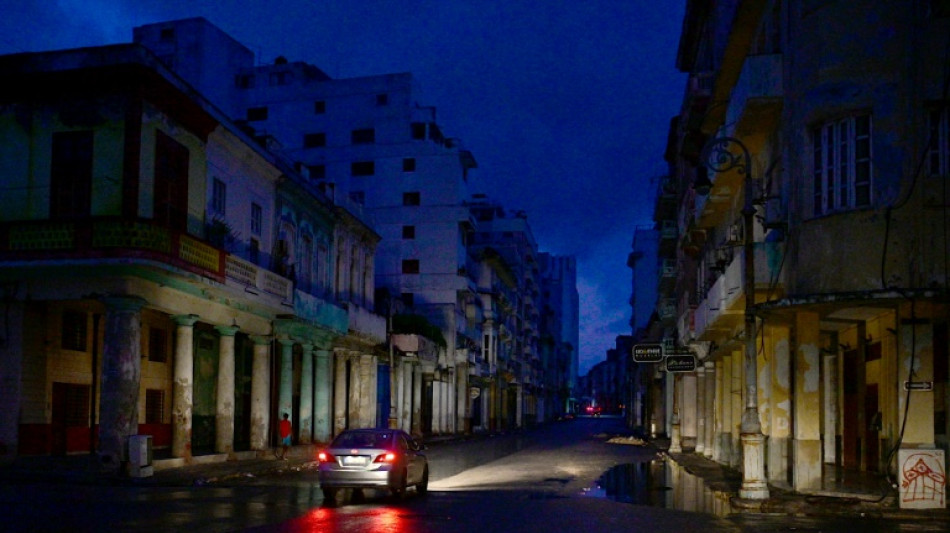
Cuban blackout highlights urgency of boosting renewables: experts / Photo: ADALBERTO ROQUE - AFP

 Fritz takes 250th hardcourt win in ATP Washington opener

 US singer D4vd to stand trial in killing of teenage girl

 Sudan RSF leader 'unleashes' fighters after army gains in Kordofan
 Ramsay-Peaty to learn lessons for LA after missing out on Commonwealth gold

 Spain wildfire burns campsite to ash, leaving tears and despair

 'Thrilled' 76ers sign James with eyes on NBA title run
 Brazil's Amazonia theaters earn UNESCO World Heritage status

 Fury of fire-ravaged French village at being 'sacrificed' for millionaires' peninsula

 Border crossings shut as heavy snow coats Argentine Andes
 Singer Carly Simon diagnosed with Parkinson's: statement

 Burnham meets Zelensky, pledges new 'Stone Cloak' for Ukrainian drones
 Newcastle winger Barnes signs long-term contract extension
 Iran, US hold fire as Saudi Arabia intercepts drones
 Chad says will withdraw from the International Criminal Court

 UK funeral director faces jail over bodies left 'on racks'
 German authorities criticised after Pride attack

 Flooding forces residents to flee homes by boat in Pakistan

 Polish village puts faith in Europe's tallest Virgin Mary statue

 Farmers help battle French forest inferno before new heatwave
 Heat, overcrowding, pushes Italian prison guard union to sue
 UK TV comedy star and naturalist Bill Oddie dies at 85

 AstraZeneca profit rises on strong cancer drug sales
 Olympic triathlon champ Beaugrand to sit out European athletics
 Spain races to contain blazes before temperatures rise

 Pirlo bitter over debate that cost him Italy coaching job
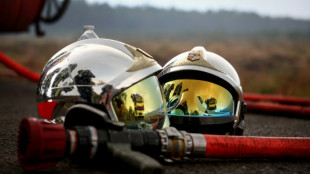
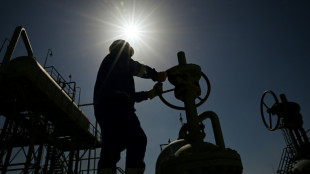
The massive blackout that plunged Cuba into darkness for four days highlighted the communist island's failure to end its near-total dependance on ageing oil-fired power plants by transitioning to renewables, experts say.
A decade after the Cuban government said it aimed to produce 24 percent of its electricity from renewables by 2030 and in so doing reduce its dependence on oil imports it can ill-afford, the Caribbean island has made little progress.
In 2022, Cuba got only 5 percent of its electricity from natural sources, the Environmental Defense Fund, a US-based NGO, noted in a recent report, a small increase from 2014, when renewables provided 4.3 percent of its power.
Analysts cite the nation's crumbling grid as one of the factors impeding Havana's progress on the renewables front, along with Cuba's ongoing economic crisis, the worst the country's faced since the fall of the Soviet Union -- Cuba's chief ally and financial backer -- in the early 1990s.
Cuban economist Pedro Monreal also blamed the country's energy crisis on chronic underinvestment in energy infrastructure compared with what he called "excessive" spending on "little-used" tourism facilities.
Between 2020 and June 2024, tourism accounted for 38.9 percent of government spending, compared with only 9.4 percent on electricity, gas and water, he wrote on the social network X.
With several of the island's power plants dating back over 40 years, breakdowns have become more frequent.
A drop in the supply of cheap oil from leftist ally Venezuela, which is in the throes of its own severe economic crisis, has further aggravated the situation, leaving Cuba struggling to supply fuel to power its plants.
The result has been months of blackouts lasting up to 20 hours per day, culminating in a nationwide blackout on October 18 after the failure of the country's biggest power plant, Antonio Guiteras, which in turn crashed the national grid.
- 'Very precarious situation' -
In 2022, 48 percent of the fuel used in several floating power plants rented from Turkey as well as in the country's vast network of generators was imported, according to EDF.
In the past, much of the oil came from Venezuela, but with Venezuela's own economy in tatters, Caracas "actually started moving it to China because they had to pay off a lot of the debt that they owed to that country," Glen Sartain, general manager of West Monroe, a US-based energy consultancy, told AFP.
"Moving those crude oil resources to different countries really has put Cuba in a very precarious position with regard to the electricity," he added.
The Cuban government blames former US president Donald Trump's ramping up of a US embargo in force since 1962 for worsening the energy crisis.
"The main cause is our failure to access international financial markets for fuel," Energy Minister Vicente de la O Levy said.
The government, which is facing growing social discontent over the power outages, is in talks with Vietnam, China and the European Union about boosting renewable energy, according to several sources close to the issue.
In May, President Miguel Diaz-Canel said the country had signed agreements with unnamed parties "that will allow us to reach more than 2,000 megawatts in under two years" from renewables -- equivalent to the peak supply announced by the authorities for October 28.
- Sun and sugarcane -
So far, Cuba's timid renewables push has centred mainly on solar power and biomass.
Nearly a million Chinese solar panels have been installed across the island of 11 million people, with another 3.6 million planned over the next two years, according to government figures.
"Cuba has abundant renewable sources," Rosell Guerra Campana, director of renewables in the energy ministry, argued in late 2023, citing, "the sun, agricultural and forest biomass."
The island had made significant progress in transforming sugar cane - the country's most iconic export -- into bioethanol, Sartain said.
In contrast, building wind farms and installing solar panels is "very expensive" for the cash-strapped island, he noted.
For EDF, solving Cuba's energy challenges "will not be no small task" as it will require "substantial investments of capital, which have been hard to come by given real and perceived risks of investing in Cuba."
G.P.Martin--AT