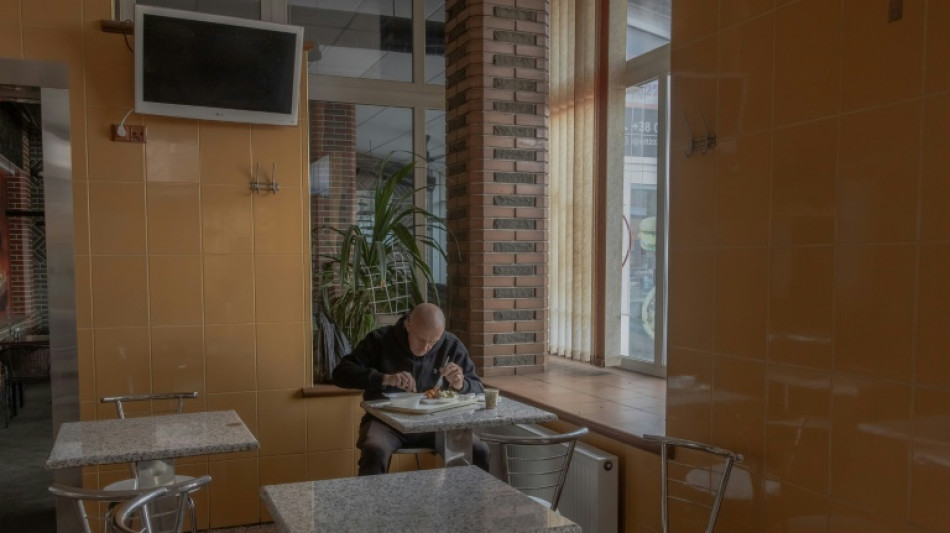
Frontline Ukraine cafe offers glimpse of normality as war rages / Photo: Roman PILIPEY - AFP

 Trump Signals Willingness to Work With Democrats After Midterm Defeat

 Qatar media bodies discuss support for humanitarian initiatives

 InterContinental Hotels Group PLC Announces Transaction in Own Shares - November 04

 No. 22 UCLA defeats No. 5 Arizona 84-75 despite Kharchenkov's 38 points

 Vessel operator seeks witnesses after Vancouver grounding

 US Air Force deploys F-16 fighters to remote Aleutian base for readiness drill

 Bezos grant helps Seattle nonprofit move thousands of families toward housing

 Shrini Srivastava joins crew of Varanasi-Delhi Vande Bharat Sleeper service

 Nearly Half of Australian Workers Overqualified, Survey Finds

 RBI eases export-declaration compliance for individual service exporters

 India proposes more import entry points for drugs and medical devices

 Derek Tierney Outlines Ten-Year Strategy for National Digital Health System

 NBC’s Steve Kornacki Reveals Tech Habits Ahead of Midterm Elections

 India and Israel oppose UN draft on regional conventional arms control

 BLS Polymers shares open 65.3% above IPO price

 Capital-markets shares rally as Motilal Oswal and Angel One lead gains

 Latino Voters Defy ICE Fears, Turn Out in Record Numbers for Midterms

 ITC shares rise as analysts anticipate gradual cigarette-business recovery

 Reliance rally puts historical one-year return pattern in focus

 Kuwait edges Oman 1-0 in veterans Gulf Cup in Doha

 Saudi Aramco quarterly profit climbs 34.6% amid elevated oil prices
Inside her cafe in the frontline Ukrainian city of Pokrovsk, Anna appeared calm as she poured a capuccino, filling the room with the scent of Java roast.
Russian troops are barely 10 kilometres (six miles) from the city but here, the sounds of war are drowned out by the whir of the coffee machine.
"Our defenders need us," the 35-year-old said, praising the many Ukrainian soldiers stationed in the city.
"They also want to have their good cup of hot coffee with a hot dog," she added.
Despite urgent calls to evacuate as Moscow's army closes in, thousands of people have chosen to stay in Pokrovsk, often elderly residents who have lived in the city their whole lives.
Anna's cafe, with its window display of candy-pink doughnuts, offers a brief semblance of normality to those who have remained.
It allows them to socialise and enjoy simple comforts while they try and deal with the trauma of living in a war zone.
Two weeks ago, the cafe's manager wanted to close the business, when Russian troops increased their bombardment of Pokrovsk, a key logistics hub, but Anna was adamant they remain open.
"We told him: 'Please, let us work!'" she said.
"The guys come by and say: 'Oh you're open. Thank God,'" she said of the soldiers.
- 'It's really scary' -
In the eastern Donetsk region, overstretched and outmanned Ukrainian soldiers are ceding dozens of towns and villages to Moscow as the Kremlin ramps up its offensive.
Pokrovsk was home to around 60,000 people before the February 2022 invasion.
By October this year only 12,000 were left, many having fled since the summer, when Russian attacks on the city intensified.
Yevgen, a customer, said places like Anna's were essential.
"Thanks to them for continuing to work," the 52-year-old told AFP, tea in one hand and cigarette in the other.
"You can at least come, socialise, even meet friends here," he added.
"Everyone has to have their own place like that."
Pokrovsk doesn't have many similar spots left.
When Anna spoke about the many shops that had closed, her eyes filled with tears.
"It was all full of life," she recalled. Now, "it's really scary".
Anna has already sent her family away and her time in Pokrovsk is also running out. She reckons the cafe only has two weeks left before the situation becomes too dangerous.
Pokrovsk already looks like a ghost town.
Public transport is no longer running and most residents do not stay outside for long.
- 'Our pizza makers left' -
Not far from Anna's cafe, one of the last restaurants still open advertises pizzas dripping with melted cheese.
But pizza is no longer on the menu, said Svitlana, 39, who works both in the kitchen and front of house.
Electricity has become a rare commodity, and the restaurant can no longer turn on its pizza oven.
"All our pizza makers left," she said, sighing.
Apart from that, "we have everything", she said, with pride. "Meat, first course, main course."
The restaurant also lacks running water, like almost the whole of Pokrovsk, so has to rely on a private well and bottled water.
But Svitlana is not giving up.
For local residents, many of whom have no electricity at all, her establishment with its generator makes it possible "to have a warm meal", she said.
- 'There's no way out' -
Under the glare of a white fluorescent light, Svitlana served dishes to her eager customers, while the fridge was stocked with sodas and a few non-alcoholic beers.
The sale of alcohol is banned in several regions close to the front line.
At one table, 60-year-old Igor had just finished his soup.
He used to eat at the canteen at the mine where he works but he told AFP it was destroyed by a Russian missile.
Despite the risks, he still comes to the restaurant, which he said allows him to feel "like a normal person".
At the till, Valery, a regular, was waiting for his order.
"We won't let them go anywhere," said the 71-year-old pensioner with gold teeth, glancing at Svitlana.
At this point, the waitresses are "combat veterans", he smiled.
But he knows this cannot last.
A native of Pokrovsk, he plans to leave but keeps putting it off.
"I don't want to go anywhere. I don't want to leave everything. But there's no way out."
P.A.Mendoza--AT