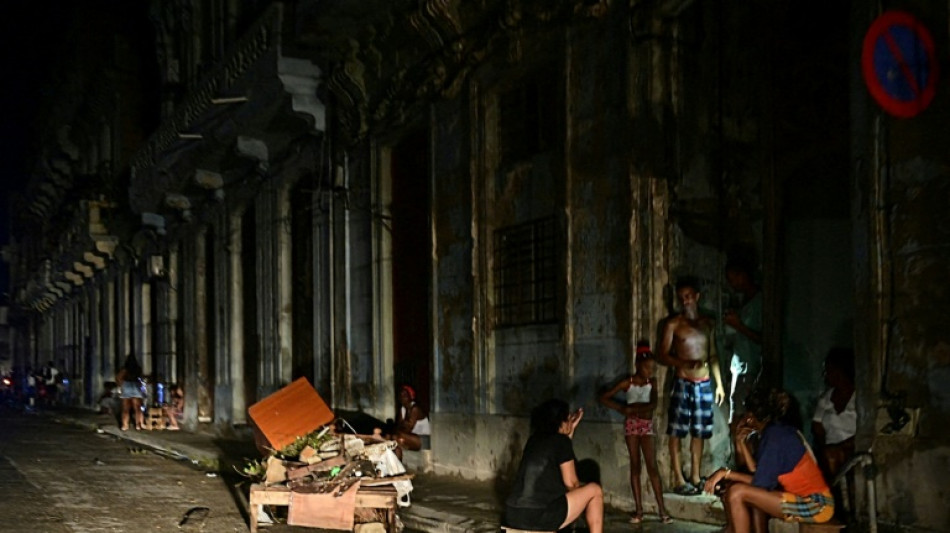
Storm Oscar hits eastern Cuba as island grapples with blackout / Photo: Adalberto ROQUE - AFP

 Trump Signals Willingness to Work With Democrats After Midterm Defeat

 Qatar media bodies discuss support for humanitarian initiatives

 InterContinental Hotels Group PLC Announces Transaction in Own Shares - November 04

 No. 22 UCLA defeats No. 5 Arizona 84-75 despite Kharchenkov's 38 points

 Vessel operator seeks witnesses after Vancouver grounding

 US Air Force deploys F-16 fighters to remote Aleutian base for readiness drill

 Bezos grant helps Seattle nonprofit move thousands of families toward housing

 Shrini Srivastava joins crew of Varanasi-Delhi Vande Bharat Sleeper service

 Nearly Half of Australian Workers Overqualified, Survey Finds

 RBI eases export-declaration compliance for individual service exporters

 India proposes more import entry points for drugs and medical devices

 Derek Tierney Outlines Ten-Year Strategy for National Digital Health System

 NBC’s Steve Kornacki Reveals Tech Habits Ahead of Midterm Elections

 India and Israel oppose UN draft on regional conventional arms control

 BLS Polymers shares open 65.3% above IPO price

 Capital-markets shares rally as Motilal Oswal and Angel One lead gains

 Latino Voters Defy ICE Fears, Turn Out in Record Numbers for Midterms

 ITC shares rise as analysts anticipate gradual cigarette-business recovery

 Reliance rally puts historical one-year return pattern in focus

 Kuwait edges Oman 1-0 in veterans Gulf Cup in Doha

 Saudi Aramco quarterly profit climbs 34.6% amid elevated oil prices
Tropical storm Oscar made landfall as a hurricane on Sunday evening in Cuba, where residents were preparing for more chaos and misery as the country grapples with a nearly nationwide power outage in its third day.
The arrival of Oscar, after the Friday collapse of Cuba's largest power plant crippled the whole national grid, piles pressure on a country already battling sky-high inflation and shortages of food, medicine, fuel and water.
Cuba's government said power would be restored to most of the country by Monday evening, with President Miguel Diaz-Canel warning his government would not tolerate public disturbances during the outage.
Oscar was a Category 1 storm when it made landfall in eastern Cuba at 5:50 pm local time (2150 GMT) on Sunday, the US National Hurricane Center said, before it weakened to become a tropical storm.
As of 11:00 pm local time, the storm was packing maximum sustained winds near 70 miles (110 kilometers) per hour, and it was expected to continue moving across eastern Cuba into Monday.
In Baracoa, waves reaching up to 13 feet (four meters) high hit the seafront. Roofs and the walls of houses were damaged, and electricity poles and trees felled, state television reported.
Energy and Mining Minister Vicente de la O Levy told reporters Sunday that electricity would be restored for most Cubans by Monday night, adding that "the last customer may receive service by Tuesday."
The power grid failed in a chain reaction Friday due to the unexpected shutdown of the biggest of the island's eight decrepit coal-fired power plants, according to the head of electricity supply at the energy ministry, Lazaro Guerra.
National electric utility UNE said it had managed to generate a minimal amount of electricity to get power plants restarted on Friday night, but by Saturday morning it was experiencing what official news outlet Cubadebate called "a new, total disconnection of the electrical grid."
Most neighborhoods in Havana remain dark, except for hotels and hospitals with emergency generators and the very few private homes with backup systems.
After three days of no power, "my fridge has defrosted and I'm afraid that everything will be spoiled," said Adismary Cuza, a 56-year-old worker.
"Cubans are tired of so much," added Serguei Castillo, 68.
- 'Energy emergency' -
The blackout followed weeks of power outages, lasting up to 20 hours a day in some provinces.
Prime Minister Manuel Marrero on Thursday declared an "energy emergency," suspending non-essential public services in order to prioritize electricity supply to homes.
And on Sunday, President Diaz-Canel warned that the government would act "severely" against anyone who attempted to "disturb public order" during the blackout.
That statement came as witnesses reported residents in several neighborhoods of Havana had taken to the streets on Sunday night to express their discontent.
There are "people in the street making noise with pots and pans, shouting 'Let us have the power back on,'" a resident of the Santo Suarez neighborhood told AFP.
Barricades of trash had also been erected in the Centro neighborhood, AFP photographers saw.
- Leaving Cuba -
President Diaz-Canel blamed the situation on Cuba's difficulties in acquiring fuel for its power plants, which he attributed to the tightening, during Donald Trump's presidency, of a six-decade-long US trade embargo.
Cuba is in the throes of its worst economic crisis since the collapse of key ally the Soviet Union in the early 1990s -- marked by soaring inflation and shortages of basic goods.
With no relief in sight, many Cubans have emigrated.
More than 700,000 entered the United States between January 2022 and August 2024, according to US officials.
While the authorities chiefly blame the US embargo, the island is also feeling the aftershocks of the Covid-19 pandemic battering its critical tourism sector, and of economic mismanagement.
To bolster its grid, Cuba has leased seven floating power plants from Turkish companies and also added many small diesel-powered generators.
In July 2021, blackouts sparked an unprecedented outpouring of public anger.
Thousands of Cubans took to the streets shouting, "We are hungry" and "Freedom!" in a rare challenge to the government.
One person was killed and dozens were injured in the protests. According to the Mexico-based human rights organization Justicia 11J, 600 people detained during the unrest remain in prison.
In 2022, the island also suffered months of daily, hours-long power outages, capped by a nationwide blackout caused by Hurricane Ian.
M.O.Allen--AT