War piles pressure on roads, services in crisis-hit Beirut / Photo: IBRAHIM AMRO - AFP

 Flooding forces residents to flee homes by boat in Pakistan

 Polish village puts faith in Europe's tallest Virgin Mary statue

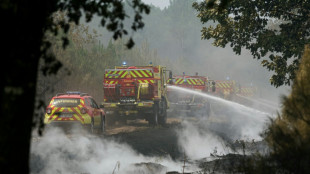 Farmers help battle French forest inferno before new heatwave
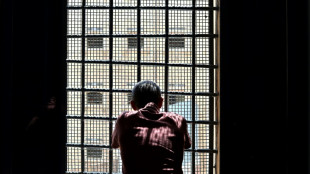 Heat, overcrowding, pushes Italian prison guard union to sue

 UK TV comedy star and naturalist Bill Oddie dies at 85

 AstraZeneca profit rises on strong cancer drug sales
 Olympic triathlon champ Beaugrand to sit out European athletics
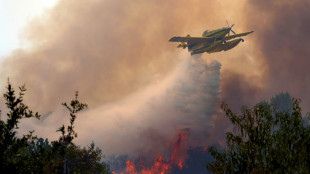 Spain races to contain blazes before temperatures rise

 Pirlo bitter over debate that cost him Italy coaching job
 Infantino slams World Cup critics for 'spreading hate'

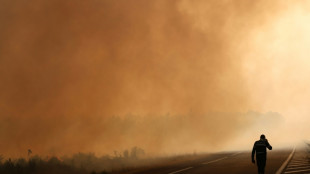 France, Spain race to contain 'monster' fires ahead of new heatwave

 Indonesia bank chief quits, adding uncertainty to struggling economy

 Vita Hydrokultur Opens £1.5m Series A Round to Scale Plant-Grown Skincare Ingredients

 Chinese chipmaker CXMT soars 500% on debut as AI fuels shortages

 Alonso says 'great signing' Rogers can rejuvenate Chelsea

 Oil prices sink as US-Iran pause fuels fresh Hormuz hopes

 Indonesia central bank chief steps down early: govt
 Gaza teen triumphs despite war, loss and displacement

 Whales at risk, hungry pelicans: Marine heat wave hits California

 With minutes to flee, Spain fire evacuees grab what they can

 Ioane, Holland back for All Blacks' blockbuster South Africa tour

 HyProMag USA to Establish Early Magnet Finishing Capability as Part of Phased Texas Hub Development

 International Battery Metals Announces CEO Transition
 Nextech3D.ai Provides Update on Acquisition of Remaining ARway Shares; Closing Expected in October 2026

 Orogen Royalties Announces Project, Partner and Royalty Update

The potholed streets of the Lebanese capital, sometimes plunged into darkness at night due to regular state power outages, were already busy before the displacement crisis sparked by the Israel-Hezbollah war.
Now, with tens of thousands of people having fled to Beirut in their cars and on their motorbikes due to Israeli bombardment, parts of the city and its roads have become overwhelmed.
"Before there were traffic problems" but now "Beirut has become a parking lot," said Jamal Adada, who has worked as a taxi driver for 25 years.
The streets have swelled with vehicles since families desperately fled the war that erupted in late September, with Israel bombing Hezbollah's once densely populated south Beirut bastion, as well as towns and villages across eastern and southern Lebanon.
"This road is supposed to have two lanes... but there's just one" now, Adada said, pointing to the line of cars parked down one side of Hamra street in Beirut's main commercial district.
Fadi Baghdadi, a member of the city's disaster management unit, said its already-ailing infrastructure is now "in a deplorable state" due to the crisis.
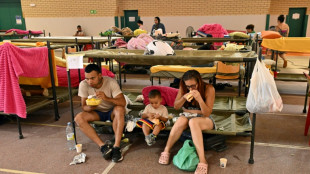
He said more than 55,000 people forced to flee their homes were staying in 169 shelters dotted around Beirut, adding that all the centres were now full.
Another estimated 200,000 people have found shelter in apartments and houses, he added.
Many have been taken in by friends and families, and other are paying rent in temporary apartments using their savings. Some have taken shelter in uninhabited buildings and flats.
- Overflowing dumpsters -
All these people "need water, (extra) rubbish is being dumped, the sewage is increasing", Baghdadi said, adding that the traffic was so bad that emergency vehicles were sometimes struggling to reach their destinations.
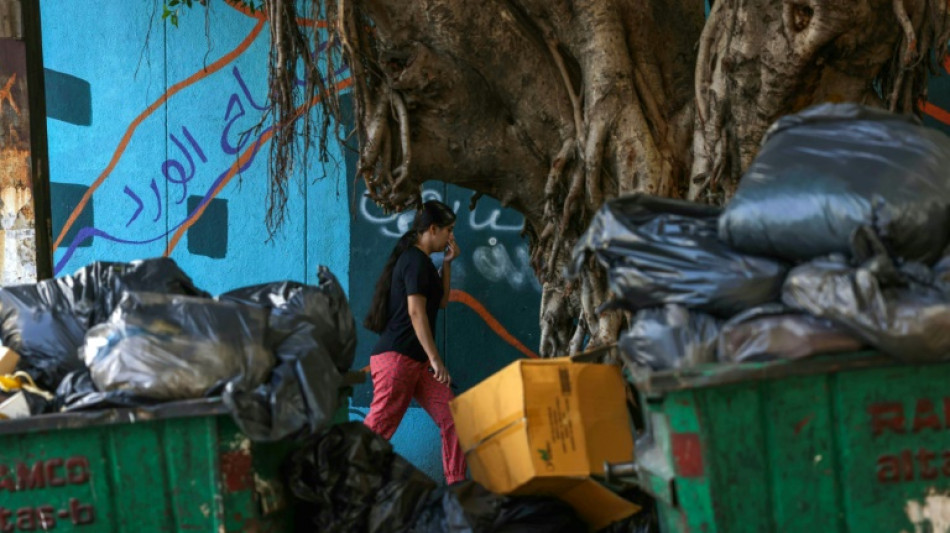
Trash has piled up around overflowing dumpsters, a worrying sight in a country that has been hit by past garbage crises and a five-year economic collapse that has left many living in poverty.
"The problem is not simply the increase in (the amount of) rubbish," said Walid Bou Saad, general manager of local waste management company RAMCO.
The sheer number of vehicles lining the roads has made work harder for rubbish collectors, he told AFP, with trucks unable to access narrower streets.
"Most people don't move their vehicles," he said, adding that rubbish that piles up in the meantime must be collected by hand, which "takes much more time".
AFP journalists saw rubbish collectors trying to clear large mounds of trash near overflowing dumpsters, with trucks sometimes struggling to manoeuvre around vehicles.
The crisis has also had an impact on water distribution, with the number of water trucks on the streets also increasing in recent weeks.
Beirut's public water network has long been patchy and most people rely on bottled water for drinking. Many use water trucked in for bathing, washing and cleaning.
The UN children's agency UNICEF told AFP last week it had provided 172,500 litres of bottled water and 2.2 million litres of trucked water to support displaced people in shelters nationwide.
- 'Extreme stress' -
Fouad El-Semelawy, whose company delivers water across Beirut, says demand for his services have spiked.
Before, "I was being asked for 20 deliveries", now it's more than 30 a day, said Semelawy, an Egyptian living in Lebanon for more than three decades.
Most of the deliveries are to schools-turned-shelters and other places hosting large numbers of displaced people, he said.
Nadim Farajalla, chief sustainability officer at the Lebanese American University, said Beirut's water network is "under extreme stress".
"Demand for water is extremely high," but "groundwater tables are very low" due to the lack of rain over the summer, he said.
The displaced themselves are on the frontlines of the crisis, with some finding shelter in long-abandoned buildings.
Such buildings are not always connected to the water grid, and their old wastewater pipes may run into storm-water drains instead of the sewage network, Farajalla said.
UNICEF said the majority of Beirut's wastewater network was "implemented decades ago", making it "susceptible to cracks and breaks due to the heavy shelling on the city".
More broadly, the large numbers of people now living in Beirut also means there is an increased chance of blockages and overflows, which could pose "a substantial public health risk", the agency said.
F.Wilson--AT