US firms brace for more tariffs as election approaches / Photo: Bryan R. SMITH - AFP/File

 Trump Signals Willingness to Work With Democrats After Midterm Defeat

 Qatar media bodies discuss support for humanitarian initiatives
 InterContinental Hotels Group PLC Announces Transaction in Own Shares - November 04

 No. 22 UCLA defeats No. 5 Arizona 84-75 despite Kharchenkov's 38 points

 Vessel operator seeks witnesses after Vancouver grounding

 US Air Force deploys F-16 fighters to remote Aleutian base for readiness drill

 Bezos grant helps Seattle nonprofit move thousands of families toward housing

 Shrini Srivastava joins crew of Varanasi-Delhi Vande Bharat Sleeper service

 Nearly Half of Australian Workers Overqualified, Survey Finds

 RBI eases export-declaration compliance for individual service exporters

 India proposes more import entry points for drugs and medical devices

 Derek Tierney Outlines Ten-Year Strategy for National Digital Health System

 NBC’s Steve Kornacki Reveals Tech Habits Ahead of Midterm Elections

 India and Israel oppose UN draft on regional conventional arms control

 BLS Polymers shares open 65.3% above IPO price

 Capital-markets shares rally as Motilal Oswal and Angel One lead gains

 Latino Voters Defy ICE Fears, Turn Out in Record Numbers for Midterms

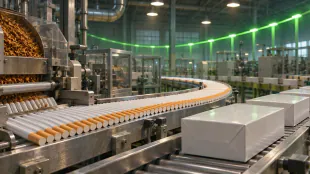 ITC shares rise as analysts anticipate gradual cigarette-business recovery

 Reliance rally puts historical one-year return pattern in focus
 Kuwait edges Oman 1-0 in veterans Gulf Cup in Doha

 Saudi Aramco quarterly profit climbs 34.6% amid elevated oil prices
From holding back investments to considering moving abroad, businesses in the United States are bracing for more economic turbulence as the presidential campaign kicks into high gear -- with fresh tariffs rolled out and promises of more.
Republican candidate Donald Trump has proposed at least a 10 percent tariff on imports and up to 60 percent on Chinese goods, intensifying levies he previously imposed on Beijing and others.
Democratic nominee Kamala Harris, meanwhile, serves an administration that largely maintained Trump's tariffs and last month finalized further hikes on $18 billion of Chinese products.
For Robert Actis, whose manufacturing business has been caught in the tariff maelstrom, the future has looked "clouded" over the past five years.
Under Trump, he faced tariffs on steel and aluminum and has struggled to find alternative suppliers for raw materials not produced in the country.
Fresh measures on the materials by the Biden-Harris administration have added to his woes.
"I would be very happy to buy from a US producer," said Actis, who imports wires to make stucco netting used in construction, "but there's no one willing to do it."
He has previously been granted tariff exemptions, but the annual applications are not always successful.
Additional costs are gradually being passed to homebuilders, he said.
- Millions in costs -
US tariffs weigh on many industries. The American Apparel & Footwear Association (AAFA) estimates retail prices have risen five percent to 10 percent annually since 2020.
"Initially, our members tried to eat some of those costs by eating into their profits," said Nate Herman, AAFA's senior vice president for policy.
But this has been tough.
It is unclear that tariffs on China have returned production to the United States, as Trump argues, and at least 14 US textile mills have closed in recent years, Herman told AFP.
Products like certain acrylic sweaters are not produced domestically either, requiring new machinery and trained workers, he said.
"The average age in domestic factories has gone into the 50s because we just can't find workers willing to work in those factories," Herman added.
"For a small company like us, it's millions of dollars" in added costs, said Ray Sharrah, CEO of lighting products maker Streamlight.
"We pay for it, our exporter helps, and ultimately the consumer (pays)," he said. "This is the problem with any tariff."
- 'Dampening effect' -
Uncertainty looms as November's election approaches, but businesses prefer predicability.
A September survey involving the Richmond and Atlanta Federal Reserve banks found that 30 percent of firms reported postponing, scaling down, delaying or canceling investment plans due to election uncertainty.
"It stops you from action. It stops you from investment, and it just generally creates a dampening effect on all economic development," Sharrah said.
With business partners, he has been trying to bring production of a major component back into the country -- but to no avail.
"When we spend time reshuffling the supply chain deck, that's time we don't spend growing our business," he said.
AAFA's Herman added that companies have been trying to find alternative sources but "with mixed results."
He believes businesses will ramp up imports ahead of expected tariff hikes, as happened in 2018 when Trump engaged in a trade war with Beijing.
"But again, if there's a global tariff imposed, then where do you go?" Herman said.
- Rhetoric or reality? -
Businesses expect tariffs to stay no matter who wins the election.
"If anything, it's probably going to go up," Actis said, adding that he has considered moving his business abroad.
But he believes it is hard to predict what a candidate like Trump might do, saying, "A lot of it is bombast."
Will Thomas of Colonial Metal Products said there is little businesses can do besides importing from diverse sources.
"It seems that the presidential candidates want to say things that invoke emotion," he said.
"However, if all these products aren't there, and you keep increasing the cost of the products, what happens? The costs go up, it's inflation."
At auto accessories importer Trim Illusion, President Colby McLaughlin is considering scaling up his business to boost margins.
As a voter, he is torn between perspectives as a business owner and a citizen.
"I'm not against a tariff, as long as there is a plan or support to help these companies bring the manufacturing back," he said.
"For me, that's the piece that I haven't heard."
F.Ramirez--AT