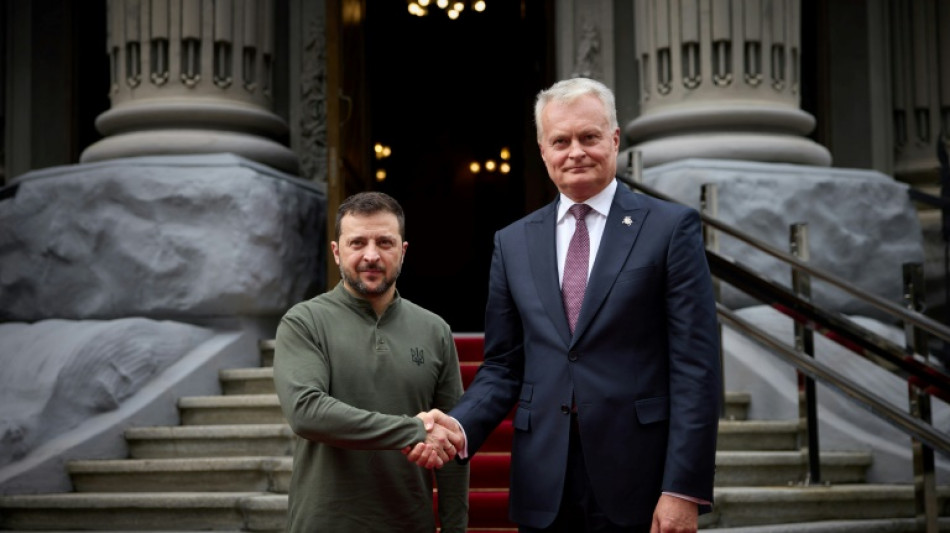
Centre-left set to win as pro-Ukraine Lithuania votes / Photo: HANDOUT - UKRAINIAN PRESIDENTIAL PRESS SERVICE/AFP

 Trump Signals Willingness to Work With Democrats After Midterm Defeat

 Qatar media bodies discuss support for humanitarian initiatives

 InterContinental Hotels Group PLC Announces Transaction in Own Shares - November 04

 No. 22 UCLA defeats No. 5 Arizona 84-75 despite Kharchenkov's 38 points

 Vessel operator seeks witnesses after Vancouver grounding

 US Air Force deploys F-16 fighters to remote Aleutian base for readiness drill

 Bezos grant helps Seattle nonprofit move thousands of families toward housing

 Shrini Srivastava joins crew of Varanasi-Delhi Vande Bharat Sleeper service

 Nearly Half of Australian Workers Overqualified, Survey Finds

 RBI eases export-declaration compliance for individual service exporters

 India proposes more import entry points for drugs and medical devices

 Derek Tierney Outlines Ten-Year Strategy for National Digital Health System

 NBC’s Steve Kornacki Reveals Tech Habits Ahead of Midterm Elections

 India and Israel oppose UN draft on regional conventional arms control

 BLS Polymers shares open 65.3% above IPO price

 Capital-markets shares rally as Motilal Oswal and Angel One lead gains

 Latino Voters Defy ICE Fears, Turn Out in Record Numbers for Midterms

 ITC shares rise as analysts anticipate gradual cigarette-business recovery

 Reliance rally puts historical one-year return pattern in focus

 Kuwait edges Oman 1-0 in veterans Gulf Cup in Doha

 Saudi Aramco quarterly profit climbs 34.6% amid elevated oil prices
Lithuanians vote Sunday in elections likely to deliver a change of government but keep much else the same, including the NATO and EU member's strong support for Ukraine and moves to bolster defence policy.
The vote is likely to see the centre-left replace the ruling conservatives, and could also see a new populist party whose leader is on trial for alleged anti-Semitic comments enter parliament for the first time.
The Baltic state of 2.8 million people has been warily eyeing perceived threats from neighbouring Russia, fearing it could be the next target if Moscow were to succeed in its ongoing war against Ukraine, which began in 2022.
Lithuania's main parties all agree on the need for strong support for Ukraine and to maintain or increase defence spending, currently around three percent of GDP.
Opinion polls show the Social Democratic Party, which last led the government from 2012 to 2016, ahead of 14 other parties and coalitions, with the latest survey predicting they will secure around 20 percent of the vote.
The ruling centre-right Homeland Union-Lithuanian Christian Democrats are expected to receive around 15 percent, with six or seven parties likely to cross the electoral threshold in total.
Despite the potential change in government, no major changes in foreign policy are anticipated.
"There is no real alternative to what Lithuania chose 20 years ago," political analyst Linas Kontrimas told AFP, referring to the country joining the European Union and North Atlantic Treaty Organization.
- President's backing -
President Gitanas Nauseda, who was re-elected for a second term this May with backing from the Social Democrats, is believed to support a change in government.
During the campaign, Nauseda -- who defeated current Prime Minister Ingrida Simonyte in the presidential vote -- met with leaders of all parliamentary parties except the conservatives, who have been in frequent conflict with him during their four-year term.
"I voted for the authorities to work together, not against each other, to solve the problems of the Lithuanian people," Nauseda said after casting an early vote, although he did not reveal his party preference.
Other opposition parties have united against the ruling conservatives.
"The time of the conservatives is over," Social Democratic leader Vilija Blinkeviciute, a former social security and labour minister, told reporters.
The Social Democrats have pledged to increase progressive taxation, tax luxury goods and provide additional funding for social services, as well as cut taxes for families with children, raise pensions and offer VAT relief on food.
- Anti-Semitism concern -
The election has also been marred by controversy surrounding a new populist party, Nemunas Dawn, led by former long-time MP Remigijus Zemaitaitis, which is expected to win parliamentary seats.
Last year, Zemaitaitis gave up his seat in parliament after facing criticism over alleged anti-Semitic comments.
He is currently on trial for incitement to hatred, although he denies the charge and insists he only criticised the Israeli government's policies in the Gaza Strip.
Most political parties have vowed to exclude Zemaitaitis from any ruling coalition.
"I think we are facing not only a geopolitical threat, but also an internal political threat," Foreign Minister Gabrielius Landsbergis, the leader of the conservatives, told reporters after he cast his early vote.
During World War II, 90 percent of Lithuania's Jewish population of approximately 208,000 were killed, often with the help of local collaborators, and the country's historical memory of the Holocaust remains a subject of intense debate.
The first round of Sunday's election will allocate roughly half of the 141 parliamentary seats through proportional representation, with the remaining seats to be decided in runoff rounds on October 27.
W.Moreno--AT