Lebanon device blasts: what we know about deadly attacks / Photo: Anwar AMRO - AFP

 Berlin police shoot dead chief suspect in deadly Islamist Pride attack

 'Fire calling the shots': France's blaze pushes crews to the brink

 Proud Antonelli salvages third as Mercedes limit damage

 Iran halts strikes as Trump gives space to talks
 Berlin mourns deadly Islamist Pride attack as police hunt for suspect

 Ex-president Hernandez returns to Honduras after Trump pardon

 Norris grabs first race win of season in Hungary

 Sooryavanshi's 81 steers India to Zimbabwe T20 series sweep
 Spanish wildfires intrude on holidaying foreign visitors
 France and Spain battle 'unpredictable' wildfires as 300,000 evacuated
 Taiwan's Chou Tien-chen snatches China Open title at age 36

 Ramsay-Peaty bounces back at Commonwealth Games after tearful outburst
 Iran says halts Middle East attacks as US holds fire
 Wildfires overwhelm exhausted firefighters in France and Spain
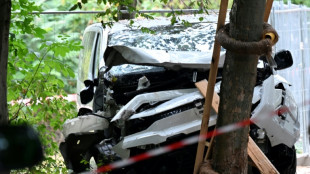 Urgent search for suspect after deadly attack near Berlin Pride

 D-Day beaches inscribed on UNESCO World Heritage List

 As Zimbabwe's raw lithium ban pays off, ambitions grow
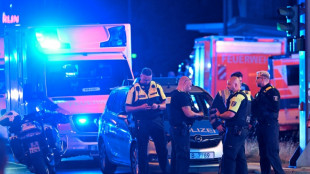 German manhunt after deadly car ramming near Berlin Gay Pride

 Vienna's venerable vineyard taverns forced to move with the times

 Thousands crowd shelters as wildfires force exodus in France, Spain

 Burnham offers sweeteners, hopeful vibes in first week as UK PM
 'The Odyssey': Christopher Nolan's latest cultural phenomenon

 'Star Trek' celebrates 60th anniversary at Comic-Con
 Jenny Shin Goes Wire-to-Wire to Capture ISPS HANDA Women's Scottish Open

 ELEKTROS Pursues Strategic Growth Through U.S. Lithium Partnerships and Customer-Focused EV Charging

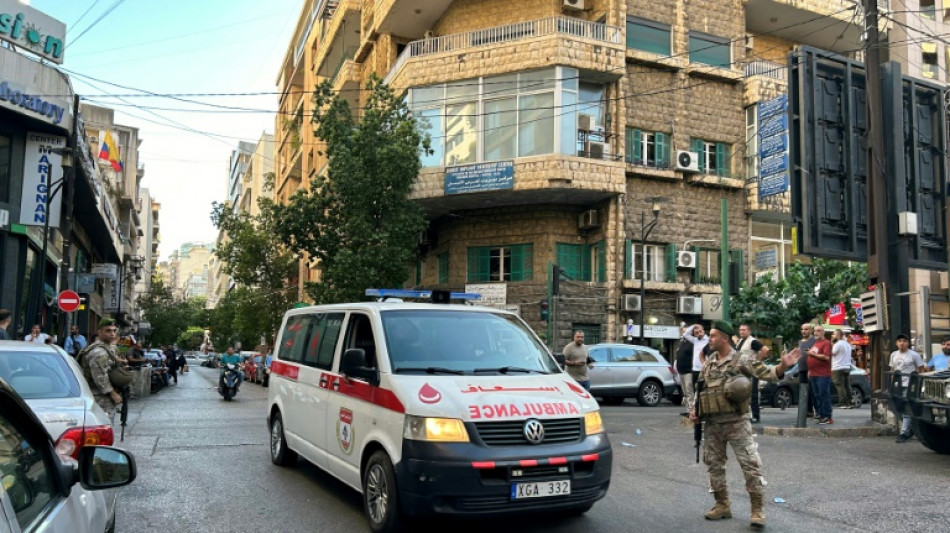
Hundreds of pagers and walkie-talkies used by Hezbollah exploded across Lebanon in unprecedented attacks this week, killing 32 people and wounding more than 3,000 others.
The blasts spanning two days have dealt a significant blow to the Iran-backed militant group, which blamed its arch-foe Israel for the attacks and vowed revenge.
Hezbollah leader Hassan Nasrallah is set to address the nation later Thursday, with many expected to watch his speech closely for any clues about the group's response.
Here is what we know about the attacks.
- What happened? -
On Tuesday hundreds of pagers carried by Hezbollah operatives exploded at almost the same time in the group's strongholds in south Beirut, eastern Lebanon and the country's south.
Those blasts killed at least 12 people, including two children, and wounded up to 2,800 others, the Lebanese health ministry said.
A second wave of explosions, this time involving walkie-talkies, swept through areas controlled by Hezbollah on Wednesday, killing 20 people and wounding more than 450.
AFPTV footage showed people running for cover when an explosion went off during a funeral in the afternoon for Hezbollah militants in south Beirut who were killed the day before in the pager blasts.
Lebanese Health Minister Firass Abiad had told broadcaster Al Jazeera that the second wave of blasts was deadlier because the walkie-talkies were bigger than the pagers.
Hezbollah already had concerns about the security of its communications after losing several key commanders to Israeli strikes in recent months.
But the nature of the attacks has instilled a sense of panic, not just in Hezbollah's strongholds but around Lebanon.
- What has Israel said? -
Israel has not commented on the operation.
Prior to the first wave of explosions, however, it had announced on Tuesday that it was expanding the aims in its war with Palestinian militant group Hamas to include securing the northern front with Lebanon.
Following Hamas's October 7 attack, Israel vowed to bring home scores of hostages taken by Palestinian militants and to crush Hamas.
Since October, Hamas ally Hezbollah has also traded almost daily fire with Israeli troops along the Lebanon-Israel border.
Not formally declared a war, the clashes on the Lebanon front have killed hundreds in Lebanon, mostly fighters, and dozens including soldiers on the Israeli side.
They have also forced tens of thousands of people on both sides to flee their homes.
Israeli Defence Minister Yoav Gallant said on Wednesday, in reference to his country's northern border with Lebanon: "The centre of gravity is moving northward."
- How were the attacks carried out? -
Part of the effectiveness of the attacks stems from its unusual nature, which saw Hezbollah's communication devices turned into weapons.
Analysts said explosives had likely been planted in the pagers before they were delivered to Hezbollah.
The preliminary findings of a Lebanese investigation found the pagers had been booby-trapped, a security official said.
"Data indicates the devices were pre-programmed to detonate and contained explosive materials planted next to the battery," the official said, requesting anonymity to discuss sensitive matters.
A source close to Hezbollah, asking not to be identified, said the pagers were "recently imported" and appeared to have been "sabotaged at source".
After The New York Times reported that the pagers that exploded on Wednesday had been ordered from Taiwanese manufacturer Gold Apollo, the company said they had been produced by its Hungarian partner BAC Consulting KFT.
A government spokesman in Budapest said the company was "a trading intermediary, with no manufacturing or operational site in Hungary".
Japanese firm Icom said it had stopped producing the model of walkie-talkies reportedly used in Wednesday's blasts in Lebanon around 10 years ago.
- Was Israel behind it? -
Some Israeli media outlets and experts said the pager attack bore the telltale signs of a job by Mossad, the spy agency famous for exploits like the early 1970s revenge killings of those behind the deaths of 11 Israeli athletes at the Munich Olympics.
John Hannah of the Jewish Institute for National Security of America described the pager attack as "another stunning display of Israeli intelligence prowess".
Hannah said Mossad has demonstrated "a repeated ability not only to deeply penetrate its worst adversaries' most sensitive networks, but then execute operations of exquisite precision and lethality whenever it chooses to do so".
The incident comes nearly a year after Hamas's October 7 attack, which dealt a huge blow to Israel's intelligence services for failing to have stopped it from happening.
N.Walker--AT