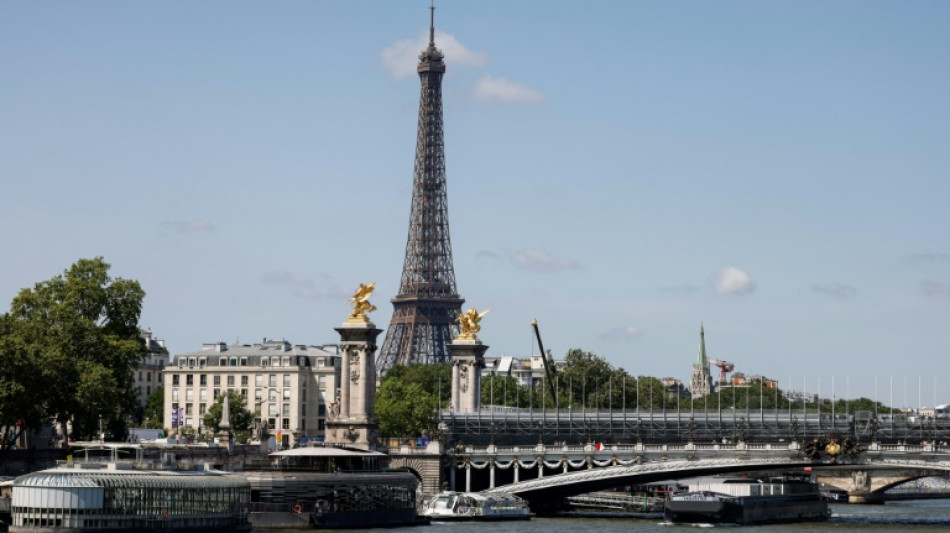
Snipers, divers and AI: securing the Paris Olympics opening ceremony / Photo: Ludovic MARIN - AFP

 Man City's Khusanov signs new five-year contract
 Atletico complete Lee signing from PSG

 After stellar World Cup, Cape Verde goalkeeper heading to Chile
 Six ancient Comoros medinas join UNESCO's heritage list
 Cameroon leader's absence sparks debate over government inaction
 'Betrayal': The young victims of India's exam leak scandal
 'The Odyssey' sparks IMAX stampede -- and a backlash
 Houthis vow retaliation for Saudi strikes as conflict deepens
 SpaceX carries out successful Starship test flight, first since going public
 Meta quits clean energy pledge amid gas-powered data center push

 Turk's term as UN human rights chief extended despite US warnings
 US measles outbreak the worst in 35 years: official data
 Trump weighs harder Iran strikes as conflict widens

 Scotland's Scott splits Australian swim dominance at Commonwealths
 Paramount agrees to delay Warner Bros. merger
 Mixed day for global equities as oil prices retreat
 Trump says hasn't decided on big Iran strikes, Tehran getting 'serious'
 Karim Khan: Forensic ICC prosecutor with a tarnished legacy
 Sinner, Djokovic withdraw from Montreal Masters
 Ferrari boss cautious after Hamilton and Leclerc shine in Hungary
 Pogacar breaks Alpe d'Huez record to extend Tour de France lead

 Fury stops Wach in Thailand to close in on Joshua fight
 US court rules abortion pill restrictions 'unlawful'
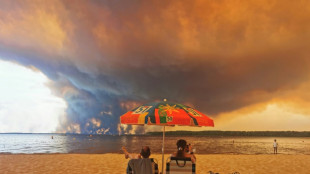 Tens of thousands flee forest infernos in France and Spain

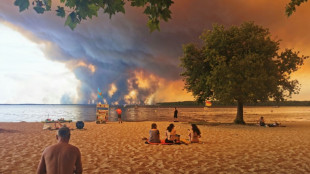 Many thousands flee burning France holiday haven by road and sea
On the water, perched on rooftops and operating AI-augmented cameras, French security forces will lock down central Paris during the opening ceremony of the Olympics on Friday aiming to prevent an incident that would ruin the biggest show on earth.
The figures tell only part of the story of the colossal effort made to protect the river parade along the Seine, the first time a Summer Olympics has started outside a stadium.
About 45,000 police and paramilitary officers will be on duty, along with 10,000 soldiers and 20,000 private security guards.
The total area that needs securing measures more than six kilometres (four miles) along the Seine and will contain around 300,000 ticketed spectators, as well as hundreds of thousands of other residents and tourists in overlooking buildings.
A no-fly zone 150 kilometres wide around Paris will be enforced an hour before the ceremony starts at 7:30 pm (1730 GMT), grounding or diverting all aviation at one of Europe's busiest airport hubs.
"This opening ceremony is the most extraordinary thing a country can do," Interior Minister Gerald Darmanin told BFM television on Wednesday, adding: "As you know, in the current context of geopolitics and terrorism, it's an enormous challenge."
The amount of specialised equipment and personnel illustrates the difficulty of securing such a risky environment -- an open-air site with fast-flowing water, overlooked by hundreds of buildings.
All at a time when France is on its maximum alert for terror attacks.
"Security of 100 percent does not exist," Frederic Pechenard, a former head of the French police force, told AFP. "The bigger and more difficult and complex a site is, the higher the risks are."
- Fortress -
Police snipers are set to be positioned on every high point along the route, scanning for potential shooters. An assassination attempt on US presidential candidate Donald Trump on July 14 helped focus minds.
Navy boats with divers and sonar have been scanning the depths of the water for explosives or infiltration attempts, while all of the 85 boats in the parade and others moored along the route have been screened by sniffer dogs and bomb disposal experts.
River traffic will be stopped in both directions, with barriers installed and nets that can be dropped to the bottom of the waterway if necessary.
The Seine concept for the opening ceremony was at first resisted by some senior security officials and described by renowned French criminologist Alain Bauer as "criminal madness" in 2022.
The initial plans -- of having up to a million spectators by the river -- have though since been scaled back.
"The risks have not changed and have become worse because of the war in Ukraine, the situation in Israel and Gaza as well as social, environmental and political tensions in France," Bauer told AFP.
"It's a beautiful idea but it has a cost and considerable consequences."
Since last week, central Paris has been turned into a fortress, with metal barriers sealing off both banks of the Seine. Only residents and people with hotel bookings are allowed into the high-security area.
The French army is set to be in charge of anti-drone operations, using the country's most sophisticated electronic warfare technology.
"Drones are now a real risk and that's why measures have been taken," said Jean-Michel Fauvergue, former head of the police commando unit RAID.
Drones operated by security forces will also be a key tool to monitor suspicious activity, while AI-augmented cameras -- new technology being deployed controversially in France for the first time -- will scan the crowds.
- Tensions -
France has been a frequent target of Islamist terror groups over the last decade, with attacks on the Charlie Hebdo magazine, the Bataclan concert hall and the national stadium, which will used for athletics during the Games.
An offshoot of the Islamic State group in Afghanistan was said by President Emmanuel Macron to be planning attacks against France in March and IS-affiliated social media accounts have issued regular threats.
Four suspects believed to be plotting attacks against the Games have been arrested, Darmanin said on Wednesday.
The international context, particularly the war in Gaza, have heightened fears.
"If you look at the history of Islamist terror attacks, you see that every time there is tension, a foreign war, then there are consequences in our country," Pechenard, the former head of police, said.
Fauvergue said French forces could be counted on and recalled being head of the police commando unit during the Euro 2016 football tournament, hosted by France, as the continent faced a series of suicide bombings.
"The threat was high but the Euros were maintained and we didn't have an attack," he said.
W.Morales--AT