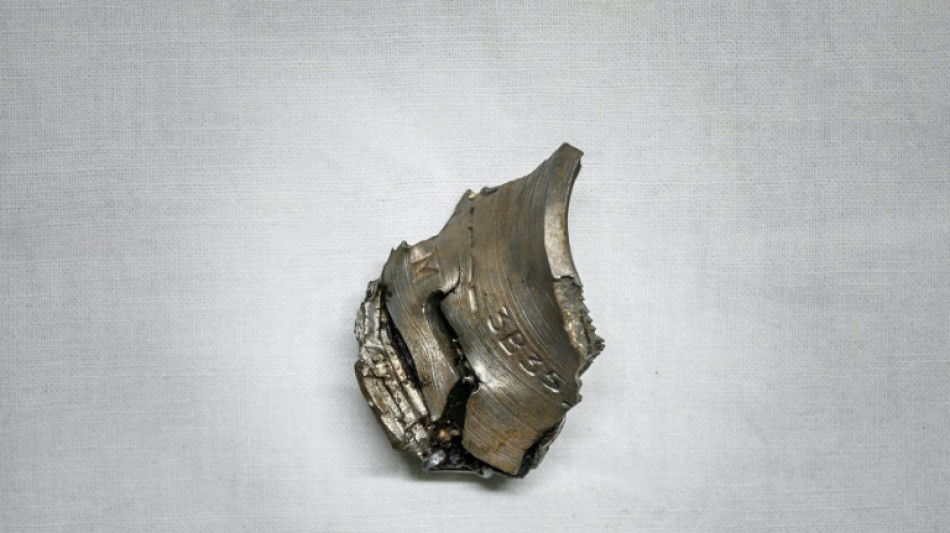
Shrapnel: The terrible fragments of war / Photo: Ed JONES - AFP

 France far right expels policeman member over racist remarks

 Pakistan collapse to 133 all out against England in 3rd Test

 Heat forces French champagne makers to stiffen their drink
 Iran war drives oil prices to $100 per barrel as Tehran strikes ships
 Pakistan collapse to 100-7 against England in 3rd Test

 Workers, migrants focus of documentaries by Oscar winners at Venice

 Nepal seeks survivors two weeks after deadly floods

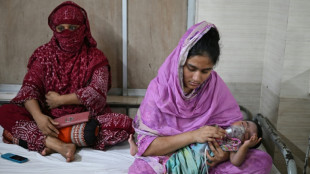 Bangladesh measles crisis kills more than 1,000 children
 Pakistan collapse to 26-4 against England in 3rd Test

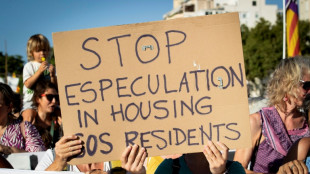 EU helps cities tighten screws on Airbnb, holiday rentals
 Courtois to put Belgium career on hold

 RavenDB Launches Quill to Bring Production AI Agents to Enterprise SQL Systems, No Migration Required

 Affleck family affair at Venice for Casey's latest film 'Company'
 Yemen rebels report fresh Saudi strikes as conflict deepens

 'They're playing with our lives': AI researcher quits Anthropic
 Series finale of 'Babylon Berlin' offers dark mirror for today's Germany
 Zara owner Inditex boosts profits as sales grow across board

 Alcaraz out in latest US Open finish, Sabalenka through on marathon day

 Brent breaks $100 on Mideast flare-up, fanning inflation fears

 South Korea video game tycoon to pay record $1.5 bn in divorce
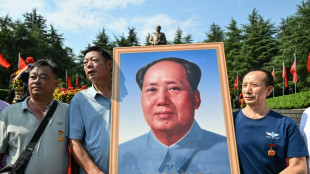 'Long live Chairman Mao': Supporters pay respects to founder of Communist China
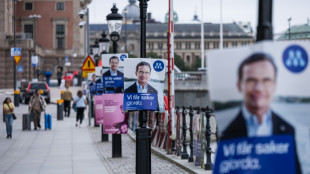 Sweden immigration restrictions spark healthcare concerns
 EU to help cities tighten screws on Airbnb, holiday rentals
 'Our year': Kane and Bayern primed for Champions League tilt
 Australian World Cup star Volpato fined over positive cocaine test
They differ in size and colour and some still have skin attached: the shrapnel extracted from the wounded at a military hospital in southern Ukraine are the cold reality of the country's war.
In this closely guarded building in the city of Zaporizhzhia, the windows are covered in tarpaulin to avoid drawing Russian fire and to protect patients if the windows shatter from a blast.
There is therefore near total darkness as surgeons come out of an operating theatre with their metallic haul -- two jam jars filled with the shrapnel taken out of soldiers and civilians undergoing treatment at the facility.
Some fragments are bottle green, others grey or brown.
"That's from a mine," said one of the doctors, Yury, pointing to a shard four or five centimetres long.
Every scrap of metal has a story.
Pointing to a particularly sharp shard, Yury said: "We took that one out of a leg. The soldier was in a stable condition and the operation was a success".
On his phone, he showed an X-ray of the wound as it was before the operation. The piece of metal stands out whiter than the muscle in which it was embedded.
Other X-rays show a bullet lodged in someone's jaw or a piece of shrapnel lodged in a pelvis.
- 'We basically live here' -
"Our men are very strong. A large majority of the ones that we treat here, even those who are seriously injured, want to return to the frontline with their friends to support them," Yury said.
An orthopaedic surgeon, Farad Ali-Shakh, said that none of the wounded had died at the hospital and there had only been two limb amputations.
"Their injuries were putting their life in danger," he said.
He too showed a picture on his phone of a blown-off foot, attached to the rest of the body by some skin.
"We managed to restore the vessels and then fix the extremities," said the surgeon.
Ali-Shakh said he is working 20 hours a day.
"We basically live here," he said. "Sometimes I get home at 2 or 3 in the morning and then I come back".
Since the start of Russia's invasion on February 24, the hospital has treated more than 1,000 wounded, including both military and civilians, according to hospital director Viktor Pysanko.
The conflict that began in 2014 with Russia-backed separatists in eastern Ukraine had been "low intensity" and wounds were relatively simple.
The injuries are now much more complex and reflect the range of ordnance being used, Pysanko said, angrily branding Russian soldiers "animals".
S.Jackson--AT