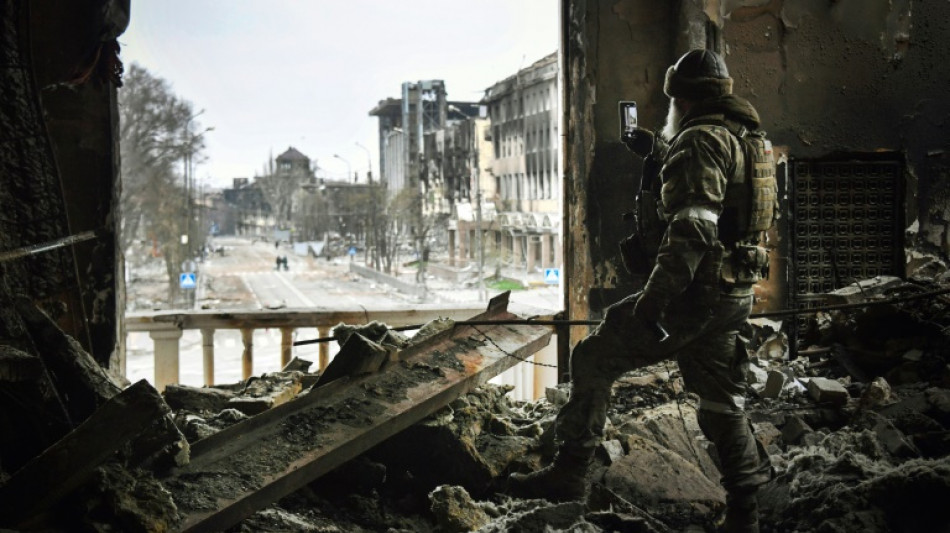
War in Ukraine: From invasion to battle for Donbas / Photo: Alexander NEMENOV - AFP

 World Cup warning with Sweden star Isak 'getting stronger and stronger'
 Tunisia coach says 'I am no wizard' after World Cup SOS call

 USA beat Australia 2-0 to reach World Cup knockouts

 Qatar-gifted Air Force One replacement unveiled

 Niemann fires 65 at US Open after upsetting two-shot penalty
 Spain's Yamal says 'too soon' to play full match at World Cup
 Neymar? He is working remotely at the World Cup, jokes Lula
 Three-time Stanley Cup champion Toews retires

 Japan wary of fired up and wounded Tunisia for World Cup landmark game

 'Like a fridge': France cave homes offer lucky few respite from heat
 Hormuz ship traffic climbs after war deal: trackers

 Kane hails World Cup 'Wonderwall' singalong as England highlight
 Sabalenka roars back to make Berlin WTA semis
 Narvaez takes Swiss Tour third stage after 100km breakaway
 Europe swelters as temperature records tumble

 French mountain lodges worry over strained water supply

 Heatwave hits more than one in two people in France
 Zverev sets up Fritz semi at Halle Open
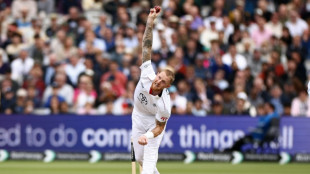
 Clark stumbles but still leads by two at US Open

 Ogura pulls off stunner to top Czech MotoGP practices
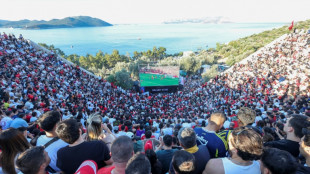 Turkey bars public World Cup screening over university entrance exam

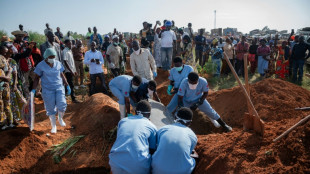 Ebola spreading 'fast' in DR Congo, warns WHO
 The Sun may not engulf Earth after all, scientists say

 Russia signals slower rate cuts amid high Ukraine war spending

 Henry strikes as New Zealand lead England by 100 runs in 2nd Test
Russia invaded Ukraine in the early hours of February 24, setting off the worst conflict in Europe in decades.
As the second phase of Russia's offensive gets underway in the east, we look back on nearly two months of fighting that has killed thousands of civilians, sparked accusations of Russian war crimes and even genocide, and led more than 4.9 million Ukrainians to flee their country.
- February 24: Russia invades -
Russian President Vladimir Putin announces a "special military operation" to "demilitarise" and "de-Nazify" the former Soviet state and protect Russian speakers there.
A full-scale invasion starts with air and missile strikes on several cities. Ukrainian President Volodymyr Zelensky pledges to stay in Kyiv to lead the resistance.
- February 26: Massive sanctions -
The West adopts unprecedented sanctions against Russia and military aid for Ukraine.
A number of Russian banks are banished from the SWIFT interbank system.
Air spaces are closed to Russian aircraft and Russia is kicked out of sporting and cultural events.
- February 27: Nuclear threat -
With his troops quickly getting bogged down, Putin puts Russia's nuclear forces on high alert, citing "aggressive" statements by NATO members and the financial sanctions.
- February 28: First talks -
During the first peace talks between Kyiv and Moscow, Russia demands the recognition of its sovereignty over Crimea, the "demilitarisation" and "de-Nazification" of Ukraine and the guarantee of its neutrality.
Zelensky appeals for "immediate" EU membership, eliciting a cool response from Brussels.
- March 3: Kherson falls -
Russian troops gain ground in the south, where they besiege the strategic port of Mariupol, seeking to link up territory held by pro-Russian rebels with the Russian-annexed Crimea.
On March 3, the southern city of Kherson becomes the first to fall.
- March 4: Media crackdown -
Russia enacts a new law severely punishing "fake news" about its "special military operation" in Ukraine.
NATO rejects Kyiv's pleas for a no-fly zone over Ukraine.
- March 8: First evacuations -
On March 8, the first humanitarian corridors are set up, allowing thousands of civilians to escape the northeastern city of Sumy and Kyiv suburbs.
- March 8: Oil embargo -
In a bid to starve Moscow's war chest, the US announces a ban on imports of Russian oil and gas. EU members take a more gradual approach, vowing to dramatically reduce their dependency on Russian gas but not turn off the tap altogether.
- March 16: Zelensky lobbies Congress -
Zelensky tells the US Congress to "remember Pearl Harbor" as he lobbies one Western parliament after another for more help to fight off Russian forces.
- March 17: 'War criminal' Putin -
Biden brands Putin a "war criminal" following the bombing of a theatre in Mariupol where families were sheltering.
- March 18: Hypersonic weapons -
Russia says it has used hypersonic missiles for the first time in Ukraine to destroy a weapons storage site.
- March 25: Russia reviews goals -
As the offensive in northern Ukraine get bogged down the Russian army announces it will focus on the "liberation" of the breakaway Donbas region in the east.
- March 26: Putin must go, says Biden -
During a visit to Warsaw, Biden says Putin is a "butcher" who "cannot remain in power" but later stresses he is not seeking regime change.
- March 29: Progress at talks -
Russia says it will "radically" reduce its military activity around Kyiv and the northern city of Chernigiv after both sides hail progress in peace talks held in Istanbul. Russian forces begin redeploying.
- April 2-3: Horror in Bucha -
After the Russian withdrawal, dozens of bodies in civilian clothes are found scattered on the street or buried in shallow graves in the Kyiv suburb of Bucha. Some of the dead have their hands tied behind their backs and some bear signs of torture.
Accusations of Russian war crimes mount but Moscow claims the images are fakes.
- April 8: Train station carnage -
At least 57 people are killed in a rocket attack on a train station in the eastern city of Kramatorsk that is being used for civilian evacuations.
- April 12: Biden speaks of 'genocide' -
Biden accuses Russia of "genocide" in Ukraine, saying Putin appears intent on "trying to wipe out the idea of even being able to be a Ukrainian". Canadian Prime Minister Justin Trudeau echoes the claim.
- April 13: Last stand in Mariupol -
As Russia closes in on Mariupol, it says more than a thousand Ukrainian troops in the city have surrendered. Ukraine vows to fight "to the end" for control of the city, which has become a symbol of Ukrainian resistance.
- April 14: Flagship sinks -
Russia's guided missile cruiser Moskva, a linchpin of its offensive in southern and central Ukraine, sinks in the Black Sea after being damaged by a fire. Ukraine claims its missiles took out the vessel.
- April 18: Battle for Donbas -
Russia carries out dozens of air strikes across eastern Ukraine in what Zelensky presents as the start of the "battle for the Donbas".
N.Mitchell--AT