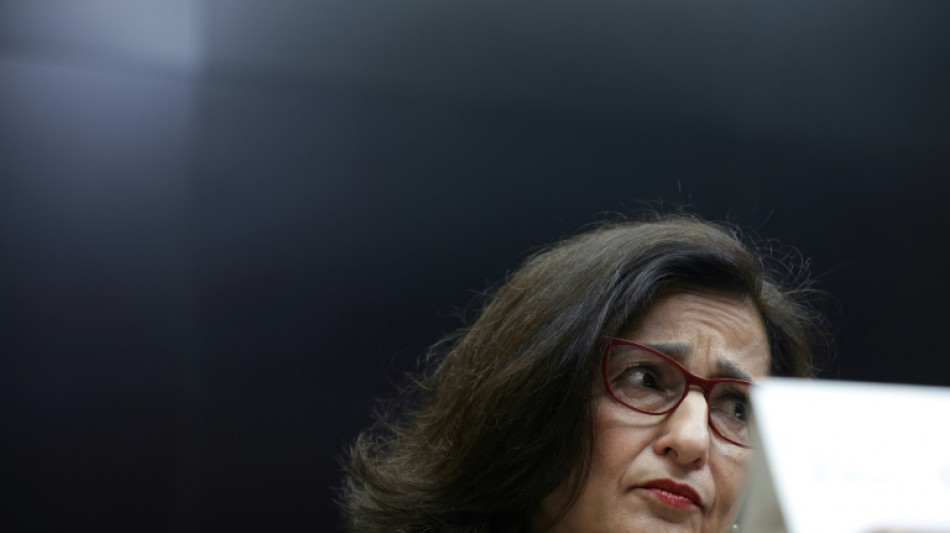
Minouche Shafik: From renowned economist to embattled Columbia president / Photo: ALEX WONG - GETTY IMAGES NORTH AMERICA/AFP

 Surrounded by militias, Sudanese fear endless cycle of war

 Commonwealth Games 'where champions are made' despite slimmed down model, argues president
 Trump family project in Albania has already caused 'irreparable' damage: NGOs

 Bollywood blast master keeps it real with fire and fury

 Tearful fights, edible offerings: A glimpse into the Maradona trial
 What's the deal with peptides? The hyped market under US review
 Tesla shares fall as Musk touts ambitious -- and costly -- plans
 Houthis claim Red Sea tanker strikes as US hits Iran again

 Wildfires ravage parts of southern France, Italy and Spain
 Alphabet beats expectations in second quarter, cloud revenue nearly doubles
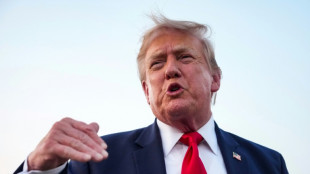 Trump threatens Iran infrastructure, Tehran vows 'eye for eye'

 US teen withdraws lawsuit against Meta over social media addiction

 Lebanon PM says Beirut working for 'complete Israeli withdrawal'
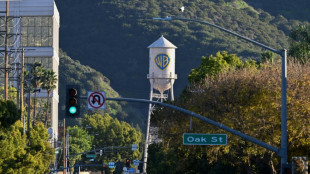 EU conditionally clears Paramount bid for Warner Bros.

 Philipsen snaps 'horrible' drought with Tour de France stage 17 victory

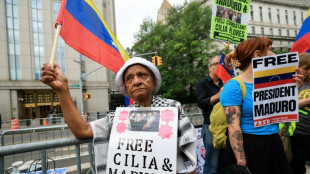 US trial of Venezuela's Maduro set for June 2027

 New UK PM Burnham gets early boost as inflation dips

 Samsung launches new, more expensive foldable smartphones

 Philipsen ends 'horrible' drought with Tour de France 17th stage victory
 Hungary's Orban says graft case is 'pretext' to target his party
 South African tycoon Motsepe rules out presidential bid

 Trump threatens Iran bridges, power as payback for Hormuz attacks

 Germany's Merz replaces leader ousted over surrogacy row
 CAF chief Motsepe backs Infantino despite criticism

 Evacuees from Spain's wildfire struggle with scale of devastation
An esteemed economist, Minouche Shafik was thrilled to become president of one of America's most prestigious colleges.
But her name will now be tied with dramatic images of New York police arresting pro-Palestinian students at the Columbia University campus.
Less than a year after taking up the role, 61-year-old Shafik finds herself at the heart of a storm over her handling of the protests that spread to other colleges in the United States.
Twice in two weeks, she asked the police to intervene -- first to disperse an encampment on the university grounds and then, on Tuesday, to oust students who had barricaded themselves inside a building on campus.
Spectacular images of helmeted police officers encircling the campus and detaining students were making the rounds overnight, prompting criticism for Shafik, particularly from teachers.
Even before Tuesday, Shafik was under fire on two main fronts.
Republicans have demanded Shafik resign, arguing that she failed to protect Jewish students on her campus.
Meanwhile pro-Palestinian students accuse her of muzzling their protests and of escalating the situation by calling police in to manage the demonstrations.
- 'Profound effect' -
Born in Alexandria in Egypt, Nemat "Minouche" Shafik was four years old when her family fled the country and moved to the United States.
"I was born into a comfortable family in a society marked by severe inequality," the British-American told the Columbia Magazine in autumn 2023.
But she said "my family's prospects changed dramatically in the mid-1960s, when most of our land and property was seized by the Egyptian state as part of Nasser's nationalization program."
Shafik found herself an immigrant in the American South "during the desegregation era, amid explosive racial tensions," an experience that had a "profound effect," she said.
A graduate of prestigious universities in the United States and the United Kingdom, Shafik went on to occupy various senior posts at the World Bank, the International Monetary Fund and the Bank of England, before being named head of the London School of Economics.
Shafik is also a member of the House of Lords, the second chamber of the UK parliament, a role from which she is currently on leave.
- 'Crucial role' -
Columbia University had already been embroiled in debates, including about the costs of higher education, before Shafik became president last year, making her the first woman to hold the post.
But the war in Gaza, triggered by Hamas's attack on Israel in October, began a course of turmoil for the college.
Shafik saw the resignations of the presidents of two other universities -- including Harvard -- brought about over claims they were not doing enough to combat anti-Semitism on their campuses.
On April 17, it was Shafik's turn to be questioned by Congress on the issue. She firmly defended her actions and condemned anti-Semitism "that is so pervasive today."
That same day, Columbia students set up tents on the campus lawns to demand an end to the war in Gaza and that their university cut all ties with Israel.
Shafik called on New York's police a day later to help disperse the protesters, leading to more than 100 students being arrested.
That started a high-profile standoff that continued into this week.
In the Columbia Magazine, Shafik said she decided to become president of the "extraordinary institution" because it was the "most cosmopolitan, outward-looking" of America's top universities.
"And at a time when universities have a crucial role to play in addressing societal problems, I think that Columbia is positioned to be a tremendous force for positive change, in New York City and around the world," she said.
Her students, on both sides of the fence, seem to have taken her at her word.
L.Adams--AT