The Moroccans who fought for France and settled in Vietnam / Photo: Nhac NGUYEN - AFP

 Surrounded by militias, Sudanese fear endless cycle of war

 Commonwealth Games 'where champions are made' despite slimmed down model, argues president
 Trump family project in Albania has already caused 'irreparable' damage: NGOs

 Bollywood blast master keeps it real with fire and fury

 Tearful fights, edible offerings: A glimpse into the Maradona trial

 What's the deal with peptides? The hyped market under US review

 Tesla shares fall as Musk touts ambitious -- and costly -- plans

 Houthis claim Red Sea tanker strikes as US hits Iran again

 Wildfires ravage parts of southern France, Italy and Spain

 Alphabet beats expectations in second quarter, cloud revenue nearly doubles

 Trump threatens Iran infrastructure, Tehran vows 'eye for eye'

 US teen withdraws lawsuit against Meta over social media addiction

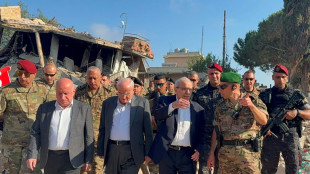 Lebanon PM says Beirut working for 'complete Israeli withdrawal'

 EU conditionally clears Paramount bid for Warner Bros.

 Philipsen snaps 'horrible' drought with Tour de France stage 17 victory

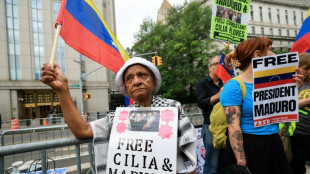 US trial of Venezuela's Maduro set for June 2027

 New UK PM Burnham gets early boost as inflation dips

 Samsung launches new, more expensive foldable smartphones

 Philipsen ends 'horrible' drought with Tour de France 17th stage victory

 Hungary's Orban says graft case is 'pretext' to target his party

 South African tycoon Motsepe rules out presidential bid

 Trump threatens Iran bridges, power as payback for Hormuz attacks

 Germany's Merz replaces leader ousted over surrogacy row

 CAF chief Motsepe backs Infantino despite criticism

 Evacuees from Spain's wildfire struggle with scale of devastation

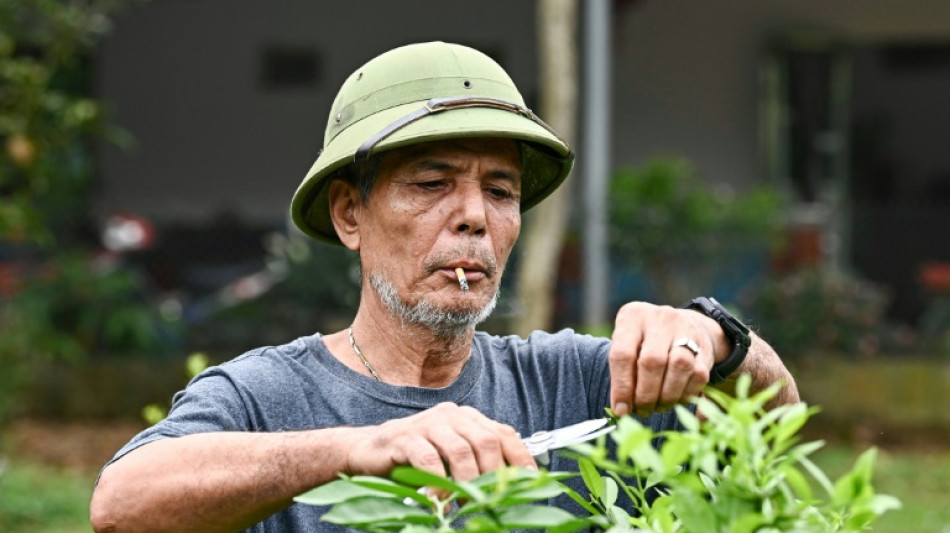
Le Tuan Binh keeps his Moroccan soldier father's tombstone at his village home north of Hanoi, a treasured reminder of a man whose community in Vietnam has been largely forgotten.
Mzid Ben Ali, or "Mohammed" as Binh calls him, was one of tens of thousands of North Africans who served in the French army as it battled to maintain its colonial rule of Indochina.
He fought for France against the Viet Minh independence movement in the 1950s, before leaving the military -- as either a defector or a captive -- and making a life for himself in Vietnam.
"It's very emotional for me," says Binh, 64, holding the tombstone.
There was no funeral when his father died in 1968, as the war with the United States was in full swing, and his body has since disappeared, but Binh has kept the stone slab, engraved with his father's nationality: "Moroccan".
Between 1947 and 1954, more than 120,000 North Africans served in the French army in Indochina.
Half were from Morocco -- which was then a protectorate of France -- and of those, around 150 remained in Vietnam after the armistice in 1954, either as defectors or prisoners, including Binh's father.
His story offers a little-known perspective on the First Indochina War as Vietnam and France prepare to commemorate the 70th anniversary of the Battle of Dien Bien Phu on May 7.
The bloody eight-week struggle in the country's northwestern hills -- won decisively by the Viet Minh -- was the climactic confrontation that ultimately brought an end to the French empire in Indochina.
In France, "the history of heroism at Dien Bien Phu was for a long time the preserve of white people, who represented the majority of commanders", said Pierre Journoud, professor of contemporary history at Paul Valery-Montpellier University.
"But after 1947, the war effort relied on colonial riflemen, and they represented the majority of troops," he told AFP.
"We've lost part of their story."
- 'The foreigner' -
At his home in the northern province of Phu Tho, 80 kilometres (50 miles) northwest of Hanoi, Binh makes a pot of black tea spiked with mint leaves from his garden -- "Moroccan style, but without the sugar," he jokes.
In the village, he is nicknamed "the foreigner", but those close to him call him Ali, the name given to him by his father.
The war with the United States and economic development have dispersed the Moroccan-Vietnamese families who lived in the country several decades ago.
Some returned to Morocco in the 1970s, but Binh wanted to stay with his Vietnamese mother and two brothers, Boujamaa and Abdallah.
Binh says his father rarely spoke about his experiences in the war -- leaving his story shrouded in mystery -- but he likely defected towards the end of the conflict, in 1953 or 1954.
"He was a man of few words," Binh said.
Vietnamese propaganda presented foreign deserters as pioneers in the struggle of oppressed peoples against imperialism, but according to French researchers, their motives were usually linked to better pay or fear of punishment for misconduct.
After 1954, Hanoi says some 300 "African and European surrendered soldiers" settled in a farming village in the Ba Vi district, around 50 kilometres from Hanoi.
- Recognition -
It was in Ba Vi that Binh's father met his Vietnamese wife and Binh was born in 1959.
The farm was dismantled in the 1970s, during the tumult of the war against the Americans, but today, a Moorish-inspired gateway remains, built by Moroccan workers as a tribute to their country of origin.
The monument stands in the garden of a family that welcomes a handful of visitors every month, and who have ensured its survival over the years.
During the extreme poverty of the 1990s, "scrap metal dealers asked if they could take parts of the gate", said one family member, who declined to give their name.
But the gate was preserved, and later restored with renovation work by Hanoi authorities and the Moroccan embassy in 2009, and then again in 2018 -- at a time when research was beginning to shed light on the role of soldiers from French colonies in Indochina.
Binh has struggled for recognition of his past for many years.
In 2016, he finally obtained a Moroccan passport, as did his two children, born to a Vietnamese mother, under a surname chosen by the embassy: El Mekki.
His daughter Leila, aged 36, now lives in Casablanca, but Binh has never set foot in Morocco.
"Now I'm too old. I gave the opportunity to my daughter," he said. "I'm happy now that some of my dreams have come true."
M.Robinson--AT