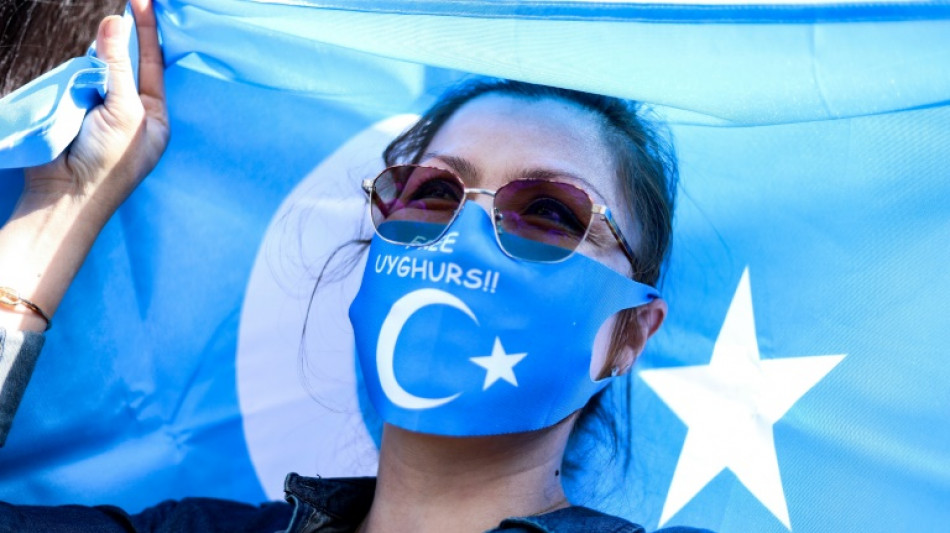
EU parliament votes forced labour ban with China in its sights / Photo: Kenzo TRIBOUILLARD - AFP

 Google-parent Alphabet beats expectations, cloud revenue nearly doubles

 US announces civilian nuclear deal with Saudi Arabia

 Tesla shares dip after profit misses expectations
 Red Sox tie club record with 15th straight MLB win
 US eyes offshore nuclear reactors

 The Sterling Announces Luxury Cocktail Lounge Concept and Investor Showcase in Orlando
 Inter Miami signs Brazil veteran Casemiro but MLS probes deal

 White House accuses China's Moonshot of stealing Anthropic AI
 Pogacar sweating on Yates's fitness ahead of Tour Queen stage
 Ukrainian soldiers and civilians welcome new army commander
 UK fintech Revolut valuation soars to $115 bn: source

 German FM, on Africa tour, eyes business ties amid US, China pressure
 Rubio says at ASEAN meeting he expects 'positive' US visit by China's Xi
 Philipsen wins Tour de France 17th stage
 DonnaPro Introduces AI-Trained Executive Assistants for European CEOs
 Happy birthday, George! UK prince becomes a teenager
 Oil prices jump on Mideast war, stock markets diverge

 US hits Iranian island, says war cost at $37.5 bn
 Metal mining's carbon footprint far larger than thought: study
 TokenInsight Q2 2026 Report: TradFi Momentum Lifts MEXC to No. 2 in Commodity Perpetuals

 Leonardo chief sees potential for Germany to join GCAP fighter jet project

 Louvre heist gallery reopens to public, but with nothing to steal

 Ukraine's new army chief: who is Mykhailo Drapaty?
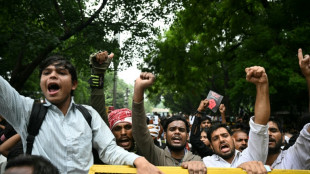 India student protests keep up pressure on Modi government

 Italian FA chief says in touch with Guardiola over coaching vacancy

EU lawmakers voted on Tuesday to ban products made using forced labour which supporters hope will be used to block goods from China, at the risk of raising tensions with Beijing.
The law does not directly mention China, but many lawmakers hope it will be used to block imports from China involving the region where the Uyghur Muslim minority lives.
Human rights groups say at least one million people, mostly members of Muslim minorities, have been detained in China's northwestern Xinjiang region and face a series of abuses, including forced sterilisation of women and coerced labour.
The legislation, backed in a vote by 555 EU lawmakers, with six against and 45 abstaining, will become law following final approval by the EU's 27 member states.
The EU has deployed an array of trade tools against China, including anti-subsidy investigations into Chinese state support for green tech such as solar panels.
The latest law seeks to eradicate forced labour from European markets.
Under the rules, EU states can remove products found to have been made using forced labour as well as goods made in the bloc comprising material made abroad using forced labour.
"This regulation is groundbreaking and it's unique. It's inclusive, broad, and together with several other regulations and directives... (it's) a real game changer," Dutch lawmaker Samira Rafaela, who pushed the text through parliament, said.
"Companies, industries, whole sectors and their respective contractors will need to make a serious effort to ensure their conduct is sustainable and ethical, respecting human rights throughout their entire supply chain," she told reporters after the vote.
Some 27.6 million people were engaged in forced labour in 2021, including around 3.3 million children, according to the International Labour Organization.
- Power to seize goods -
The new rules give the European Commission the power to launch investigations when there are suspicions about the supply chains in countries outside the EU.
If the use of forced labour is proved, officials will seize the products at the borders and order their withdrawal from the European market and online retailers.
If the risk is in one member state, the local authority in that country will investigate the products allegedly made using forced labour.
For some goods deemed to be at risk, importers will be forced to provide detailed information on the manufacturers.
The EU will also create a regularly updated database about forced labour risks that will include international reports to aid the commission and national bodies in assessing possible violations of the law.
Critics have pointed out that the law does not go as far as one adopted by Washington.
The United States in 2021 banned the importation of products from Xinjiang unless businesses could prove their production did not involve forced labour.
Maria Manuel Leitao Marques, another EU lawmaker who spearheaded the law through parliament, pointed to the concerns about products in Europe made by Uyghurs.
"It could be that what you are using today or consuming today, such as cotton might not come from Turkmenistan, but from China, where the Uyghurs are being forced to work, where they're the victims of forced labour," she said during a debate on Monday.
A.O.Scott--AT