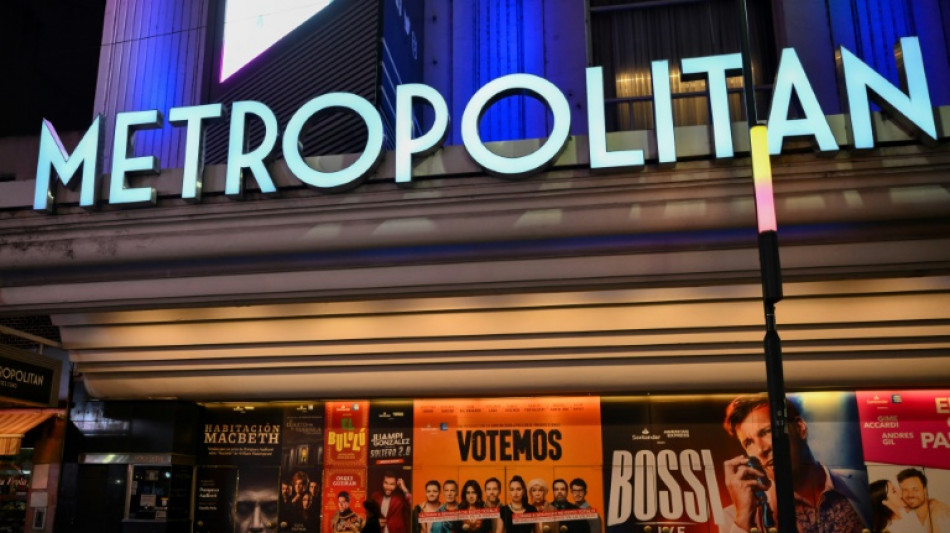
Like a bad movie: Argentina's culture industry agonizes under Milei / Photo: LUIS ROBAYO - AFP

 New UK PM Burnham gets early boost as inflation dips
 Samsung launches new, more expensive foldable smartphones

 Philipsen ends 'horrible' drought with Tour de France 17th stage victory
 Hungary's Orban says graft case is 'pretext' to target his party
 South African tycoon Motsepe rules out presidential bid

 Trump threatens Iran bridges, power as payback for Hormuz attacks

 Germany's Merz replaces leader ousted over surrogacy row
 CAF chief Motsepe backs Infantino despite criticism

 Evacuees from Spain's wildfire struggle with scale of devastation
 Ancient Lebanese city of Tyre added to heritage danger list

 Extreme heatwave grips Tunisia as wide power cuts fuel frustration

 'Beautiful game' provides Venezuelans with welcome distraction in wake of tragedy
 Oil prices surge on Mideast war, stock markets diverge
 Fury says 'best yet to come' ahead of Thailand fight

 Japan suffers heat 'disaster as cities hit by 'cruelly hot' days
 In Kazakhstan, emptying villages and overcrowded cities

 Hitler's Austrian birthplace transformed into police station

 Mideast conflict lifts Brent back above $94, stocks give up gains

 Greece broils on year's warmest day as three-day heatwave peaks
 Japan cities 'cruelly hot' for first time

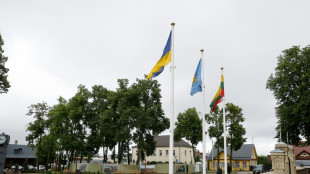 Lithuania moves Red Army graves to leave behind Soviet past

 OpenAI reports 'unprecedented' autonomous hack by AI agents
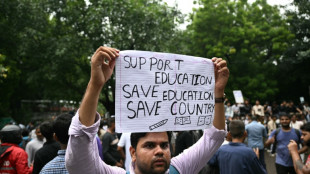
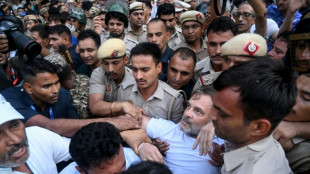 India opposition leader released after protest detention

 Australia cricket great Warner pleads guilty to drink-driving
 US hits Iran, says war cost at $37.5 bn

President Javier Milei's "chainsaw" approach to budget cuts have not only caused deep financial pain to many Argentines, but is also threatening the country's Oscar-winning culture scene, industry players say.
At home and abroad, actors, directors and musicians accuse the self-declared "anarcho-capitalist" leader of showing disdain towards their industry as he slashes funding and rails against those who question him.
Milei himself has said the government must choose between "funding movies that nobody watches" and "feeding people."
He has denounced at least one artist criticizing his funding cuts as a "parasite" living off taxpayer money at the expense of hungry kids.
The cultural industry in Argentina, the birthplace of tango, is responsible for some 300,000 formal jobs.
But under Milei, "they are dismantling everything related to culture in general and cinema in particular," award-winning Argentine actress Cecilia Roth, who has played in several movies by Spain's Pedro Almodovar, said at a press conference in Mexico on Friday.
On top of losses in direct state support, the industry is also reeling from the average Argentine having much less money to spend on such luxuries as films or plays as disposable income has shrunk and poverty levels have risen to 60 percent.
- 'Little hope' -
Argentina's Incaa film institute has dismissed 170 of its 645 employees in recent months, suspended overtime payments and is not accepting any new projects for a period of 90 days.
Incaa is financed mainly by taxes on ticket sales and 25 percent of the revenues of the National Communications Agency which co-finances dozens of films every year, including eight Oscar nominees and two winners: "The Official Story" and "The secret in their eyes."
"Every day the panorama is darker," Argentine production and audiovisual director Paula Orlando, told AFP.
"I am considering leaving the country," added the 31-year-old, who has 12 years of experience in the industry.
"There is little hope."
- 'Strong bias' -
Voices of concern have also been raised abroad, from directors such as Almodovar himself, and Finland's Aki Kaurismaki.
Earlier this month, Belgian film-making siblings Jean-Pierre and Luc Dardenne, France's Claire Denis and American Viggo Mortensen penned an article in which they said Argentina’s cinema industry was "on the brink."
Music and literature, too, have suffered the effects of Milei's cost-cutting measures, including the repeal of a law protecting independent book stores from being undercut by large chains.
Such actions go to show that Milei and his government carry "a strong bias against cultural industries," according to Martin Gremmelspacher, president of the Argentine Book Chamber.
Book sales, he said, fell 30 percent in both January and February from a year earlier.
- 'Dangerous' future -
Luis Sanjurjo, a professor of cultural policies at the University of Buenos Aires, said it was wrong to think that "the market can replace the state."
"In no serious capitalist country in the world is there an absence of the state" in the development of culture, he told AFP.
Sanjurjo formerly headed an arts and culture industry sub-division in the now-defunct culture ministry, scrapped by Milei.
He said it appeared the ultra-liberal Milei government was "bitter" towards the industry amid the global culture wars increasingly pitting people against each other on issues such as gay rights, abortion, religion, women's rights and even political correctness.
Last week, renowned Argentine concert pianist Martha Argerich published an open letter lamenting the government's decision to stop the issuing of grants to impoverished artists under a scholarship named after her.
Culture Minister Leonardo Cifelli later said the decision was merely the temporary result of an "administrative transition," without saying when the grants would be resumed.
"I myself received the support of the Argentine State as a young girl," Argerich wrote.
"If the state does not support and contribute to culture, the future is really dangerous."
W.Morales--AT