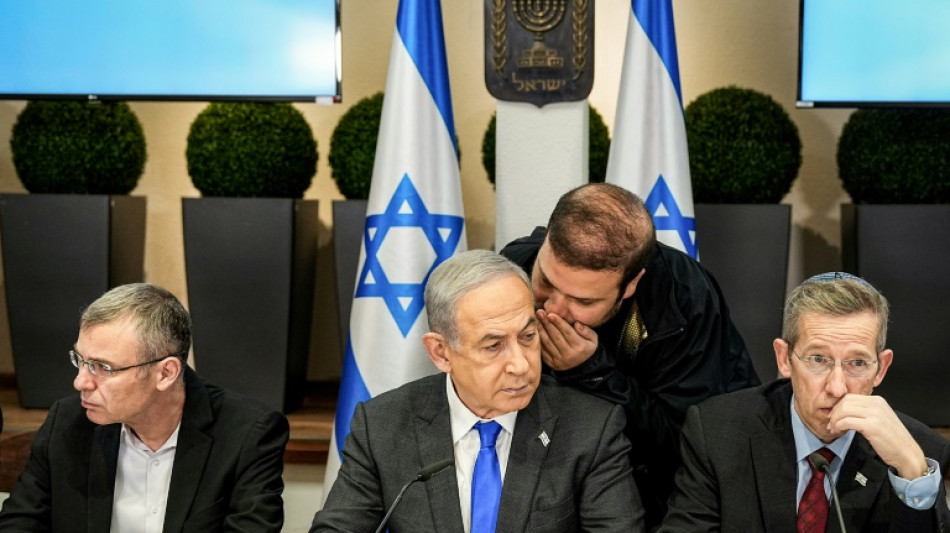
Mideast enters new era with Israel strikes on Iran / Photo: Ohad Zwigenberg - POOL/AFP/File

 New UK PM Burnham gets early boost as inflation dips

 Samsung launches new, more expensive foldable smartphones

 Philipsen ends 'horrible' drought with Tour de France 17th stage victory

 Hungary's Orban says graft case is 'pretext' to target his party
 South African tycoon Motsepe rules out presidential bid

 Trump threatens Iran bridges, power as payback for Hormuz attacks

 Germany's Merz replaces leader ousted over surrogacy row

 CAF chief Motsepe backs Infantino despite criticism

 Evacuees from Spain's wildfire struggle with scale of devastation

 Ancient Lebanese city of Tyre added to heritage danger list

 Extreme heatwave grips Tunisia as wide power cuts fuel frustration

 'Beautiful game' provides Venezuelans with welcome distraction in wake of tragedy

 Oil prices surge on Mideast war, stock markets diverge

 Fury says 'best yet to come' ahead of Thailand fight

 Japan suffers heat 'disaster as cities hit by 'cruelly hot' days
 In Kazakhstan, emptying villages and overcrowded cities

 Hitler's Austrian birthplace transformed into police station

 Mideast conflict lifts Brent back above $94, stocks give up gains

 Greece broils on year's warmest day as three-day heatwave peaks

 Japan cities 'cruelly hot' for first time

 Lithuania moves Red Army graves to leave behind Soviet past

 OpenAI reports 'unprecedented' autonomous hack by AI agents

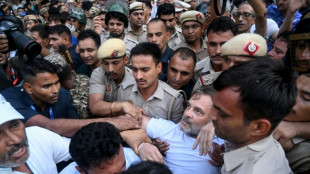 India opposition leader released after protest detention

 Australia cricket great Warner pleads guilty to drink-driving

 US hits Iran, says war cost at $37.5 bn
After years of high-level US pressure on its ally to show restraint, Israel's purported attack on Iran takes the region and Western-led diplomacy into uncharted territory.
Iran and Israel have long waged a shadow war, marked by assassinations of Tehran's nuclear scientists and attacks on Israel by the clerical state's allies in the Arab world such as Lebanon's Hezbollah, but the United States has put a top priority on preventing a wide-scale war.
The deadliest-ever assault on Israel, carried out on October 7 by Iranian-backed Palestinian militants Hamas, shook Israel and solidified its resolve, with President Joe Biden's administration resigned to limiting rather than preventing a regional flare-up.
Direct Iranian and Israeli attacks are "a milestone, because it's completely changed the rules of engagement between the two adversaries," said Merissa Khurma, director of the Middle East program at the Wilson Center.
"It has also elevated tensions across the region. It has made the specter of all-out war very real for many countries in the region," she said.
Israel early Friday appeared to have struck near the Iranian city of Isfahan, after Iran last weekend carried out its first-ever direct assault on Israel with a barrage of 300 missiles, drones and rockets.
Neither the Iranian nor the Israeli direct strikes are known to have caused major casualties or damage and neither country publicly confirmed Friday's strikes, leading US officials privately to voice hope that Iran will not retaliate and the cycle will end.
- Forcing Iran to change calculus -
The Iranian drone strikes were in turn revenge for Israel's apparent destruction on April 1 of an Iranian consular building in Syria that killed seven members of Iran's elite Revolutionary Guards including two generals.
Alex Vatanka, director of the Iran program at the Middle East Institute, said Israel clearly gamed out the consequences of the Damascus strike -- and he pointed to speculation that Israel may have been hoping to draw in the United States, which has been increasingly critical of Israel's relentless assault on Hamas-ruled Gaza.
Vatanka said Israel sought to force Iran -- an enemy since the 1979 Islamic revolution overthrew the pro-Western shah -- to rethink the costs versus benefits of its "Axis of Resistance," the fighters around the region including in Iraq, Lebanon, Syria and Yemen nurtured by Tehran over two decades.
"It's a very simple model in the sense that Iran is fighting its adversaries in the region so that they don't have to fight them inside of Iran," Vatanka said.
"That basic calculation is being put to a test because of what the Israelis have done, I'm sure deliberately," he said.
Both Biden and his Democratic predecessor Barack Obama have counseled diplomacy over military action with Iran, with Obama negotiating a 2015 nuclear deal loathed by Israeli Prime Minister Benjamin Netanyahu.
Biden's Republican challenger in November, Donald Trump, as president ripped up the nuclear deal and imposed sweeping sanctions, which have hurt the Iranian economy but not stopped Tehran's regional strategy.
- Diplomatic success after failure? -
Israel appeared to have steered clear of targeting Iran's nuclear sites -- although its message was unmistakable as Isfahan is the province of Iran's key nuclear facility of Natanz.
"Israel wanted to demonstrate to Iran what it could do without really doing it," said Ali Vaez, director of the Iran project at the International Crisis Group.
US officials have worried that a direct Israeli strike on Iran's nuclear facilities would lead the ruling clerics to rush forward toward a bomb, quickly unleashing war and pushing Iran's Arab rivals such as Saudi Arabia to pursue nuclear weapons themselves.
The Iranian and Israeli strikes led to criticism both from the left and the right that the Biden administration has failed at its key post-October 7 goal of preventing regional war.
But the United States also quietly pressed both Israel and Iran to keep their strikes within limits, with Secretary of State Antony Blinken seeking to send a message to Tehran through his Chinese, Turkish, German and other counterparts.
"Diplomatic efforts this past week have very much been focused on de-escalation and -- for now -- it seems like they have been successful," Khurma said.
Y.Baker--AT