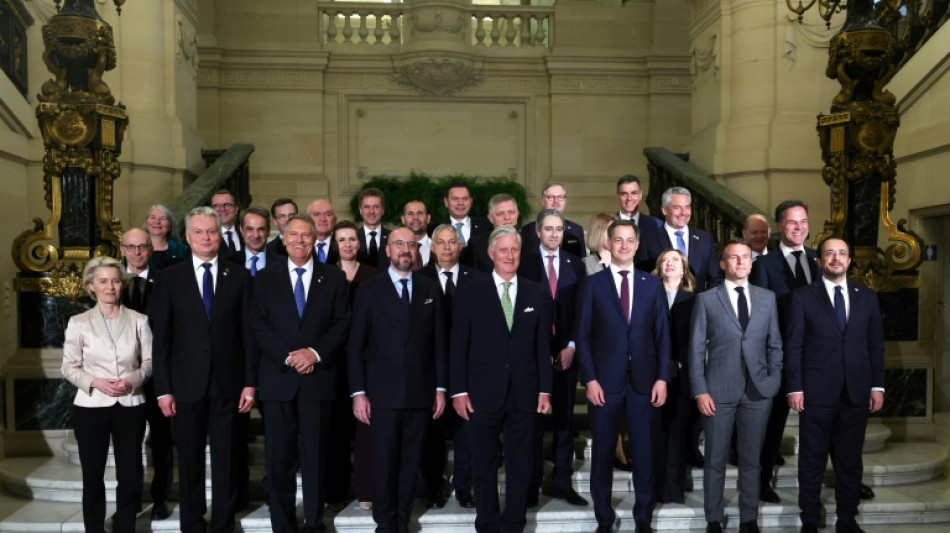
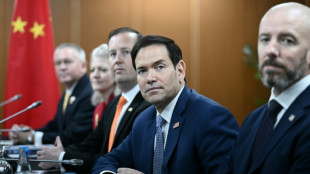
Act fast or fall behind China, US for good, EU leaders told / Photo: Olivier HOSLET - POOL/AFP

 New UK PM Burnham gets early boost as inflation dips
 Samsung launches new, more expensive foldable smartphones
 Philipsen ends 'horrible' drought with Tour de France 17th stage victory
 Hungary's Orban says graft case is 'pretext' to target his party
 South African tycoon Motsepe rules out presidential bid
 Trump threatens Iran bridges, power as payback for Hormuz attacks
 Germany's Merz replaces leader ousted over surrogacy row
 CAF chief Motsepe backs Infantino despite criticism

 Evacuees from Spain's wildfire struggle with scale of devastation
 Ancient Lebanese city of Tyre added to heritage danger list

 Extreme heatwave grips Tunisia as wide power cuts fuel frustration
 'Beautiful game' provides Venezuelans with welcome distraction in wake of tragedy
 Oil prices surge on Mideast war, stock markets diverge
 Fury says 'best yet to come' ahead of Thailand fight
 Japan suffers heat 'disaster as cities hit by 'cruelly hot' days
 In Kazakhstan, emptying villages and overcrowded cities
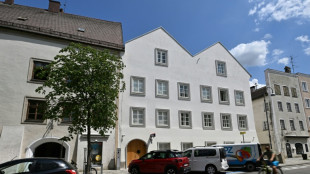 Hitler's Austrian birthplace transformed into police station
 Mideast conflict lifts Brent back above $94, stocks give up gains
 Greece broils on year's warmest day as three-day heatwave peaks
 Japan cities 'cruelly hot' for first time

 Lithuania moves Red Army graves to leave behind Soviet past
 OpenAI reports 'unprecedented' autonomous hack by AI agents
 India opposition leader released after protest detention

 Australia cricket great Warner pleads guilty to drink-driving
 US hits Iran, says war cost at $37.5 bn
The European Union must act fast or risk falling perilously behind the economies of China and the United States, EU leaders heard Thursday as they headed into summit talks on how to leverage the bloc's huge market to stem its decline.
From supply chain disruptions following the coronavirus pandemic to an energy crisis after Russia's invasion of Ukraine, Europe's economy has yet to recover from a series of major, back-to-back challenges.
But it may yet face its biggest: the clean energy and digital transitions that Brussels has made its priority in the coming years will require additional annual investment of nearly 620 billion euros ($660 billion), according to the European Commission.
"Competitiveness is a fundamental issue. We face complicated challenges," EU chief Charles Michel told reporters as the Brussels talks got underway, pointing to the climate, the digital transition and security.
The EU has a population of 450 million and is home to some of the world's biggest economies including Germany and France.
But from artificial intelligence to solar panels, from computer chips to batteries, the EU is fast losing ground on innovation to other global powers.
The EU has been put further on the back foot as China and the United States have poured in billions of dollars of state aid to prop up their critical industries.
"There's no time to waste. The gap between the European Union and US in terms of economic performances is becoming bigger and bigger," Enrico Letta, the author of a long-awaited report into the future of the single market, told reporters.
Official EU data shows the bloc's economic stagnation has lasted more than 18 months. While the United States grew by 2.5 percent and China by 5.2 percent in 2023, Eurostat data last month showed the EU economy grew by only 0.4 percent.
The Brussels summit began with a presentation by Letta, whose report identifies as a key issue the absence of a properly integrated EU-wide financial market.
Although the EU has a single currency, its start-ups cannot raise the jaw-dropping amounts their US competitors can, and Europeans currently find it more rewarding to pour more than 300 billion euros of their savings into US markets each year.
Michel pointed to the "gigantic volume" of savings by citizens, of which a "substantially large part leaves the EU and is not mobilised to support innovation".
The debate comes as the EU seeks to define the strategic priorities for the European Commission's next five-year mandate following elections across the bloc in June.
- Internal debates -
The leaders' gathering gives fresh impetus to the idea of a Capital Markets Union -- or what Letta is dubbing a "savings and investment union".
But the issue -- which is far from new -- has been mired in technical talks for 10 years because of national divisions that remain hard to overcome.
While France has strongly insisted on greater integration, the EU's smaller countries have pushed back against a centralised, European supervision of markets being thrust upon them.
Further headaches stem from suggestions to harmonise taxation and bankruptcy regulations at the EU level -- which have thus far faced insurmountable blocks.
"We must avoid over-bureaucratising, over-regulating and over-centralising everything, which some countries are in favour of," Luxembourg Prime Minister Luc Frieden said on Wednesday, calling for a "pragmatic approach".
- 'Radical change' needed -
Letta's report is not the only one leaders will be leaning on.
Ex-European Central Bank chief Mario Draghi, increasingly touted as a potential successor to commission president Ursula von der Leyen, will present his report on the EU single market in the summer.
Draghi gave a taste of what to expect as he called for "radical change" during a speech in Belgium on Tuesday.
"Our major competitors are taking advantage of the fact that they are continental-sized economies. We have the same natural size advantage in Europe, but fragmentation is holding us back," Draghi said.
Spurring the sense of urgency is the colossal scale of the sums needed: on top of the hundreds of billions required to fund the green transition, as war rages in Ukraine the EU needs tens of billions of euros more to help Kyiv.
French President Emmanuel Macron proposed in January taking on joint EU debt to raise money, like Europe did during the pandemic, but that idea has been given short shrift by the leaders of the so-called frugal countries, including Germany.
B.Torres--AT