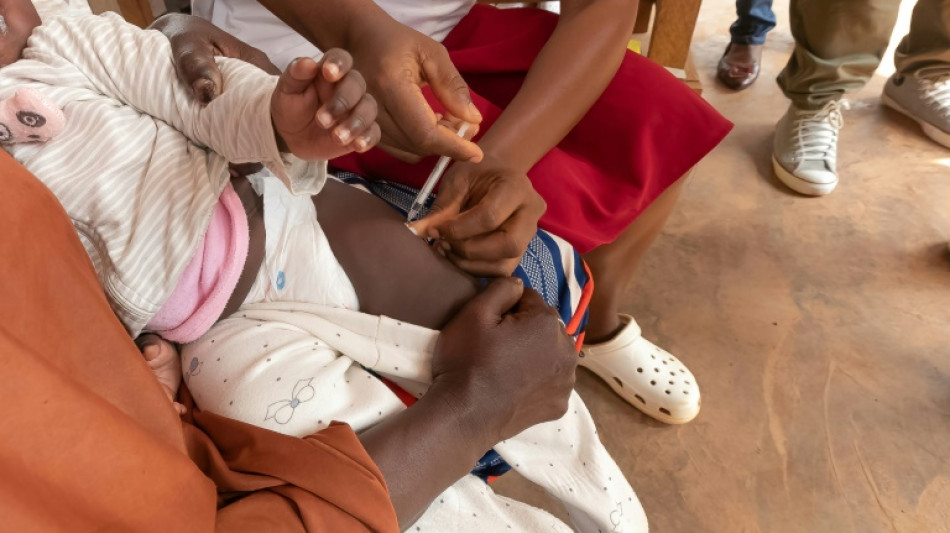
Slimmer draft pandemic agreement released ahead of fresh talks / Photo: ETIENNE NSOM - AFP

 New UK PM Burnham gets early boost as inflation dips

 Samsung launches new, more expensive foldable smartphones

 Philipsen ends 'horrible' drought with Tour de France 17th stage victory

 Hungary's Orban says graft case is 'pretext' to target his party
 South African tycoon Motsepe rules out presidential bid

 Trump threatens Iran bridges, power as payback for Hormuz attacks

 Germany's Merz replaces leader ousted over surrogacy row
 CAF chief Motsepe backs Infantino despite criticism

 Evacuees from Spain's wildfire struggle with scale of devastation
 Ancient Lebanese city of Tyre added to heritage danger list
 Extreme heatwave grips Tunisia as wide power cuts fuel frustration
 'Beautiful game' provides Venezuelans with welcome distraction in wake of tragedy
 Oil prices surge on Mideast war, stock markets diverge

 Fury says 'best yet to come' ahead of Thailand fight

 Japan suffers heat 'disaster as cities hit by 'cruelly hot' days
 In Kazakhstan, emptying villages and overcrowded cities

 Hitler's Austrian birthplace transformed into police station
 Mideast conflict lifts Brent back above $94, stocks give up gains

 Greece broils on year's warmest day as three-day heatwave peaks
 Japan cities 'cruelly hot' for first time

 Lithuania moves Red Army graves to leave behind Soviet past
 OpenAI reports 'unprecedented' autonomous hack by AI agents
 India opposition leader released after protest detention

 Australia cricket great Warner pleads guilty to drink-driving
 US hits Iran, says war cost at $37.5 bn
The new draft of the global pandemic agreement has been released to countries ahead of Thursday's deadline, with a more streamlined take on how the world should handle future pandemics.
Rattled by Covid-19, which shredded economies, crippled health systems and killed millions, countries have spent two years trying to craft an international accord on pandemic prevention, preparedness and response.
The ninth and supposedly final round of talks among the World Health Organization's 194 member states, held at the WHO headquarters in Geneva, ended on March 28 without a deal.
The bureau of the Intergovernmental Negotiating Body conducting the talks therefore went away to reflect on the major sticking points and come up with a new, tighter draft, honing in on areas of common ground.
The new draft retains some provisions on equity -- which developing countries have been holding out for -- but kicks some aspects further down the road to 2026.
- What happened in March? -
Keen to prevent the trauma of Covid-19 ever happening again, countries started negotiating an accord two years ago.
But at the final two-week talks session, the text ballooned from 29 pages to more than 100 as countries inserted proposed amendments. Agreement between the main blocs seemed far off.
Western nations broadly want ramped-up surveillance and rapid sharing of all data and samples on emerging pathogens.
Meanwhile one bloc of countries that includes India, Mexico and Bangladesh, calling itself the Group for Equity, plus another group of African countries, is trying to ensure developing nations are not cut adrift again when it comes to accessing vaccines, tests and treatments.
- What comes next? -
Countries will now digest the new draft and return to the WHO headquarters for further talks, from April 29 until May 10.
They are up against the clock, with the aim being to adopt a final agreement at the annual assembly of WHO member states, which runs from May 27 to June 1.
- What's in the new draft? -
The new WHO Pandemic Agreement draft seen by AFP now runs to 23 pages.
It would commit countries to a more equitable geographical distribution and scaling up of the global production of pandemic-related health products.
The text also reflects efforts to battle the swirl of disinformation and conspiracy theories that have surrounded the negotiations, including allegations that WHO could take over countries' health policies.
The new draft retains a paragraph specifically saying the agreement cannot be interpreted as giving the WHO or its leader any authority to alter national laws, "impose vaccine mandates... or implement lockdowns".
- And on the key section? -
The main arguments revolve around the section titled access and benefit sharing.
The draft agreement calls for a WHO Pathogen Access and Benefit-Sharing System (PABS).
Under the PABS system, the sharing of material for public health risk assessment is placed "on an equal footing" with "timely, effective, predictable and equitable access to pandemic-related health products" arising from that sharing.
The system would include the "fair, equitable and timely sharing of benefits" arising from PABS material and information, which countries must share in a "rapid, systematic and timely" way.
During a pandemic this would include "real-time access by WHO to 20 percent (10 percent as a donation, and 10 percent at affordable prices to WHO) of the production of safe, efficacious and effective pandemic-related health products".
But it now says the modalities, operational dimensions, and terms and conditions of the system "shall be further defined in a legally-binding instrument, that is operational no later than May 31, 2026".
By shunting the arguments over deeper details another two years down the road, this new move could improve the chances of an agreement being approved and adopted at the World Health Assembly in six weeks' time.
O.Brown--AT