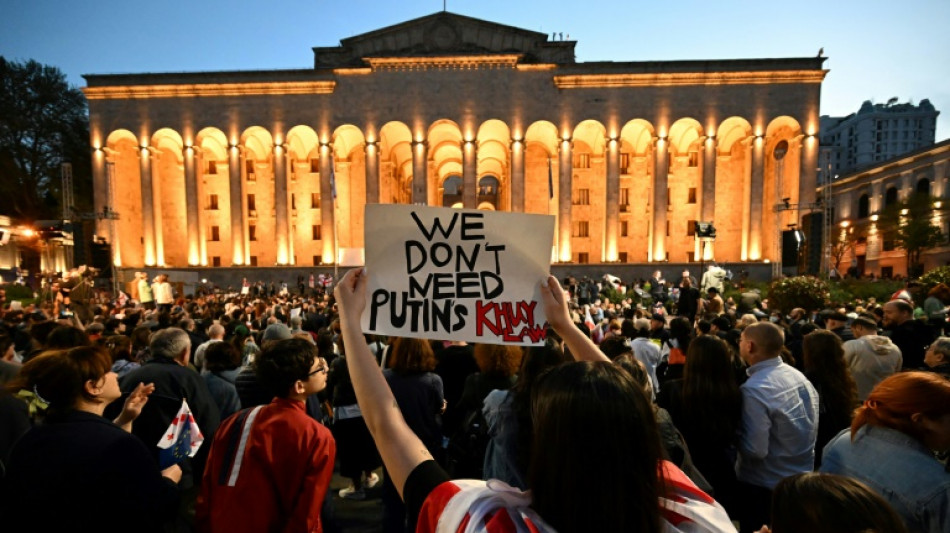
Thousands rally in Georgia as parliament debates 'foreign influence' law / Photo: Vano SHLAMOV - AFP

 Trump threatens Iran bridges, power as payback for Hormuz attacks

 Germany's Merz replaces leader ousted over surrogacy row
 CAF chief Motsepe backs Infantino despite criticism

 Evacuees from Spain's wildfire struggle with scale of devastation
 Ancient Lebanese city of Tyre added to heritage danger list

 Extreme heatwave grips Tunisia as wide power cuts fuel frustration

 'Beautiful game' provides Venezuelans with welcome distraction in wake of tragedy

 Oil prices surge on Mideast war, stock markets diverge
 Fury says 'best yet to come' ahead of Thailand fight

 Japan suffers heat 'disaster as cities hit by 'cruelly hot' days
 In Kazakhstan, emptying villages and overcrowded cities

 Hitler's Austrian birthplace transformed into police station
 Mideast conflict lifts Brent back above $94, stocks give up gains

 Greece broils on year's warmest day as three-day heatwave peaks
 Japan cities 'cruelly hot' for first time
 Lithuania moves Red Army graves to leave behind Soviet past

 OpenAI reports 'unprecedented' autonomous hack by AI agents
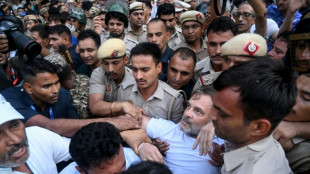 India opposition leader released after protest detention

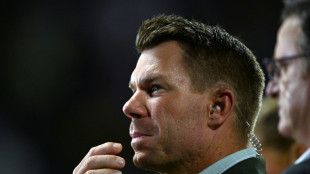 Australia cricket great Warner pleads guilty to drink-driving
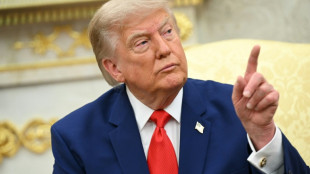
 US hits Iran, says war cost at $37.5 bn

 Tech lifts Asia stocks, Brent crude back above $92

 Hitler's Austrian birthplace to become a police station

 Decomposed body in singer D4vd's car was 'unrecognizable,' court hears

 A once wary Hollywood slowly warms to AI
 Designing a Tour de France route: a three-year labour of love

Georgian lawmakers on Tuesday agreed an early draft of a controversial "foreign influence" bill, sparking fresh street protests against the legislation criticised for mirroring a repressive Russian law.
The bill has sparked outrage in Georgia and concern in the West, with many arguing it undermines Georgia's bid for European Union membership.
Lawmakers voted 78 to 25 to move the draft bill along for further debate.
Georgia's President Salome Zurabishbili -- who is at loggerheads with the ruling party -- condemned the move as "against the will of the population".
It "is a direct provocation -- a Russian strategy of destabilisation," she said.
Thousands rallied in the evening outside the parliament building in Tbilisi, blocking traffic on the main thoroughfare of the Georgian capital, whistling and shouting: "No to the Russian law!"
Riot police cordoned off entrances to the legislature and demonstrators briefly scuffled with them, attempting to push against the police line, an AFP journalist witnessed.
Police used pepper spray against the crowds and several protestors were detained. Water cannon was also on standby.
The interior ministry said one police officer had been injured and called on protesters to follow police instructions.
"In case the rally participants continue their illegal actions, the ministry of internal affairs will take special measures defined by law," it said in a statement.
University student Kote Tatishvili, one of the demonstrators, said "Georgians will never accept this Russian law."
"We, peaceful demonstrators, will prevail, we will force Russian stooges in the Georgian Dream (ruling party) to withdraw the law," he said.
A day earlier, police had detained 14 demonstrators as some 10,000 people took to the streets.
- 'Further away from EU' -
The European Union has called on Tbilisi not to pass the legislation, saying it contradicts the democratic reforms the country is required to pursue to progress on its path towards EU membership.
Renewing Brussels' criticism of the proposals, EU chief Charles Michel said Tuesday: "The draft Law on Transparency of Foreign Influence is not consistent with Georgia's EU aspiration and its accession trajectory."
It "will bring Georgia further away from the EU and not closer," he wrote on X, formerly Twitter.
Amnesty International urged Georgian authorities to "immediately stop their incessant efforts to impose repressive legislation on the country's vibrant civil society."
It said the draft law "poses a direct threat to the rights to freedom of association and expression."
The ruling Georgian Dream party controls 84 seats in the 150-member legislature and can pass the law without opposition backing.
If adopted, the bill will require any independent NGO and media organisation that receives more than 20 percent of funding from abroad to register as an "organisation pursuing the interests of a foreign power."
That was a change from last year's proposal, which used the term "agent of foreign influence."
A similar law is used in Russia to punish government critics and suffocate independent media.
In December, the EU granted Georgia official candidate status but said Tbilisi would have to reform its judicial and electoral systems, reduce political polarisation, improve press freedom and curtail the power of oligarchs before membership talks are formally launched.
US State Department spokesman Matthew Miller said last week that passing the law would "derail Georgia from its European path."
The ruling party was forced to drop a similar measure last year, following mass protests that saw police use water cannon and tear gas against demonstrators.
Then in a surprise move ahead of October's parliamentary elections seen as a key democratic test, it re-introduced the bill in parliament earlier this month.
A former Soviet republic, Georgia has sought for years to deepen relations with the West, but the current ruling party is accused of trying to steer the Black Sea nation toward closer ties with Russia.
Once seen as leading the democratic transformation of ex-Soviet countries, Georgia has in recent years been criticised for perceived democratic backsliding.
J.Gomez--AT