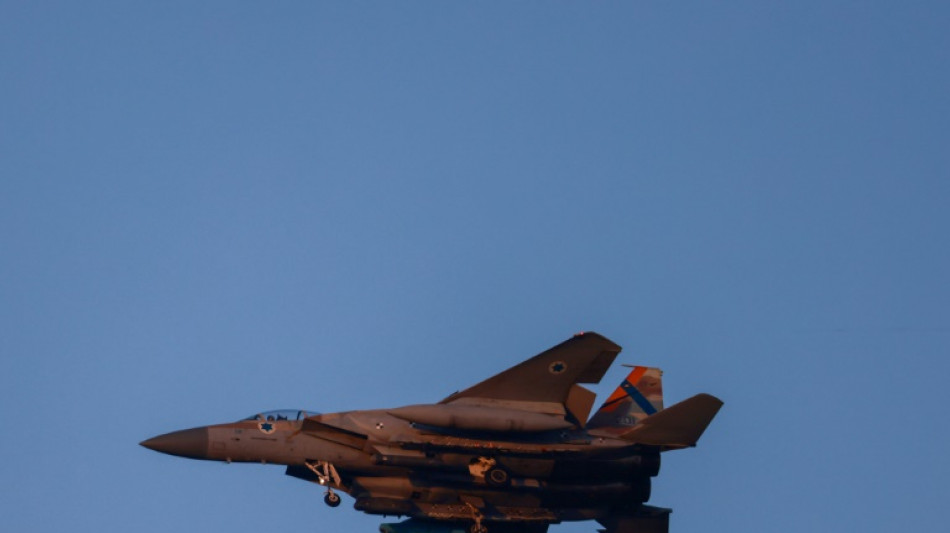
Will Israel have to choose between Iran retaliation and Gaza assault? / Photo: Menahem KAHANA - AFP

 Trump threatens Iran bridges, power as payback for Hormuz attacks

 Germany's Merz replaces leader ousted over surrogacy row

 CAF chief Motsepe backs Infantino despite criticism
 Evacuees from Spain's wildfire struggle with scale of devastation

 Ancient Lebanese city of Tyre added to heritage danger list

 Extreme heatwave grips Tunisia as wide power cuts fuel frustration

 'Beautiful game' provides Venezuelans with welcome distraction in wake of tragedy

 Oil prices surge on Mideast war, stock markets diverge

 Fury says 'best yet to come' ahead of Thailand fight

 Japan suffers heat 'disaster as cities hit by 'cruelly hot' days
 In Kazakhstan, emptying villages and overcrowded cities

 Hitler's Austrian birthplace transformed into police station

 Mideast conflict lifts Brent back above $94, stocks give up gains

 Greece broils on year's warmest day as three-day heatwave peaks

 Japan cities 'cruelly hot' for first time
 Lithuania moves Red Army graves to leave behind Soviet past

 OpenAI reports 'unprecedented' autonomous hack by AI agents

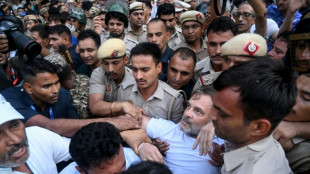 India opposition leader released after protest detention

 Australia cricket great Warner pleads guilty to drink-driving

 US hits Iran, says war cost at $37.5 bn
 Tech lifts Asia stocks, Brent crude back above $92

 Hitler's Austrian birthplace to become a police station

 Decomposed body in singer D4vd's car was 'unrecognizable,' court hears

 A once wary Hollywood slowly warms to AI
 Designing a Tour de France route: a three-year labour of love

Israel has vowed to respond to Iran's unprecedented attack and to send troops into Gaza's overcrowded Rafah area in its war against Hamas, but experts say it cannot achieve both goals simultaneously.
Israeli Prime Minister Benjamin Netanyahu has appeared determined to move ahead on both fronts but has not offered a timeline for either.
He would likely have to take into account pleas from top ally the United States for restraint after Tehran's drone and missile attack -- as well as calls for the protection of Palestinian civilians in the besieged Gaza Strip.
- Can Israel's response wait? -
The Israeli military, already battling Hamas in Gaza and Iran-backed groups elsewhere in the region, cannot sustain active fighting against Iran too, analysts told AFP.
"Israel won't be able to carry out an offensive in Rafah and a retaliation against Iran at the same time," said Michael Horowitz, director of security consultancy Le Beck International.
"A decision will have to be made," he said.
Since the Iranian attack on Saturday, public statements from successive Israeli war cabinet meetings have offered little clarity on Israel's plans.
Instead, the meetings mostly illustrated stark differences within the cabinet, with some hawkish ministers demanding a punishing retaliation against Tehran and an immediate attack on Rafah -- while others prefer Israel wait.
For now, Israel does not face the threat of another direct Iranian attack and has time to consider its next moves, said John Erath, policy director at the Washington-based Center for Arms Control and Non-Proliferation.
Israeli leaders could be "looking for options that would not escalate" tensions with arch foe Iran and provide an "off-ramp to the crisis", he said.
Iran has said that with the attack, most of which was intercepted, Tehran has settled the score with Israel after an April 1 strike on Damascus that killed seven Iranian Revolutionary Guards including two generals.
Israel's military has emphasised that it will respond to the Iranian attack, with military spokesman Rear Admiral Daniel Hagari saying "we will do it at the opportunity and the time we will choose".
- Has the attack affected Rafah plans? -
Israeli media have quoted security sources as saying the long-feared Rafah offensive was due to start this week but the plans have been upended by the Iranian attack.
Israel says it must send ground troops into the far-southern city to destroy Hamas battalions there, despite international concern for the fate of about 1.5 million Palestinians sheltering in Rafah, mostly displaced by violence elsewhere in Gaza.
With combat and bombardment ongoing in central Gaza, Israel has refused to let Palestinian civilians return to the battered north.
A statement on Monday said Defence Minister Yoav Gallant had led a meeting to discuss a "series of measures to be taken ahead of operations in Rafah, particularly the evacuation of civilians".
Israeli media reports, citing unnamed sources, say the defence ministry has already acquired 30,000 tents out of the 40,000 Israel had invited tenders for, and they would be set up near Rafah within a couple of weeks -- presumably for people evacuated from the city.
The same sources say faltering efforts by US, Egyptian and Qatari mediators towards a truce deal were likely to accelerate the planned attack.
According to the reports, Netanyahu has become convinced that Hamas -- whose October 7 attack on southern Israel triggered the war -- was not interested in reaching an agreement after the group's response to the latest proposal presented in Cairo earlier this month.
But trying to guess a timeline for the Rafah assault from those developments would be mere "speculation", Erath cautioned.
- What are the diplomatic risks for Israel? -
On both Iran and Gaza, "diplomatic considerations weigh on Israel's calculations", said Horowitz.
While the international community has increasingly criticised Israel over its devastating military operations in Gaza, the Iranian attack with hundreds of drones and missiles has sparked displays of support for Israel.
Such a diplomatic gain could be easily erased by a ground offensive in Rafah, but Horowitz argued Israel could also seize this moment of global solidarity to act in Gaza.
Foreign allies could turn a blind eye to any invasion of Rafah in exchange for demanding that "Israel doesn't respond" to Iran, he said, adding however that this scenario "seems quite unlikely".
Public opinion in Israel seems divided too.
In a poll released Tuesday by the Hebrew University of Jerusalem, 48 percent of respondents said they back a retaliation against Iran at any cost, with 52 percent against it.
The poll suggests that support for a Rafah offensive, even at a risk to Israel-US relations, is at 44 percent.
A.Anderson--AT