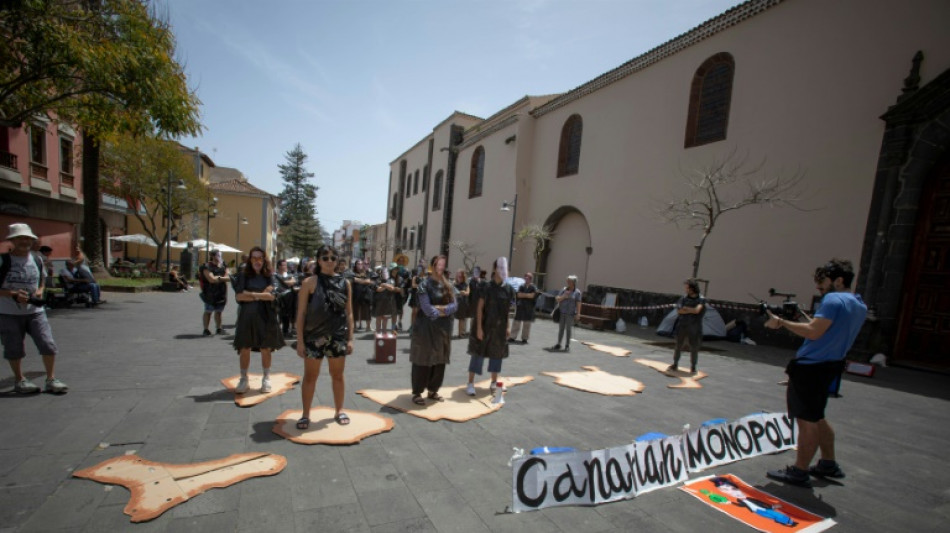
'Go home': Overtourism sparks backlash in Spain / Photo: DESIREE MARTIN - AFP

 Trump threatens Iran bridges, power as payback for Hormuz attacks

 Germany's Merz replaces leader ousted over surrogacy row

 CAF chief Motsepe backs Infantino despite criticism
 Evacuees from Spain's wildfire struggle with scale of devastation

 Ancient Lebanese city of Tyre added to heritage danger list
 Extreme heatwave grips Tunisia as wide power cuts fuel frustration

 'Beautiful game' provides Venezuelans with welcome distraction in wake of tragedy

 Oil prices surge on Mideast war, stock markets diverge
 Fury says 'best yet to come' ahead of Thailand fight

 Japan suffers heat 'disaster as cities hit by 'cruelly hot' days

 In Kazakhstan, emptying villages and overcrowded cities

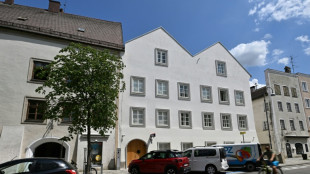 Hitler's Austrian birthplace transformed into police station

 Mideast conflict lifts Brent back above $94, stocks give up gains

 Greece broils on year's warmest day as three-day heatwave peaks

 Japan cities 'cruelly hot' for first time
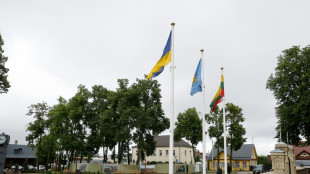 Lithuania moves Red Army graves to leave behind Soviet past

 OpenAI reports 'unprecedented' autonomous hack by AI agents

 India opposition leader released after protest detention

 Australia cricket great Warner pleads guilty to drink-driving

 US hits Iran, says war cost at $37.5 bn

 Tech lifts Asia stocks, Brent crude back above $92

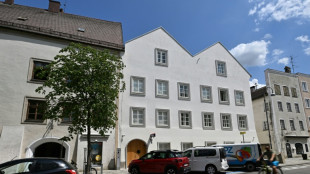 Hitler's Austrian birthplace to become a police station

 Decomposed body in singer D4vd's car was 'unrecognizable,' court hears

 A once wary Hollywood slowly warms to AI
 Designing a Tour de France route: a three-year labour of love
Anti-tourism movements are multiplying in Spain, the world's second most visited country, prompting authorities to try and reconcile the interests of locals and the lucrative sector.
Rallying under the slogan "The Canaries have a limit", a collective of groups on the archipelago off northwest Africa are planning a slew of protests on Saturday.
The Canaries are known for volcanic landscapes and year-round sunshine and attracts millions of visitors from all over the world.
Groups there want authorities to halt work on two new hotels on Tenerife, the largest and most developed of the archipelago's seven islands.
They are also demanding that locals be given a greater say in the face of what they consider uncontrolled development which is harming the environment.
Several members of the collective "Canaries Sold Out" also began an "indefinite" hunger strike last week to put pressure of the authorities.
"Our islands are a treasure that must be defended," the collective said.
The Canaries received 16 million visitors last year, more than seven times its population of around 2.2 million people.
This is an unsustainable level given the archipelago's limited resources, Victor Martin, a spokesman for the collective told a recent press briefing, calling it a "suicidal growth model".
- 'Go home' -
Similar anti-tourism movements have sprung up elsewhere in Spain and are active on social media.
In the southern port of Malaga on the Costa del Sol, a centre of Spain's decades-old "soy y playa" or "sun and beach" tourism model, stickers with unfriendly slogans such as "This used to be my home" and "Go home" have appeared on the walls fn doors of tourist accommodations.
In Barcelona and the Balearic Islands, activists have put up fake signs at the entrances to some popular beaches warning in English of the risk of "falling rocks" or "dangerous jellyfish".
Locals complain a rise in listings of accommodation on short-term rental platforms such as Airbnb have worsened a housing shortage and caused rents to soar, especially in town centres.
The influx of tourists also adds to noise and environmental pollution and taxes resources such as water, they add.
In the northeastern region of Catalonia, which declared a drought emergency in February, anger is growing over the pressure exerted on depleted water reserves by hotels on the Costa Brava.
"There are tourist destinations that are at the limits of their capacity," said Jose Luis Zoreda, the vice president of tourism association Exceltur .
"It's a problem that appears occasionally in the high season and in certain parts of the country, but it's getting worse".
- Loudspeaker ban -
Before the Covid-19 pandemic brought the global travel industry to its knees in 2020, protest movements against overtourism had already emerged in Spain, especially in Barcelona.
Now that pandemic travel restrictions have been lifted, tourism is back with a vengeance -- Spain welcomed a record 85.1 million foreign visitors last year.
In response, several cities have taken measures to try to limit overcrowding.
The northern seaside city of San Sebastian last month limited the size of tourist groups in the centre to 25 people and banned the use of loudspeakers during guided tours.
The southern city of Seville is mulling charging non-residents a fee to enter its landmark Plaza de Espana while Barcelona had removed a bus route popular with tourists from Google Maps to try to make more room for locals.
Housing Minister Isabel Rodriguez said over the weekend that "action needs to be taken to limit the number of tourist flats" but stressed the government is "aware of the importance of the tourist sector", which accounts for 12.8 percent of Spain's Gross Domestic Product.
A.Moore--AT