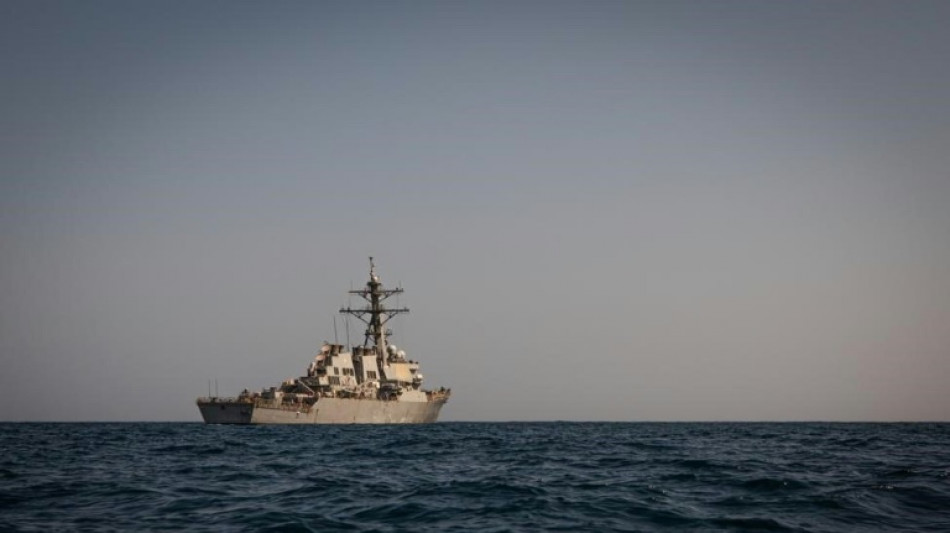
How the US helped counter Iran's attack on Israel / Photo: Aaron Lau - US Department of Defense/AFP/File

 Metal mining's carbon footprint far larger than thought: study

 TokenInsight Q2 2026 Report: TradFi Momentum Lifts MEXC to No. 2 in Commodity Perpetuals

 Leonardo chief sees potential for Germany to join GCAP fighter jet project
 Louvre heist gallery reopens to public, but with nothing to steal

 Ukraine's new army chief: who is Mykhailo Drapaty?

 India student protests keep up pressure on Modi government

 Italian FA chief says in touch with Guardiola over coaching vacancy

 Cooler inflation hands new UK PM Burnham an early boost
 Bezos holds talks with group interested in buying Liverpool stake: reports

 The student movement in India challenging Modi's government

 Danish fish fossil cliffs set to gain UNESCO status

 In Bulgarian mountains, local doctor still on call at 90

 Australia protests China's 'destabilising' missile test
 Sydney court dismisses defamation case against film star Rebel Wilson

 US tariffs on Brazil take effect as Trump readies fresh flurry
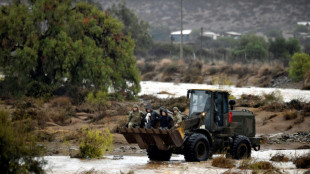 Death toll rises to 13 in Chile's severe storms
 24 hours in a Ukrainian hospital, buckling under the toll of war

 India's domestic workers go online as instant services boom

 From bath to fish market: DJs play to revive Japan neighbourhoods

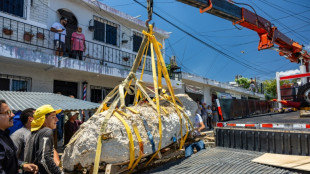 Nearly 3,000-year-old human remains unearthed in El Salvador

 New Zealand may miss climate targets due to government policies: report

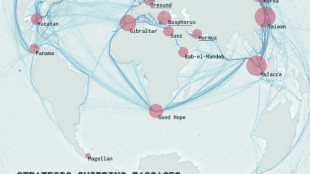 Hormuz, Malacca and other key straits spawn tensions throughout history

 Aston Bay Announces Board Changes
 Avino Announces Q2 2026 Production Results
 CANEX to Pay Out Bulk of Dissenting Gold Basin Shareholders in Canex Shares and Updates Helix Litigation

Iran's unprecedented attack on Israel with hundreds of drones and missiles marked the culmination of a tense two weeks in which Washington engaged in whirlwind efforts to prepare for the expected violence.
American aircraft and planes downed dozens of drones and missiles when Iran launched the attack on Saturday, after Tehran repeatedly threatened to hit back in response to an Israeli strike on its consulate in Damascus that killed two top officers at the beginning of the month.
Senior US officials detailed the role Washington played -- both militarily and diplomatically -- in countering the attack:
- Iranian attack -
Iran launched a barrage of more than 100 medium-range ballistic missiles, more than 30 land-attack cruise missiles and more than 150 attack drones at Israel, a senior US military official said.
Two American warships -- the USS Arleigh Burke and the USS Carney -- destroyed between four and six ballistic missiles, while US aircraft shot down more than 70 Iranian drones, the military official said.
A Patriot missile battery also shot down a ballistic missile that was headed toward Israel in the area of the northern Iraq city of Arbil.
President Joe Biden spent Saturday evening receiving real-time updates in the Situation Room at the White House as the attack unfolded.
"At one point, we knew there were over 100 ballistic missiles in the sky" and "the results of the defenses of course were unclear until all was said and done," a senior administration official said, describing the tense atmosphere.
- The catalyst -
Israel carried out a strike on Iran's consulate in Damascus on April 1, killing seven Revolutionary Guards including two generals and prompting warnings from Tehran that it would respond.
Top US officials were pulled aside and informed of details about the strike during a visit by the Israeli ambassador and defense attache at the White House, the senior administration official said.
"We were not a part of that strike" but "we knew that that would have repercussions," the official said.
A few days later, Biden instructed the government "to defend Israel to the maximum extent possible" and to ensure that all necessary authorities and assets were in place to do so -- a directive that sent officials into action.
- US preparations -
Ahead of the attack, US officials including Secretary of Defense Lloyd Austin and Secretary of State Antony Blinken were in "constant, ongoing, continuous contact" with the Israelis, as well as with other countries in the Middle East.
General Erik Kurilla, the head of the US military command responsible for the region, was dispatched to the region and provided real-time updates as well as coordinating with the Israelis and other partners.
The United States was in touch with Iran as well, sending "a series of direct communications through the Swiss channel," the senior administration official said.
Washington also deployed additional military assets to the region "to bolster regional deterrence efforts and increase force protection for US forces," a US defense official said last week.
- What comes next? -
The US goal since the start of the latest round of conflict between Israel and Hamas six months ago has been to prevent it from spiraling into a broader regional conflict, and Washington is keen to lower the temperature in the region.
"We would not be a part of any response they do," the senior administration official said of possible Israeli action after the attack. "We would not envision ourselves participating in such an act."
Israel has meanwhile "made clear to us they're not looking for a significant escalation with Iran," but "a big question is not only whether, but what Israel might choose to do," the official said.
W.Nelson--AT