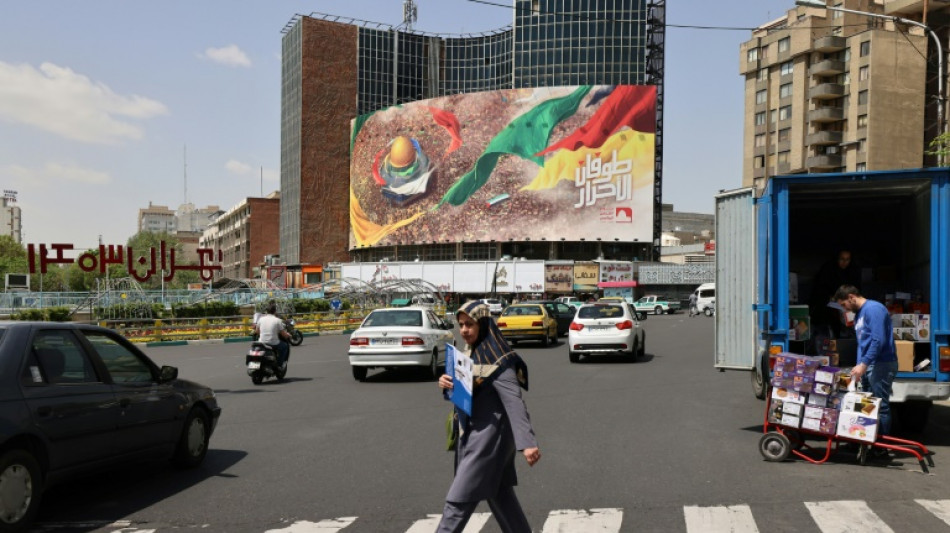
In Tehran, fears grow of potential Iran-Israel war / Photo: ATTA KENARE - AFP

 Metal mining's carbon footprint far larger than thought: study
 TokenInsight Q2 2026 Report: TradFi Momentum Lifts MEXC to No. 2 in Commodity Perpetuals

 Leonardo chief sees potential for Germany to join GCAP fighter jet project
 Louvre heist gallery reopens to public, but with nothing to steal

 Ukraine's new army chief: who is Mykhailo Drapaty?

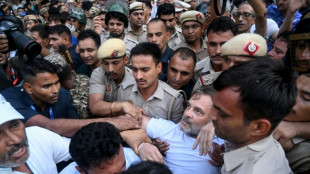
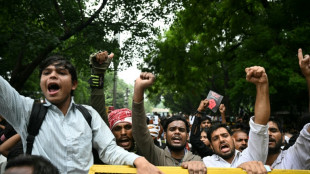 India student protests keep up pressure on Modi government

 Italian FA chief says in touch with Guardiola over coaching vacancy

 Cooler inflation hands new UK PM Burnham an early boost
 Bezos holds talks with group interested in buying Liverpool stake: reports

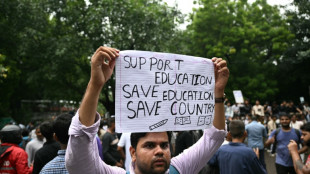 The student movement in India challenging Modi's government

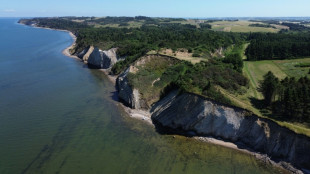 Danish fish fossil cliffs set to gain UNESCO status

 In Bulgarian mountains, local doctor still on call at 90

 Australia protests China's 'destabilising' missile test
 Sydney court dismisses defamation case against film star Rebel Wilson

 US tariffs on Brazil take effect as Trump readies fresh flurry

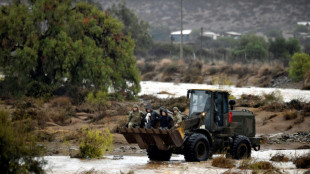 Death toll rises to 13 in Chile's severe storms
 24 hours in a Ukrainian hospital, buckling under the toll of war

 India's domestic workers go online as instant services boom

 From bath to fish market: DJs play to revive Japan neighbourhoods
 Nearly 3,000-year-old human remains unearthed in El Salvador

 New Zealand may miss climate targets due to government policies: report

 Hormuz, Malacca and other key straits spawn tensions throughout history

 Aston Bay Announces Board Changes
 Avino Announces Q2 2026 Production Results
 CANEX to Pay Out Bulk of Dissenting Gold Basin Shareholders in Canex Shares and Updates Helix Litigation

After three days off, people in Tehran returned to work as normal on Saturday, but with a lingering cloud of concern that soaring tensions between Iran and its arch foe Israel could tip over into war.
"I don't know who is at fault and who is not, but it is better to reach a compromise so that the war does not begin, and innocent people don't die," said Maryam, a 43-year-old private sector worker.
Like most Iranians, Maryam has been following the news about a stand-off between Iran and Israel since a strike hit Iran's consulate in Damascus on April 1.
The attack, which Tehran has blamed on Israel, killed seven members of Iran's Revolutionary Guards Corps, including two generals.
Iran has since vowed to punish Israel for the attack, without specifying how.
The United States and other nations have urged restraint.
Ties frayed further on Saturday, when Iran seized an Israeli-linked ship in the Gulf.
Israel then issued a warning that Iran would "bear the consequences for choosing to escalate the situation any further".
The Iranian reformist newspaper Shargh said on Saturday that "the longer Tehran's response is delayed, the more it has negative consequences on the country's economy and intensifies concerns in society".
This uncertainty has weighed on the return to school for students after the long holidays that follow the Iranian New Year, celebrated on March 31 -- as well as the end of Ramadan.
"God willing, our government will favour reason over emotion," said Salehi, a 75-year-old retired government employee in central Tehran.
"If that is the case, there should be no conflict," he told AFP.
- 'War is always bad' -
But other Tehran residents would like the government to have a stronger response than was seen after previous killings of Iranian soldiers blamed on Israel.
"This time we must respond to it with more seriousness and determination," said Yusof, a 37-year-old private sector employee.
Ehsan, a 43-year-old university professor, said it was "logical" to retaliate, because the Israelis "attacked an Iranian diplomatic building" in Syria's capital Damascus.
"War is always bad and worrying -- a person who has experienced war would never support it, but sometimes to achieve peace, a war is necessary," he added.
Ahmad Zeidabadi, an expert in international relations, said "it seems that the authorities have not yet made a final decision, as it will probably have serious consequences".
Tehran has to also take into account any response's impact on public opinion, which appears to currently be more concerned about economic difficulties than by the war in Gaza, he said.
"The possibility of war worries business leaders, in particular those who depend on the rate of foreign currencies," Zeidabadi told AFP.
"Some of them fear that it will cause a shortage of food."
In a sign of these fears, Iran's rial has plunged to a historic low of around 650,000 to the US dollar on the black market.
The government also faces "a dilemma" on a strategic level, said Ali Bigdeli, an academic specialising in international affairs.
"Israel's attack can drag Iran to the edge of an unwanted war," Bigdeli told the reformist newspaper Ham Mihan.
"Entering the war and attacking Israel from Iran's territory is in the interest of Israel," he said.
It could offer Israeli Prime Minister Benjamin Netanyahu "a justification for the Gaza war, and will end the Gaza war in the shadow of the war with Iran," he added.
Former Iranian deputy foreign minister Hossein Jaberi Ansari said that Tehran "should choose the least costly and at the same time most profitable option to respond to Israel".
"The most legitimate target for an Iranian strike would be Israel's security and military installations in the territories occupied since 1967, particularly in the Golan Heights," he said.
N.Mitchell--AT