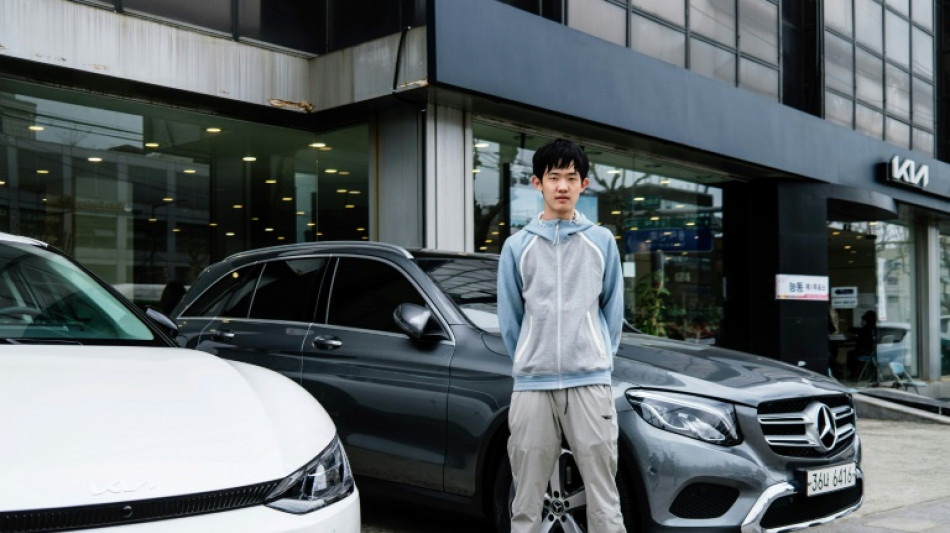
Too busy for politics? S. Korea's young voters on what motivates them / Photo: Anthony WALLACE - AFP

 India student protests keep up pressure on Modi government
 Italian FA chief says in touch with Guardiola over coaching vacancy
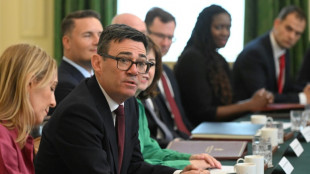 Cooler inflation hands new UK PM Burnham an early boost

 Bezos holds talks with group interested in buying Liverpool stake: reports

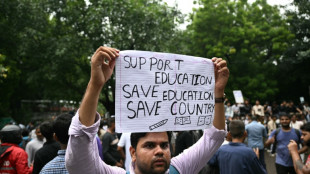 The student movement in India challenging Modi's government

 Danish fish fossil cliffs set to gain UNESCO status
 In Bulgarian mountains, local doctor still on call at 90

 Australia protests China's 'destabilising' missile test
 Sydney court dismisses defamation case against film star Rebel Wilson

 US tariffs on Brazil take effect as Trump readies fresh flurry

 Death toll rises to 13 in Chile's severe storms

 24 hours in a Ukrainian hospital, buckling under the toll of war
 India's domestic workers go online as instant services boom
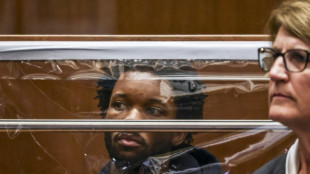
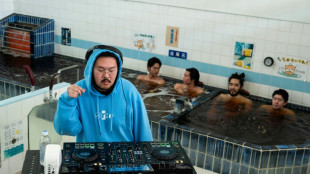 From bath to fish market: DJs play to revive Japan neighbourhoods
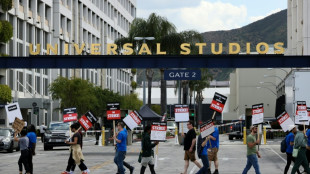
 Nearly 3,000-year-old human remains unearthed in El Salvador

 New Zealand may miss climate targets due to government policies: report

 Hormuz, Malacca and other key straits spawn tensions throughout history

 XCF Announces $2.50 Exercise Price Warrant Capital Strategy to Support Operations and Growth
 Cashmere Valley Bank Reports Increased Quarterly Earnings of $6.9 million, Year to Date Earnings of $12.7 million

 Who is the Best Plastic Surgeon in Bellevue, Washington?

 At least 53 dead in Guyana capsized ferry disaster

 Colombia to host office of Trump's anti-cartel alliance: president-elect
 Trump says US 'not finished' as Iran widens attacks

 Panthers lose Moton to blood clot as NFL camps open

 LPGA launches Nanea Cup event next March in Hawaii
High youth unemployment, feuding politicians and a cost of living crisis: young South Korean voters told AFP what was on their minds as they voted -- some for the first time -- in elections Wednesday.
This election cycle, younger voters were outnumbered by those over 60, official data showed, and at polling booths across the capital Seoul, there were visibly more older voters casting their ballots.
AFP spoke to them to find out what was going on:
- Hard to find jobs -
Outside a polling station set up inside a KIA car showroom, university student Ahn Hyun-sup, 21, told AFP that it was his first time to vote in a parliamentary election.
"These days, many young people are not interested in elections. But if the young don't go out to cast their ballots, politicians will no longer listen to their opinions," he said.
"That's why I came to vote today. It is difficult for younger people to find jobs. I hope the newly elected lawmakers will solve some of the employment issues," he said.
Addressing the country's famously adversarial politics, he said: "I hope they stop fighting and make policies for the people."
- Life not improving -
For another first-time voter, Kim Yong-ho, 24, who owns a food and beverage business, it is important to vote because those who don't participate do not have the right to criticise the system.
"There is definitely less interest in this election," than in the 2022 presidential election, he told AFP.
"I think it is because (people) feel rather disappointed. The real situation after the election didn't improve as they expected," he said.
"Maybe the future may change because of politics, but at present, I don't really feel it's that significant."
- Rising rents -
Son Su-yeon, 27, who works in the service industry, said it was her second time to vote in a general election -- and she believed it was very important young people showed up.
"The right to vote is so precious, I don't want to squander that right," she said, adding that people seemed more inclined to vote when they were discontented with the incumbent government.
Son said she could see that politicians had been trying to address the country's woefully low birthrate -- the world's lowest -- but "most policies don't seem realistic."
But for her day-to-day life, the most important issue she wanted the government to focus on was unaffordable housing for young people living in capital Seoul.
This "is one of the biggest problems now," she said. "I'm planning to get married in a few years, so that's something I have to consider."
- Cost of living -
Choi Ji-sun, 25, has voted in every election since she became eligible, making Wednesday her third vote after the 2020 general election and the 2022 presidential election.
"I believe the most powerful right citizens have is our right to vote," she told AFP, adding that it was important for citizens to stay politically engaged to hold politicians to account.
"There are too many policies, and not all policy pledges are kept, so I've gradually become disengaged and my expectations have fallen," she added.
Politicians of all stripes make many promises on the campaign trail, she said, and have "always talked about creating a country where young people can thrive".
"But if you look at the current situation, the cost of living is too high and there are not many policies for young people, even though my income level is not high at all. It's a bit bittersweet."
- 'No impact' -
Despite always voting, university student Cho Na-young, 22, who is currently looking for work, said she didn't feel that her political participation made much difference.
"To be honest, even if the members of the National Assembly or the President change, my life doesn't seem to change that much," she told AFP.
"I don't live on (state) subsidies, and I don't pay a lot of taxes. I don't think (a change of government) really has much of an impact on my life," she added.
Even so, she said she was voting to try and make sure "a party that I hate would not be elected".
"My friends also said they didn't like Lee Jae-myung and wanted to prevent Lee from being elected," she added, referring to the scandal-plagued leader of the opposition.
- North Korea tensions -
All South Korean men must perform around 18 months of mandatory military service and Kim Yeong-kwang, 21, told AFP he had just finished his time in the army.
"Because I was recently discharged from the military, I'm most concerned about North Korea relations and national security issues," the university student said.
If the ruling People Power Party were to lose it is possible that South Korea's foreign policy could shift, and become more pro-China and less hawkish on the nuclear-armed North.
"The young need to show more interest to make politicians care more about us and put forward policies for us," he said.
"But it seems we are not that interested maybe because we're too busy making a living."
T.Perez--AT