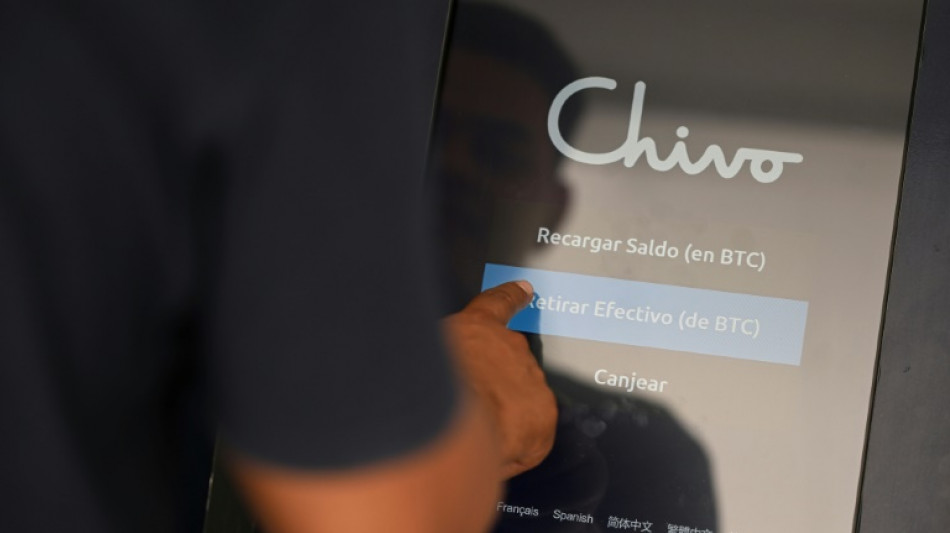
Record remittances provide lifeline in Central America / Photo: Marvin RECINOS - AFP

 India student protests keep up pressure on Modi government

 Italian FA chief says in touch with Guardiola over coaching vacancy

 Cooler inflation hands new UK PM Burnham an early boost

 Bezos holds talks with group interested in buying Liverpool stake: reports

 The student movement in India challenging Modi's government

 Danish fish fossil cliffs set to gain UNESCO status

 In Bulgarian mountains, local doctor still on call at 90

 Australia protests China's 'destabilising' missile test
 Sydney court dismisses defamation case against film star Rebel Wilson

 US tariffs on Brazil take effect as Trump readies fresh flurry

 Death toll rises to 13 in Chile's severe storms

 24 hours in a Ukrainian hospital, buckling under the toll of war

 India's domestic workers go online as instant services boom

 From bath to fish market: DJs play to revive Japan neighbourhoods

 Nearly 3,000-year-old human remains unearthed in El Salvador

 New Zealand may miss climate targets due to government policies: report

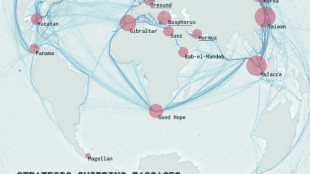 Hormuz, Malacca and other key straits spawn tensions throughout history

 XCF Announces $2.50 Exercise Price Warrant Capital Strategy to Support Operations and Growth

 Cashmere Valley Bank Reports Increased Quarterly Earnings of $6.9 million, Year to Date Earnings of $12.7 million

 Who is the Best Plastic Surgeon in Bellevue, Washington?

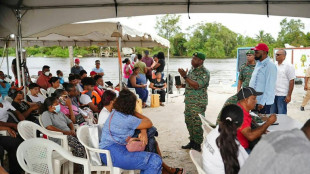 At least 53 dead in Guyana capsized ferry disaster

 Colombia to host office of Trump's anti-cartel alliance: president-elect

 Trump says US 'not finished' as Iran widens attacks

 Panthers lose Moton to blood clot as NFL camps open

 LPGA launches Nanea Cup event next March in Hawaii

Money sent home by migrants in the United States to Central America has risen to record levels, providing a lifeline for many of their relatives like Salvadoran mother of three Marta Alvarado.
Such remittances are now equivalent to a quarter of the combined economic output of the poverty-afflicted nations of El Salvador, Guatemala, Honduras and Nicaragua.
Alvarado described the money transfers as "a blessing" for her family.
"What my brothers send month after month helps not only me but also my mother and father, who are now elderly," said the 54-year-old, who works as a secretary in a health clinic.
"It helps them to support themselves, buy their food, clothing and medicine, and to do home improvements," she told AFP.
El Salvador, Guatemala, Honduras and Nicaragua together received almost $42 billion in family remittances in 2023, according to official data from central banks and the intergovernmental Central American Monetary Council.
The remittances even exceed the amounts generated by foreign investment, tourism or exports.
They are a key factor in boosting trade and consumer spending in nations with high poverty rates, according to experts.
- 'Life preserver' -
Remittances to the four countries increased from $19.0 billion in 2017 to $41.8 billion in 2023 -- a rise that experts attribute to greater migration, in particular to the United States.
The exact number of Central Americans living abroad is unknown, since many are irregular migrants.
But according to estimates by international and non-governmental organizations, the figure is around 10 million, or a quarter of the combined population of El Salvador, Guatemala, Honduras and Nicaragua, where most migrants hail from.
"People who don't find opportunities in their country are forced to leave," Henry Rodriguez, an economist at the National Autonomous University of Honduras, told AFP.
Remittances now represent almost 27 percent of the gross domestic product (GDP) in Honduras, 26 percent in Nicaragua, 24 percent in El Salvador and almost 20 percent in Guatemala.
They are "and will continue to be a life preserver for the Salvadoran economy for a long time," economist Carlos Acevedo, a former president of El Salvador's central bank, said.
"Without remittances we would have sunk a long time ago," he told AFP.
"If dollars do not enter, the financial system does not work -- nothing works in the country. And remittances are one of the main sources of dollar inflows," Acevedo said.
- Breaking cycle of poverty -
In Nicaragua, 17-year-old student Ligia Hurtado receives money sent by two aunts from Spain, which she uses to pay for university fees, housing, food and transportation.
In El Salvador, 61-year-old retiree Emerita Coto said her brother sends her $400 every month from New York, money that she uses to pay for a plot of land that she acquired on credit.
In contrast, money transfers are less important for countries with little emigration, and represent only around one percent of GDP in Panama and Costa Rica.
Multilateral organizations such as the World Bank and the Inter-American Development Bank promote the productive use of remittances, rather than for consumption.
They encourage investment in small businesses to support the development of nations with small economies and high poverty rates.
It is a view shared by Guatemala's new president, Bernardo Arevalo.
"Remittances can contribute more efficiently to breaking the cycle of poverty that motivates migration," he said.
Gustavo Juarez, who heads an association of Guatemalans deported from the United States, agrees.
"It would be good for a remittance to be invested in a business or a small enterprise," he told AFP.
In El Salvador's capital, Alvarado's 71-year-old mother Ester plans to open a store with some of the money that her children send.
"Soon she will have a business that can help her to have other income," Alvarado said.
Th.Gonzalez--AT