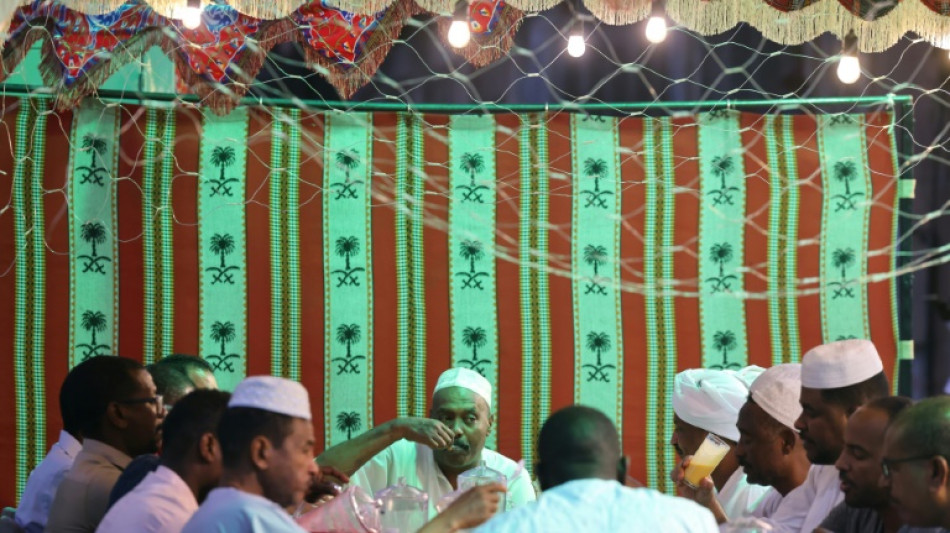
War-stranded Sudanese find solace in Saudi's 'Little Khartoum' / Photo: Fayez Nureldine - AFP

 Danish fish fossil cliffs set to gain UNESCO status
 In Bulgarian mountains, local doctor still on call at 90

 Australia protests China's 'destabilising' missile test
 Sydney court dismisses defamation case against film star Rebel Wilson

 US tariffs on Brazil take effect as Trump readies fresh flurry

 Death toll rises to 13 in Chile's severe storms
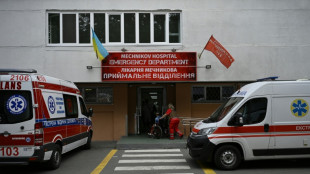 24 hours in a Ukrainian hospital, buckling under the toll of war
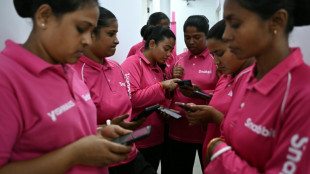 India's domestic workers go online as instant services boom

 From bath to fish market: DJs play to revive Japan neighbourhoods
 Nearly 3,000-year-old human remains unearthed in El Salvador

 New Zealand may miss climate targets due to government policies: report

 Hormuz, Malacca and other key straits spawn tensions throughout history

 InterContinental Hotels Group PLC Announces Transaction in Own Shares - July 22
 Rainout keeps Red Sox MLB win streak at 14 with two games Wednesday

 Zelensky sacks army chief Syrsky after days of protests

 Messi lands in Argentine hometown after World Cup defeat

 Lipowitz breaks collarbone in Tour de France crash

 India opposition leader Gandhi detained after calling for PM resignation
 AI boom lifts Mexico tech exports, complicating Trump trade goals
 'Godzilla' actress Kaylee Hottle, 18, dies in US car crash

 South Africa's anti-migrant unrest led over 160,000 to flee
 Ipswich sign Ghana winger Fatawu from Leicester
 Evenepoel wins 'special' Tour de France individual time-trial

 Evenepoel wins Tour de France individual time-trial

 Tropical Storm Bertha strengthens, threatening Gulf coast of US
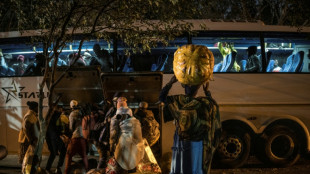
Stranded abroad by almost a year of war, Saudi Arabia's swelling Sudanese community are drawn to Riyadh's "Little Khartoum" where they can eat, pray and console each other about the conflict ravaging their country.
During the Muslim holy month of Ramadan, Sudanese men, some in traditional robes and turbans, gather daily for the fast-breaking "iftar" evening meal and prayers in southern Riyadh's Ghubairah area.
The district, filled with Sudanese shops and restaurants, is a magnet for the growing numbers who have fled Sudan or find themselves unable to return because of safety fears.
The war between Sudan's army and a paramilitary force since last April has killed tens of thousands and forced millions to flee their homes, in one of the world's most dire humanitarian emergencies.
"I can't go back to Sudan as the situation is difficult," said Imad al-Dine Ahmed, a 50-year-old trader who arrived last year on a pilgrimage to the holy city of Mecca.
Ahmed, who used to sell electrical appliances in the city of Kosti, south of the capital Khartoum, now relies on money transferred by his brother from Sudan to support him, his wife and mother, who live with him in Saudi.
In Sudan "there aren't any stable services, not even for water and electricity," he told AFP, as he broke his day-time fast with Sudanese dishes of okra and chicken.
Saudi Arabia, which has hosted mediation talks between the warring parties, has been offering temporary, renewable visas for Sudanese since the war broke out.
Although the numbers of immigrants from Sudan have not been released, a Sudanese official said more than 50,000 have arrived in Saudi Arabia in the past year.
They are among the roughly 1.8 million Sudanese who have fled to neighbouring countries, according to United Nations figures.
- 'Sadness and pain' -
"A large percentage of Sudanese have come to Saudi Arabia and now need to be in a Sudanese atmosphere that will bring back memories," said Omar Arabi, who manages a Sudanese restaurant in Ghubairah.
Arabi, a father of six, helps oversee iftar gatherings on the pavement outside his restaurant, where dozens of men sit on carpets and cushions.
The meals "can last 40 minutes or one hour, but people appreciate their time and this hour allows them to forget their sadness and pain", said Arabi.
"They find themselves in a comfortable atmosphere... and wait for the next day to come to repeat the same gathering."
Many of the Sudanese in the Saudi capital long for home but can't go back because of the perilous journey.
Port Sudan, which faces Saudi Arabia across the Red Sea, is the country's main entry point after Khartoum's international airport was taken out of service by the fighting.
But with frequent clashes and road closures, many Sudanese are unwilling to travel by land from Port Sudan to their home towns and villages.
"Those flying from Saudi to Sudan can go there but once they arrive to Sudan, it's very difficult to arrive to their area of residence," said Arabi, who recently brought his wife, six children and parents to live with him in Saudi Arabia.
- 'Never forget' -
Bashir Abdel Azim, a Riyadh-based sales manager at Sudan's Badr Airlines, said the number of Sudanese travelling from Saudi to Sudan has fallen sharply.
"The numbers have decreased by more than 50 percent," he said.
"Most people currently travel from Sudan to Saudi Arabia, and not the other way around," said Abdel Azim, who is trying to evacuate his own family.
Issam Youssef, a Sudanese barber living in Saudi, said the danger of travel is not the only deterrent.
The war has destroyed infrastructure and crippled the economy, leaving many unable to provide for their families.
"I am responsible for 17 people," said Youssef, who sends money back home from Saudi Arabia.
Saleh Mohammed, who owns a sweet shop in Ghubairah, said the conflict had left his neighbours dead and forced his family to flee Khartoum.
"What happened to the country we can never forget," the 53-year-old said.
J.Gomez--AT