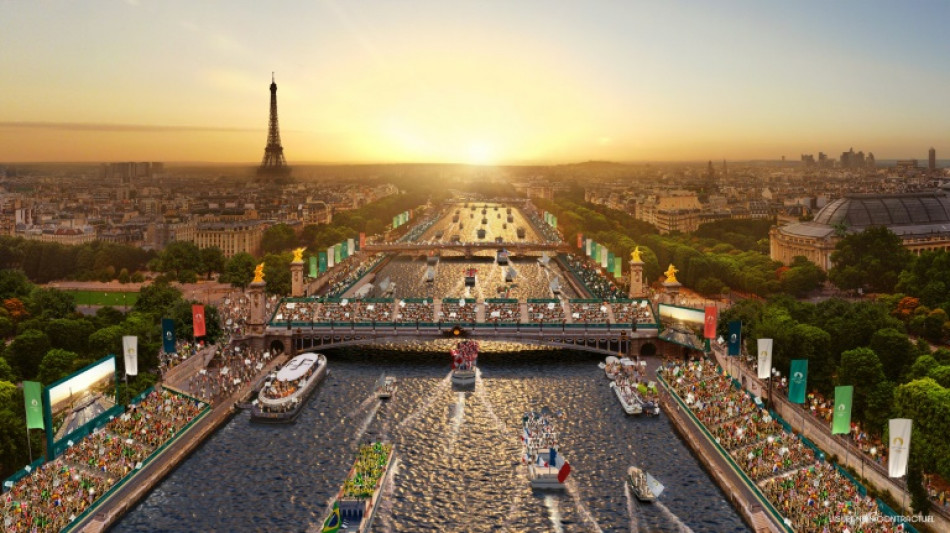
No 'specific' terror threat to Paris Olympics: minister / Photo: Florian Hulleu - Paris 2024/AFP/File

 Danish fish fossil cliffs set to gain UNESCO status
 In Bulgarian mountains, local doctor still on call at 90

 Australia protests China's 'destabilising' missile test
 Sydney court dismisses defamation case against film star Rebel Wilson
 US tariffs on Brazil take effect as Trump readies fresh flurry
 Death toll rises to 13 in Chile's severe storms
 24 hours in a Ukrainian hospital, buckling under the toll of war
 India's domestic workers go online as instant services boom

 From bath to fish market: DJs play to revive Japan neighbourhoods
 Nearly 3,000-year-old human remains unearthed in El Salvador
 New Zealand may miss climate targets due to government policies: report
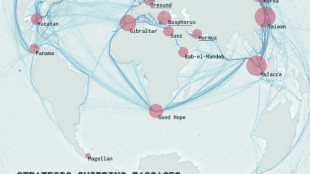 Hormuz, Malacca and other key straits spawn tensions throughout history

 InterContinental Hotels Group PLC Announces Transaction in Own Shares - July 22
 Rainout keeps Red Sox MLB win streak at 14 with two games Wednesday
 Zelensky sacks army chief Syrsky after days of protests
 Messi lands in Argentine hometown after World Cup defeat

 Lipowitz breaks collarbone in Tour de France crash
 India opposition leader Gandhi detained after calling for PM resignation
 AI boom lifts Mexico tech exports, complicating Trump trade goals
 'Godzilla' actress Kaylee Hottle, 18, dies in US car crash

 South Africa's anti-migrant unrest led over 160,000 to flee
 Ipswich sign Ghana winger Fatawu from Leicester
 Evenepoel wins 'special' Tour de France individual time-trial

 Evenepoel wins Tour de France individual time-trial
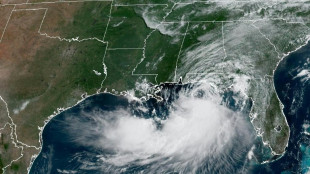 Tropical Storm Bertha strengthens, threatening Gulf coast of US
France's sports minister said Wednesday that there was no "specific" terror threat to the Paris Olympics and that organisers were planning to go ahead with the opening ceremony on the river Seine.
An attack on a Moscow concert hall last month which left 140 people dead has revived fears for the Paris Games which begin on July 26.
"Today there is no specific terror-related threat targeting the Olympic and Paralympic Games," Sports Minister Amelie Oudea-Castera told the France 2 channel.
She said the opening ceremony on the Seine remained the "main plan" but suggested that an alternative was being prepared behind the scenes.
Instead of parading through the athletics stadium at the start of the Games, sporting delegations are set to sail down the Seine on a flotilla of river boats in front of up to 500,000 spectators, including people watching from nearby buildings.
"It's not because we are not talking about a Plan B that there isn't one," Oudea-Castera added.
All countries have said they plan to take part in the open-air river parade, including the most risk-averse such as the United States and Israel.
The Olympics have been attacked in the past -- most infamously in 1972 in Munich and again in 1996 in Atlanta -- with the thousands of athletes, huge crowds and live global television audience making it a target.
Organisers have previously ruled out moving the location of the opening ceremony from the Seine but have suggested it could be downgraded -- meaning only performers, and not athletes, might board the boats, for example.
French security forces are screening up to a million people before the Games, including people living close to key infrastructure, according to the interior ministry.
After the Moscow attack, the government placed France on its highest terror alert, meaning security forces are patrolling around possible targets such as government buildings, transport infrastructure or schools.
Oudea-Castera said that rehearsals for the opening ceremony would take place on the river on May 27 and June 17.
- Budget worries -
Speaking in parliament on Tuesday evening, she denied to lawmakers that the Olympics budget was slipping out of control.
The head of the state auditor, Pierre Moscovici, said last week that the cost to taxpayers could reach 5.0 billion euros -- much higher than the three billion he had previously indicated.
"There are no hidden costs or a budgetary drift," Oudea-Castera said, adding that "these are the least costly Olympics since Sydney (in 2000)."
The current budget is 8.8 billion euros, comprising 4.4 billion euros for the organising committee and 4.4 billion for infrastructure.
She told France 2 last week that there was "no reason" that the state's contribution to the Games would reach five billion euros.
The budget for the organising committee might over-run by 15 percent, compared to 200 percent in London, she said.
"We have a budget that is extremely controlled," she told France 2.
A 2020 study by academics at the University of Oxford concluded that every summer Olympics since 1960 had gone over budget, with the average sports-related costs ending up between two to three times (172 percent) the original estimate.
Some of the most notorious over-spends occurred in Montreal in 1976 and Rio de Janiero in 2016, where both cities were left nearly bankrupt and mired in debt.
N.Walker--AT