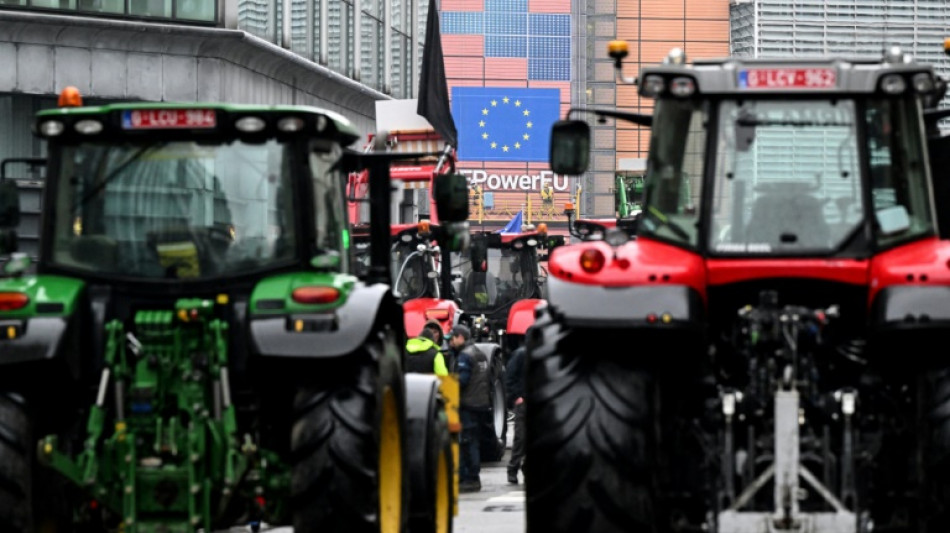
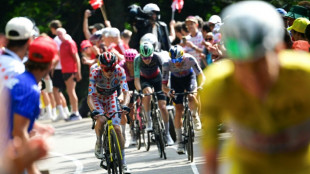
Stormclouds gather over EU's Green Deal / Photo: JOHN THYS - AFP/File

 French youth social media ban meets age check conundrum

 Lebanon's Aoun to meet Trump as pressure builds to disarm Hezbollah
 Red Sox stretch streak to 14 after clinging on to beat Orioles 6-5
 Wes Streeting named new UK defence minister
 Inside Indonesia's slave island: 'I want my children to be free'
 Thousands welcome home Argentina squad, without Messi, despite World Cup loss
 Trump orders new 50% tariff on many Canadian goods
 US accuses Cuba of sweeping spy campaign, aiding American left
 US stocks drop on latest Middle East fighting, tech earnings caution
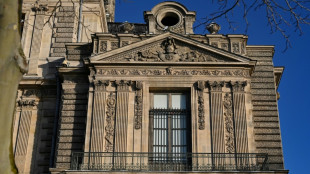 Louvre heist gallery to reopen to public on Wednesday
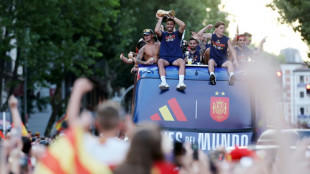
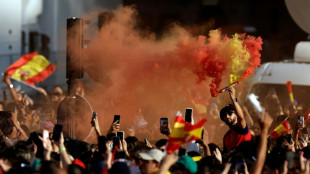 World Cup champs Spain lap up adulation of a million on bus parade
 Canada faces one of its most intense fire seasons
 Mexican drug lord 'El Mayo' sentenced to life in US prison
 Spanish king hails World Cup heroes as celebration tour begins
 Mexican drug lord 'El Mayo' sentenced to life in prison
 Leasing firm SMBC orders 200 planes from Airbus and Boeing
 Zelensky faces deepening political crisis as protests dig in
 'Legendary' former Liverpool and England star Keegan dies aged 75
 Former Liverpool and England star Kevin Keegan dies aged 75

 Three things we learned from the Belgian Grand Prix
 Without Messi, Argentine team set for low-key homecoming
 Garcia departure leaves Belgium facing 'generational change'
 Scars of war linger on Syria's Saint Simeon monastery
 Plane carrying Spain's World Cup winning team lands in Madrid
 MEXC Launches 0-Fee Stock Futures Campaign With $5,000,000 SNDK Prize Pool
The EU's Green Deal -- once a core Brussels mission -- is looking increasingly under threat in the bloc's upcoming elections as resistance grows to its costs and consequences.
Farmers' protests, consumer cost-of-living worries and some countries' hesitation are already undercutting the ambitious plan to make the European Union carbon-neutral by 2050.
"The European Green Deal is our new growth strategy," European Commission chief Ursula von der Leyen announced back at the start of her mandate in 2019, as she unveiled dozens of pieces of legislation to meet climate targets agreed by EU member countries.
Five years on, the tone has changed.
Now, industry and farmers denounce the new "burdens" being piled upon them. Member states, including France, are calling for a "pause" in further measures.
"This backlash is centred on the agricultural area. It's not been true for energy, industry, transports," argued Pascal Canfin, chair of the European Parliament's environment committee.
He blames what he calls a "polarisation strategy" by right-wing parties.
Many of the Green Deal's laws have been adopted: an end to selling internal-combustion engine cars by 2035; a border carbon tax; rules against importing goods from deforested zones.
But momentum stalled last year with legislation to reduce chemical pesticides and to restore wilderness ecosystems -- opposed on grounds they could undermine food production in the bloc.
The biggest group in the European Parliament, the conservative European People's Party (EPP), from which von der Leyen hails, has made the shift an electoral gambit.
"It's easy to fix a figure. But it's more difficult to really make the transition happen in industry and also with the citizens," said a German EPP lawmaker, Peter Liese.
Farmland and forestry "should be protected much more" and farmers should not be seen "as an enemy of climate policy", he said.
- 'Identity politics' -
The climate crisis is becoming "a real identity politics issue" caught up in the farmers protests, said Susi Dennison, of the think tank the European Council on Foreign Relations.
It is being cast as "an either-or choice -- between either you do climate, or you are concerned about the economic picture," she said.
"There isn't really a strong enough response to that false dichotomy from progressive groups," Dennison said.
On the left in the parliament, Iratxe Garcia, of the Socialists & Democrats, laid the blame at the feet of "the extreme right and the EPP," accusing them of "trying to mix everything and to confuse the debate".
"What the conservatives are doing is trying to send the message that we have to choose between the farmers and the Green Deal," Garcia said, calling that "really irresponsible".
"The transition -- we have to do it. And we are prepared to confront, to speak, to explain," she said.
Yet a rightward shift in the European Parliament could put much of the legislative slate on the issue in jeopardy, undermining transitional steps needed after 2030. It could even slow the application of laws already adopted, some of which have revision clauses.
Phuc-Vinh Nguyen, of the Jacques Delors Institute, said a pause in the EU rules on battling climate change "risked being instrumentalised to legitimise populist attacks" that aim to bog down their application.
For Antonio Tajani, deputy prime minister in Italy's far-right government, it was time for Brussels "to abandon its extremist and ideological stance.
"Industry and farming cannot be penalised by unattainable environmental goals," he said.
Already Brussels has given up on trying to revise rules around chemical products and -- because of the farmers' revolt -- has put forward a lengthening list of concessions and opt-outs from environmental rules linked to its Common Agricultural Policy.
Von der Leyen herself -- vying for a second mandate -- has for the past few months been calling for a "new phase" of the Green Deal that factors in the need for better European competitivity for farmers and business.
The next EU legislature could seek to tie the deal to a reindustrialisation push, to attract investment, factories and jobs as part of the transition, said Neil Makaroff, of the think tank Strategic Perspectives.
Experts, however, point to a weak point in garnering those investments: a financing gap to reach 2030 climate goals that has been put at 406 billion euros ($445 billion) a year by the think tank I4CE.
M.O.Allen--AT