With men on the front, women descend Ukraine's mines / Photo: Anatolii STEPANOV - AFP

 Trump Signals Willingness to Work With Democrats After Midterm Defeat

 Qatar media bodies discuss support for humanitarian initiatives
 InterContinental Hotels Group PLC Announces Transaction in Own Shares - November 04

 No. 22 UCLA defeats No. 5 Arizona 84-75 despite Kharchenkov's 38 points

 Vessel operator seeks witnesses after Vancouver grounding

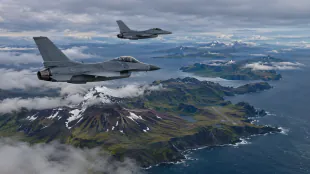 US Air Force deploys F-16 fighters to remote Aleutian base for readiness drill

 Bezos grant helps Seattle nonprofit move thousands of families toward housing

 Shrini Srivastava joins crew of Varanasi-Delhi Vande Bharat Sleeper service

 Nearly Half of Australian Workers Overqualified, Survey Finds

 RBI eases export-declaration compliance for individual service exporters

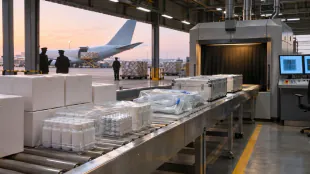 India proposes more import entry points for drugs and medical devices

 Derek Tierney Outlines Ten-Year Strategy for National Digital Health System

 NBC’s Steve Kornacki Reveals Tech Habits Ahead of Midterm Elections
 India and Israel oppose UN draft on regional conventional arms control

 BLS Polymers shares open 65.3% above IPO price

 Capital-markets shares rally as Motilal Oswal and Angel One lead gains

 Latino Voters Defy ICE Fears, Turn Out in Record Numbers for Midterms

 ITC shares rise as analysts anticipate gradual cigarette-business recovery

 Reliance rally puts historical one-year return pattern in focus

 Kuwait edges Oman 1-0 in veterans Gulf Cup in Doha

 Saudi Aramco quarterly profit climbs 34.6% amid elevated oil prices
Even though Anya Karkachova grew up in the heartland of Ukraine's industrial east -- dotted by coal mines and their smoking chimneys -- she never imagined she would be working underground herself.
But the 31-year-old is now one among hundreds of Ukrainian women who have taken on new roles below the surface of the war-battered country as its men fight off Russian forces on the front.
"Of course it's hard. The air isn't like in the mountains, is it?" Karkachova told AFP in a mine 400 metres beneath the Dnipropetrovsk region in eastern Ukraine.
"But because there's a shortage of guys and we have this situation in Ukraine, we have to help in some way," she added.
Ukraine introduced historic changes to its labour laws just weeks after Russia invaded to allow women to take on work previously restricted to men.
They point to sweeping social shifts in the country brought on by the war, which has seen tens of thousands of women join the armed forces and take on jobs that used to be limited to men, as Kyiv strives to keep its struggling economy afloat.
Karkachova fled to Dnipropetrovsk from the eastern mining region of Lugansk, now occupied by Russia, and her ex-husband is among those fighting on the front.
The move with her children from one industrial territory to another felt natural and the prospect of working in a mine didn't feel entirely alien.
- 'It was an oddity' -
"And so, I went to try to work. In life you have to try everything. I like it."
DTEK, the Ukrainian energy company that operates the facility where Karkachova has been working for one year requested its location be withheld for security reasons.
Inna Kobozeva, head of human resources at the mine told AFP that out of a total of around 2,800 employees, some 600 were now fighting on the front.
She noted that more than two dozen staff have been killed in fighting with Russian forces since 2014, when Kremlin-backed separatists seized swathes of eastern Ukraine.
At least 183 women since the war have begun working underground at this particularly facility.
They are among around 500 in a broader group of DTEK mining facilities in the region, making up around 15 percent of staff, a press officer said.
But not everyone welcomed women underground -- particularly the men -- when they took on the roles.
"At first, they were pessimistic. They couldn't even believe it. But then they changed their minds," said Kobozeva, the HR chief.
"It was an oddity," said Dmitry, a 33-year-old operator of the mine's underground transport network.
- 'Indispensable' work -
But when one of his colleagues who was deployed to the front was replaced by one of the new female recruits, his scepticism fell away.
"She works no worse than the boys. There's a lot of boys missing. Yeah. Their help is indispensable," he said.
Even before the war, Ukraine's economy ministry said there were workforce shortages, a problem exacerbated by the flight of some six million Ukrainians from the country due to the conflict.
Adding to that, the military has said it hopes to mobilise some 500,000 men to reclaim territory captured by Russia.
"We haven't stopped recruitment. I wouldn't say the situation is critical but we do have a staff shortage," Kobozeva said.
Several of the women interviewed by AFP expressed hope that men fighting on the front would return after the war and take up their old jobs again.
"We went to work to help our husbands. They'll come back and return to their places," said Tetiana Tarasova, a 36-year-old machine operator whose partner is fighting in the Donetsk region.
Victoria, 33, who also works in the mine's underground transport network, said it was important for women to help at a time of national crisis but ultimately the subterranean work is "a man's job".
"I understand that our women are strong and can handle anything," she said, but it was the circumstances of the war that had pushed her to take on the work underground.
"I probably wouldn't have agreed to do it if the moment hadn't forced me to".
afptv-bur-jbr/jc/yad
H.Thompson--AT