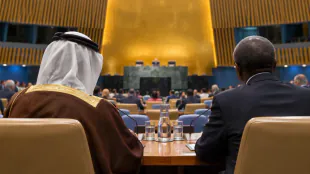
Swiss look at using Russian assets for Ukraine reparations / Photo: GABRIEL MONNET - AFP

 Trump Signals Willingness to Work With Democrats After Midterm Defeat

 Qatar media bodies discuss support for humanitarian initiatives

 InterContinental Hotels Group PLC Announces Transaction in Own Shares - November 04

 No. 22 UCLA defeats No. 5 Arizona 84-75 despite Kharchenkov's 38 points

 Vessel operator seeks witnesses after Vancouver grounding

 US Air Force deploys F-16 fighters to remote Aleutian base for readiness drill

 Bezos grant helps Seattle nonprofit move thousands of families toward housing

 Shrini Srivastava joins crew of Varanasi-Delhi Vande Bharat Sleeper service

 Nearly Half of Australian Workers Overqualified, Survey Finds

 RBI eases export-declaration compliance for individual service exporters

 India proposes more import entry points for drugs and medical devices

 Derek Tierney Outlines Ten-Year Strategy for National Digital Health System

 NBC’s Steve Kornacki Reveals Tech Habits Ahead of Midterm Elections

 India and Israel oppose UN draft on regional conventional arms control

 BLS Polymers shares open 65.3% above IPO price

 Capital-markets shares rally as Motilal Oswal and Angel One lead gains

 Latino Voters Defy ICE Fears, Turn Out in Record Numbers for Midterms

 ITC shares rise as analysts anticipate gradual cigarette-business recovery

 Reliance rally puts historical one-year return pattern in focus

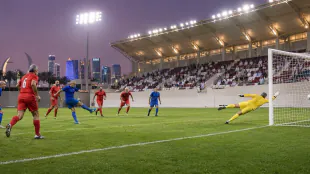 Kuwait edges Oman 1-0 in veterans Gulf Cup in Doha

 Saudi Aramco quarterly profit climbs 34.6% amid elevated oil prices
Swiss lawmakers on Thursday narrowly backed moves towards allowing the use of frozen Russian state assets to fund war reparations in Ukraine.
The issue has been hotly debated in Switzerland, where discretion in the key banking industry and the country's tradition of neutrality are highly valued.
The upper house of parliament voted by 21-19 in favour of a series of government-backed motions, with three abstentions. The lower house passed them last year.
They pave the way for the government to work on an international legal basis for using frozen aggressor-state assets to pay for reparations in attacked countries.
More than $8 billion in Russian central bank reserves and assets are held in Switzerland.
"The facts are very clear indeed," Foreign Minister Ignazio Cassis told parliament's upper house.
"Russia has seriously violated international law. It must therefore repair the damage caused.
"International discussions are under way regarding compensation mechanisms and Switzerland is participating with its knowledge, its skills and all its history in this area."
Bern will now seek to establish the international legal basis needed for a reparations mechanism to be developed at the global level.
It would be aimed at allowing frozen funds from an aggressor's central bank, or assets of its state-owned companies, to be legally transferred to an attacked state.
- Lively debate -
Thursday's vote followed a lively debate in the upper chamber.
There was concern about whether Switzerland's image on neutrality might be harmed, and whether Switzerland was doing enough when there was war in Europe.
Cassis argued that since Russia's full-scale invasion of Ukraine in February 2022, Switzerland had supported the affected populations with around three billion Swiss francs ($3.4 billion).
The government also aims to spend around 1.5 billion Swiss francs on Ukraine and the region between 2025 and 2028. Switzerland also plans to host a peace conference later this year.
"We don't have to blush when we talk about Ukraine on the international stage," Cassis said, whether it was on the financial, diplomatic or humanitarian front.
Switzerland's long-standing position is one of well-armed military neutrality.
It has refused to send arms to Kyiv or allow countries that hold Swiss-made weaponry to re-export it to Ukraine.
But it has matched the European Union's economic sanctions on Russia.
The economic affairs ministry said in May last year that 7.4 billion Swiss francs of Russian central bank reserves and assets were being held in Switzerland.
Switzerland has also frozen 7.5 billion Swiss francs in Russian funds and assets owned or controlled by sanctioned persons, companies or entities, the ministry said at the time.
The country is a long-favoured destination for wealthy Russians and their assets.
The Swiss Bankers Association estimated that in March 2022, Russian clients held approximately 150 billion Swiss francs in banks in Switzerland.
W.Stewart--AT