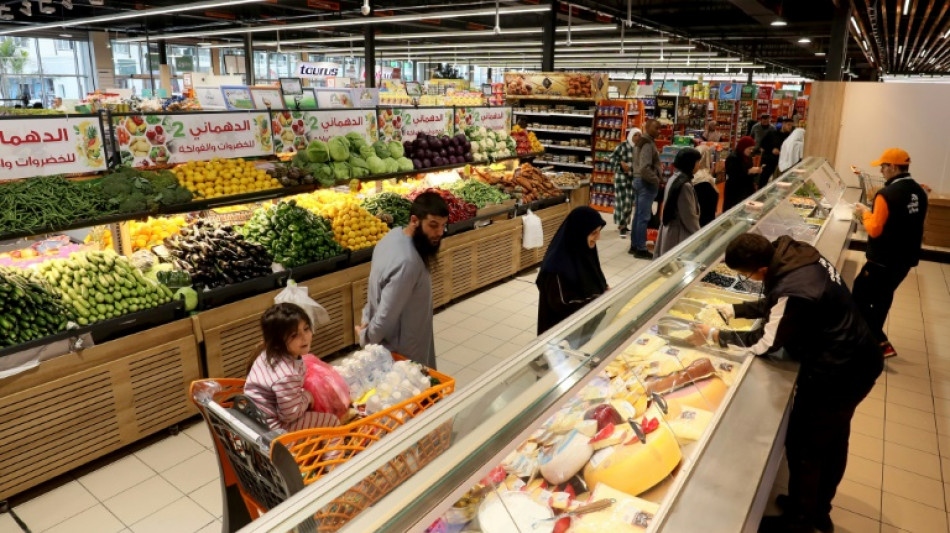
Despite oil riches, Libyans hit by plummeting purchasing power / Photo: Mahmud Turkia - AFP

 Italy's Mazzoli wins US PGA Dominican Republic title

 Evenepoel wins Tour stage, Vingegaard crashes out after night-time control

 New Zealander Fox wins British Open on final hole

 Three-team NBA trade sends Dort to Hawks, Risacher to Mavs: reports

 Left knee issues will keep Ohtani off the mound for now

 Floating igloo leaves France for polar exploration mission

 Young charges into British Open lead as Scheffler comes up short

 Olympic champ Evenepoel wins Tour de France 15th stage

 Kim leads British Open as Young charges into clubhouse lead

 Antonelli takes sixth win of the season with victory at Belgian Grand Prix
 Red and yellow sweep Madrid before World Cup final

 Russell out of Belgian GP after colliding with Hamilton on lap one

 Tour de France rivals Pogacar, Vingegaard given night-time doping controls

 EMSense Reviews - Is It Worth Trying? A Proven Foot Therapy for All

 Tour de France leader Pogacar confirms night-time doping control

 GuardHouse Camera Reviews - Is GuardHouse WatchEye Worth Trying? Find Out

 Where can you watch the World Cup final for free? TV channels and live stream options
 Palestinians say Israeli settlers torch mosque, factory
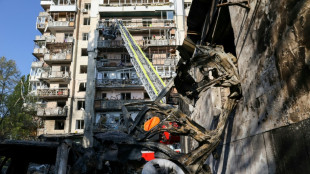
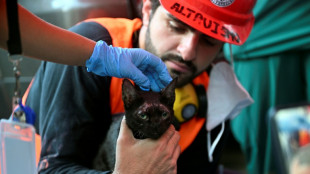 Cat rescued from ruins of Venezuela quake offers 'ray of hope'

 Sindhu wins Japan Open to end title drought
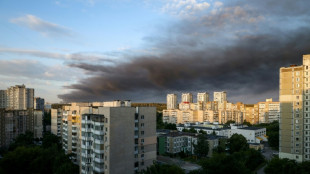 Kyiv hit with deadly strikes after attack on Russian e-commerce giant

 Skipper Sheehan urges higher level from beaten Ireland

 Spain and Argentina brace for World Cup final

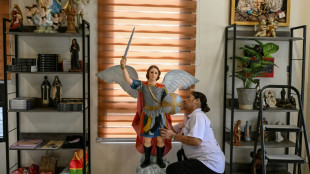 Faith vs therapy: Inside the Philippine school for exorcists

 India probe into stolen donations tests trust in temple finances
Libya may sit on Africa's biggest oil reserves, but many families are struggling with rapidly rising consumer prices as the festive Muslim holy month of Ramadan nears.
Since a currency depreciation has driven up the cost of imported food and other goods, said self-employed Mohamad al-Weheshi, 29, "we have to make do with the minimum".
With a monthly income of around $150 at the official exchange rate, he said, "we will soon have to do without meat".
Libya's dinar currency -- which officially trades at 4.8 to the US dollar -- has recently dropped on the parallel market from around five dinar to the greenback to 7.5 now.
Economic analyst Abubakr al-Tur said "Libya is experiencing a critical situation with rising prices and a currency devaluation".
This, he told AFP, has had "a major impact on the purchasing power of citizens, who are increasingly unable to obtain basic products".
Pointing to recent business closures and lay-offs, the analyst said "it's difficult and impacting all classes, except the richest".
Interim Prime Minister Abdulhamid Dbeibah, who leads a UN-recognised government in Tripoli, said Tuesday that his government "shared the concerns of the Libyans".
He said he is "determined to bring the dinar back to the level of before", evoking "plots hatched to exploit people's difficulties" and to "maintain instability" in Libya.
- Bloated state sector -
Libya is still struggling to recover from years of war and chaos since the 2011 overthrow of longtime dictator Moamer Kadhafi and remains split between two rival administrations.
The north African country of seven million people is plagued by instability and corruption.
Dbeibah's government in Tripoli uneasily shares power and funds in Libya with a rival administration in the oil-rich east backed by military strongman Khalifa Haftar.
Libya earns around $20 billion per year in net revenues from oil and gas exports, which accounts for around 95 percent of state revenue.
Much of this wealth pays for a bloated public sector that employs almost one third of the population, as well as for state subsidies meant to guarantee low prices for fuel and, until recently, basic foodstuffs.
Dbeibah has launched major infrastructure projects, with construction cranes now dotting the capital, under an economic programme called "Return to Life".
The analyst Tur said "the government has indeed carried out reforms and reconstruction projects", but that these programmes remain "insufficient".
- 'Retirees suffer most' -
The cost of living crisis and foreign cash crunch come after the Central Bank of Libya announced steps it said were aimed at ensuring greater financial stability.
It restricted import letters of credit -- the only legal means for an importer to buy products in foreign currencies -- to the purchase abroad of medicines and food products.
This forced importers of cars, machine tools and construction equipment to turn to the parallel market to find foreign currency.
Citizens' foreign currency purchases have meanwhile been capped at $4,000 per person per year, down from $10,000.
The purchasing power of households has been further hit because the prices of basic foodstuffs such as pasta, rice, sugar and flour, previously largely subsidised, are now indexed to the level of the dollar on the parallel market.
Meanwhile, recent months also saw delays in the payment of state salaries for Libya's 2.3 million civil servants and in pension payments.
So, as prices surge, it is "the retirees who suffer the most", said Mohamad al-Werfalli, 65, who was shopping with his wife in a Tripoli supermarket.
"Our pensions have fallen in value, especially for civil servants," he said, adding that the elderly now "spend their time waiting for pensions to be paid".
P.Hernandez--AT