
EU proposes vast defence boost, spurred by Russian war in Ukraine / Photo: Daniel MIHAILESCU - AFP/File

 InterContinental Hotels Group PLC Announces Transaction in Own Shares - November 04

 No. 22 UCLA defeats No. 5 Arizona 84-75 despite Kharchenkov's 38 points

 Vessel operator seeks witnesses after Vancouver grounding

 US Air Force deploys F-16 fighters to remote Aleutian base for readiness drill

 Bezos grant helps Seattle nonprofit move thousands of families toward housing

 Shrini Srivastava joins crew of Varanasi-Delhi Vande Bharat Sleeper service

 Nearly Half of Australian Workers Overqualified, Survey Finds

 RBI eases export-declaration compliance for individual service exporters

 India proposes more import entry points for drugs and medical devices

 Derek Tierney Outlines Ten-Year Strategy for National Digital Health System

 NBC’s Steve Kornacki Reveals Tech Habits Ahead of Midterm Elections

 India and Israel oppose UN draft on regional conventional arms control

 BLS Polymers shares open 65.3% above IPO price

 Capital-markets shares rally as Motilal Oswal and Angel One lead gains

 Latino Voters Defy ICE Fears, Turn Out in Record Numbers for Midterms

 ITC shares rise as analysts anticipate gradual cigarette-business recovery

 Reliance rally puts historical one-year return pattern in focus

 Kuwait edges Oman 1-0 in veterans Gulf Cup in Doha

 Saudi Aramco quarterly profit climbs 34.6% amid elevated oil prices
 Washington reports movement in Iran negotiations aimed at preventing escalation

 Korea’s Labor Share of GDP Hits Record Low Amid Semiconductor Boom

 littlefish and Halo Dot Partner to Replace Payment Terminals with SoftPOS

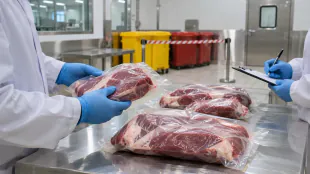 Kuwait inspectors destroy 115 kilograms of unverified meat in Farwaniya

 Egypt Accelerates Construction of 341km Sinai Railway Linking Arish and Taba

 John Schneider Admits Owes Millions in 'Dukes of Hazzard' Divorce Battle
EU officials on Tuesday unveiled an ambitious proposal to massively boost weapons production and procurement in the bloc to shift from a reliance on US arms and in reaction to Russia's invasion of Ukraine.
The European Commission says the 27-nation bloc is facing a new "security paradigm" with an expansionist Russia operating a wartime economy as it presses into year three of the conflict with Kyiv.
"To counter the return of high-intensity war on our border, we have decided to kick up a gear," EU internal market commissioner Thierry Breton told reporters in announcing the new initiative.
The European Defence Industrial Strategy aims, over the long term, to give incentives to European arms manufacturers to invest more, make their production more agile and -- for the first time -- to collectively catalogue what they have available.
"We must take more responsibility for our own security, while, of course, remaining fully committed to our NATO alliance," said European Commission Vice President Margrethe Vestager.
"We need to get that transatlantic balance right, irrespective of electoral dynamics in the US," she told reporters, in a nod to Republican White House hopeful Donald Trump casting doubt on the US commitment to its NATO allies should he win reelection.
"An improved ability to act will make us a stronger ally," Vestager said.
The question of financing the ambitious initiative is problematic for a continent that has trimmed defence investment for decades following the collapse of the Soviet Union.
- Funding questions -
Breton has spoken of an ultimate need for some 100 billion euros ($110 billion) for the European Union to rival the Pentagon and US defence industry.
To kickstart the project, the commission plans to set aside 1.5 billion euros from the EU's current budget that runs to 2027 -- an amount Vestager acknowledged "is not a lot of money" given the scale of the initiative.
"But it can still work as an incentive, as a bonus... because the real funding for a stronger defence comes from member states and that funding will increase over the years to come," she said.
Some countries, such as France, back an idea of EU bonds to finance a buy-European weapons production base, similar to what was done to finance economic recovery from the Covid pandemic.
But "frugal" countries such as Germany are against that, concerned it will centralise budget power in Brussels and override national sovereignty over defence issues.
There is also a debate over using money generated from frozen Russian assets in the EU to help fund the initiative, though the bloc's foreign policy chief Josep Borrell said that "is still not decided and there are different views" among member states.
- 'Kick up a gear' -
While the EU and member countries have supported Ukraine financially and with military weapons and equipment, arms production has come up short with the bloc missing a target to give Kyiv a promised one million artillery shells.
Breton said the bloc was now providing Ukraine around 80,000 shells per month.
The EU's 27 member countries spent more than 100 billion euros on defence purchases between Russia's February 2022 invasion of Ukraine and June last year, Vestager said.
"Almost 80 percent of that was spent outside of the European Union, and the US alone accounted for more than 60 percent of this spending. This is no longer sustainable," she said.
The EU's proposed strategy aims to have trade of weapons within the bloc reaching 35 percent of total value of the EU defence market by 2030.
Member states will also be encouraged to procure European weapons to a level of at least 50 percent of their defence budgets by 2030 and 60 percent by 2035.
A defence industrial readiness board would be created to bring together member countries, the commission and the EU's top diplomat, currently Borrell, to coordinate.
One mechanism would be set up for common arms procurement across the bloc, and another to support defence cooperation including through potential tax breaks.
Importantly, Ukraine would be treated as a "quasi member" of the initiative, which would open the way for it to more easily purview and tap arms production and supplies in the EU -- should its war against Russian troops be ongoing then.
F.Ramirez--AT