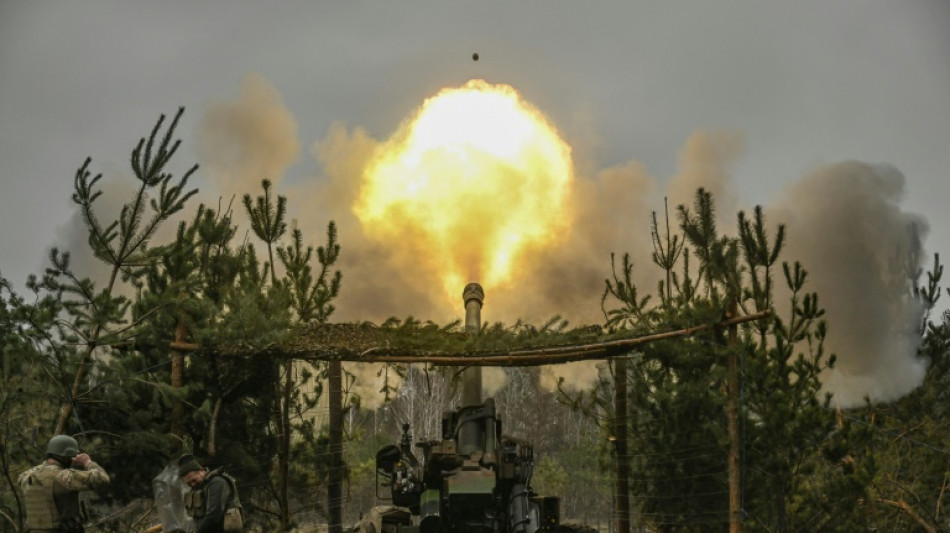
Europe battles powder shortage to supply shells for Ukraine / Photo: Aris Messinis - AFP/File

 Galloway accuser could not foresee publishing-sector fallout, lawyer argues

 New York City Center revives In the Heights as a timely community story

 Godzilla Minus Zero shifts focus toward postwar human drama
 Mehbooba Mufti urges dialogue and renewed Central Asia links for Kashmir

 Seacliff Healthcare Seeks Specialist GP in Thirroul

 US stocks fall before midterm Election Day as technology shares weaken

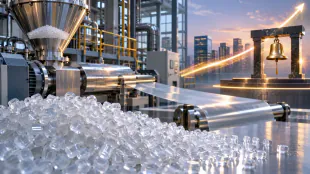
 BLS Polymers makes strong market debut at ₹248 per share

 Petrol and diesel prices remain broadly steady across major Indian cities
 Reliance shares remain in focus after near-12% surge

 2026 Arizona Midterms: Key Races, Ballot Measures, and Voter Deadlines

 Coal India prepares possible $1 billion Mahanadi Coalfields listing

 Julia Stiles and Ezra Sosa Share Emotional Farewell After 'DWTS' Elimination
 US Buildings Threatened by Wildfires Could Triple by 2060

 Why Pregnancy Cost Estimates Fail: A Family’s $9,000 Surprise

 US Strikes Iranian Targets in Strait of Hormuz Ahead of Midterms
 Brodeur’s Overtime Goal Secures Bethlehem’s Second Consecutive Sectional Title

 Rare 1970 Plymouth ‘Cuda 426 Hemi Listed for $400,000

 The Digital Burden: Why Instant Messaging Feels Like a Full-Time Job
 Alberta Tabled Controversial Riding Boundary Maps Amid Gerrymandering Accusations

 Hong Kong court set to sentence activist Joshua Wong in security case
 Australia raises benchmark rate to highest level in 18 years

 'The Remarried Empress' Cast Discusses Bringing Fantasy Royal Drama to Life
 Asian stocks retreat as AI worries outweigh steep oil-price drop

 Hamad International Airport stages emergency drills during WATAN 2026

 Global failure to punish attacks leaves journalists at continuing risk

Hard-to-find gunpowder is hindering Europe's scramble to provide hundreds of thousands of shells for Ukraine's defensive effort against Russian invaders, with solutions only starting to emerge.
"We have all become aware of the need to face up to the scarcity of some components, especially gunpowders," French President Emmanuel Macron said Monday after a gathering of Kyiv's allies in Paris.
"Powder is really what's lacking today," he added.
Gunpowder goes into propellant charges that hurl artillery shells -- such as the NATO-standard 155-millimetre projectiles used in many guns sent to Ukraine -- over distances of tens of kilometres.
"A simple explosive artillery shell has three parts. It has a steel casing, a high-explosive main charge and a detonator" usually set to trigger the blast on impact, said Johann Hoecherl, a munitions expert at the German armed forces university in Munich.
"Propellant charges are usually separate, because (gunners) will take one or two, up to six or even eight" depending on the desired range, he added.
While the propellant is still referred to as gunpowder "it's not powder at all these days, it's made up of rods or pellets", Hoecherl said.
In a video on its website, German arms manufacturer Rheinmetall illustrates stackable propellant cylinders filled with explosive pellets slotting in behind a shell in the breech of a cannon.
- 'Innovation at work' -
Europe counts a very small number of powder producers, said Jean-Paul Maulny, deputy director of France's Institute for International and Strategic Relations (IRIS).
They include firms like Eurenco, with operations in France, Belgium and Sweden, and Nitrochemie, majority-owned by Rheinmetall, with sites in Germany and Switzerland.
With many countries pushing to bring production home, France "is in the process of relocating part of Eurenco's production to Bourges" around 200 kilometres (125 miles) south of Paris, Maulny said.
"This is one of the bottlenecks for munitions," he added. "The top question is the quantity of production."
EU internal market commissioner Thierry Breton told reporters in Paris Friday that the bloc also faced challenges finding the raw materials for gunpowder.
"To make powder, you need a specific kind of cotton, which mostly comes from China," he said.
Nitrocellulose, also known as guncotton, is a key ingredient in gunpowder manufacture.
"Would you know it, deliveries of this cotton from China stopped as if by chance a few months ago," Breton added.
China and Russia have in recent years ramped up economic cooperation and diplomatic contacts, and their strategic partnership has grown closer since the invasion of Ukraine.
In Russia this week, China's Vice Foreign Minister Sun Weidong declared relations "are at their best period in history".
Breton said that "Nordic countries have found a substitute for the Chinese cotton... innovation is at work, precisely to meet the need for powder, because... we have problems today with powder capacity".
Companies producing the substitute ingredients for powder would be among those selected for grants under the EU's Act In Support of Ammunition Production (ASAP) to be announced next week, Breton said.
- 'Much larger scale' -
Breton predicted that EU efforts to boost artillery shell output would bring the bloc's annual production capacity to between 1.5 million and 1.7 million by the end of this year.
He estimated that the equivalent figure for Russia was "a little below two million".
"Everyone is putting themselves in a position to manufacture on a much larger scale," said IRIS expert Maulny.
"For now, the Ukrainians are short of shells... the Russians don't have a shortage since they got stocks from the North Koreans, but it could happen in the coming months," he added.
"No-one was ready for a high-intensity conflict where there's enormous consumption of military equipment. We haven't seen a war like this since World War II," Maulny said.
S.Jackson--AT