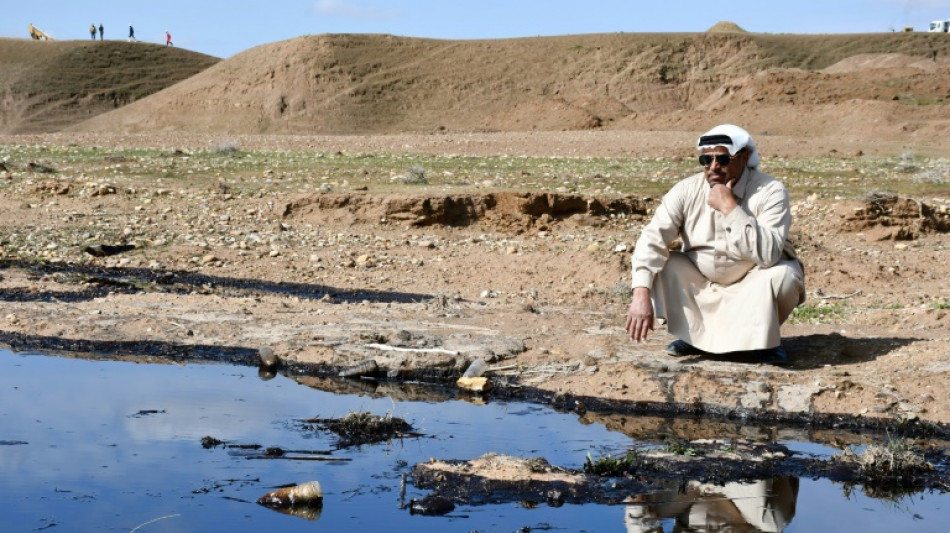
Oil spills pile on pressure for Iraq's farmers / Photo: Abdel Khalek Azzawi - AFP

 Galloway accuser could not foresee publishing-sector fallout, lawyer argues

 New York City Center revives In the Heights as a timely community story

 Godzilla Minus Zero shifts focus toward postwar human drama

 Mehbooba Mufti urges dialogue and renewed Central Asia links for Kashmir

 Seacliff Healthcare Seeks Specialist GP in Thirroul

 US stocks fall before midterm Election Day as technology shares weaken

 BLS Polymers makes strong market debut at ₹248 per share

 Petrol and diesel prices remain broadly steady across major Indian cities

 Reliance shares remain in focus after near-12% surge

 2026 Arizona Midterms: Key Races, Ballot Measures, and Voter Deadlines

 Coal India prepares possible $1 billion Mahanadi Coalfields listing

 Julia Stiles and Ezra Sosa Share Emotional Farewell After 'DWTS' Elimination

 US Buildings Threatened by Wildfires Could Triple by 2060

 Why Pregnancy Cost Estimates Fail: A Family’s $9,000 Surprise

 US Strikes Iranian Targets in Strait of Hormuz Ahead of Midterms

 Brodeur’s Overtime Goal Secures Bethlehem’s Second Consecutive Sectional Title

 Rare 1970 Plymouth ‘Cuda 426 Hemi Listed for $400,000

 The Digital Burden: Why Instant Messaging Feels Like a Full-Time Job
 Alberta Tabled Controversial Riding Boundary Maps Amid Gerrymandering Accusations

 Hong Kong court set to sentence activist Joshua Wong in security case

 Australia raises benchmark rate to highest level in 18 years

 'The Remarried Empress' Cast Discusses Bringing Fantasy Royal Drama to Life
 Asian stocks retreat as AI worries outweigh steep oil-price drop
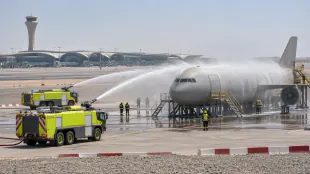 Hamad International Airport stages emergency drills during WATAN 2026

 Global failure to punish attacks leaves journalists at continuing risk

Iraq enjoys tremendous oil wealth but many hard-scrabble farmers in the north say crude spills have contaminated their lands, piling on pressure as they already battle drought.
Amid the hills of Salaheddin province, puddles of the viscous black liquid pollute the otherwise fertile and green fields, rendering vast swathes of farmland barren.
"The oil has damaged all that the land can give," said one farmer, Abdel Majid Said, 62, who owns six hectares (15 acres) in the village of Al-Meaibdi.
"Every planted seed is ruined. This land has become useless."
Oil spills in Iraq -- a country ravaged by decades of conflict, corruption and decaying infrastructure -- have contaminated farmland in the northern province, especially during the winter rains.
Authorities blame the jihadists of the Islamic State group who overran large swathes of Iraq and Syria in 2014 and were only defeated in Iraq three years later.
The IS group blew up oil pipelines and wells and also dug primitive oil storage pits, causing crude to seep into the ground, from where annual rains wash it out again.
But the local farmers also complain that the state has been too slow to clean up the mess.
In Al-Meaibdi and the nearby hills of Hamrin, authorities are struggling to find a sustainable solution to the problem, which adds to a litany of environmental challenges.
Iraq, also battered by blistering summer heat and severe drought, is ranked by the United Nations as one of the five countries most vulnerable to key impacts of climate change.
- 'Damaged land' -
In Hamrin, layers of sludge pile up as excavators build up dirt barriers -- a temporary measure to stem the flow of contaminated water onto farmland below.
The oil not only damages the soil and crops but can also pollute groundwater in the water-scarce country.
Said, the farmer, said "the soil is no longer fertile -- we have not been able to cultivate it since 2016".
Some other farmers had already abandoned their lands, he added.
He pointed to a green plot of land so far untouched by the spills and said: "Look how the crops have grown there -- but not even a grain has sprouted here."
Oil spills have contaminated 500 hectares of wheat and barley fields in Salaheddin, said Mohamed Hamad from the environment department in the province.
Hamad pointed to the reign of IS, which collected revenues from oil production and smuggling by building makeshift refineries and digging primitive oil storage pits.
He said the group blew up the pipelines and wells of the oil fields of Ajil and Alas, causing crude oil to flood and collect in the Hamrin hills' natural caves.
Earlier this month, due to heavy rain, oil remnants again poured into agricultural lands, Hamad said, and "unfortunately, the leak damaged land and crops".
Authorities have buried IS's makeshift storage pits, Amer al-Meheiri, the head of the oil department in Salaheddin province, told Iraq's official news agency INA last year.
Yet during the heavy rains, the oil continues to seep out.
- 'A great loss' -
Iraq's crude oil sales make up 90 percent of budget revenues as the country recovers from years of war and political upheaval, leaving it overly reliant on the sector.
The country boasts 145 billion barrels of proven oil reserves, amounting to 96 years' worth of production at the current rate, according to the World Bank.
But for many farmers, oil has been a scourge.
Abbas Taha, an agriculture official in Salaheddin, said "oil spills have been occurring frequently since 2016".
"Farmers suffer a great loss because they no longer benefit from the winter season to grow wheat," he said.
Some farmers have filed complaints against the state demanding compensation, only to find themselves lost in Iraq's labyrinthine judicial system, tossed from one court to another.
But Taha insists that authorities plan to compensate those affected in a country where agricultural lands are shrinking as farmers are abandoning unprofitable plots hit by drought.
Due to the severe water scarcity, authorities are drastically reducing farm activity to ensure sufficient drinking water for Iraq's 43 million people.
Hamad said his department had contacted the relevant authorities to remove oil remnants that would eventually seep through the soil to contaminate groundwater and wells.
The soil also needs to be treated by removing the top layer and replacing it, he said.
"We urged the prime minister, the agriculture minister and the oil minister to compensate the farmers suffering from this environmental disaster," said 53-year-old farmer Ahmed Shalash.
"But nothing has happened."
D.Johnson--AT