Debt, inflation and the peso: Argentina's election worries / Photo: Luis ROBAYO - AFP

 UAE nominates official to lead UN
 NFL boss Goodell welcomes probe into Hurts medical care

 Musk threatens Democrats teeing up congressional probes

 In the Mexican town that makes emblematic Day of the Dead garlands

 Protests banned in parts of Paris as Macron swipes at Trump

 Judge orders Meta to pay $25 bn to New Mexico in Cambridge Analytica case
 Champagne puts cork in project to expand production area

 Canadian publisher says novelist Orelien used AI to write novel

 Trump faces fresh questions over ties to 'humanitarian' Putin

 Hansen back in Ireland squad for Nations Championship
 Kremlin sees little 'substance' in Ukraine peace ideas

 Top Arab-Israeli election candidate tells AFP Netanyahu win would be 'catastrophe'

 South African rugby player's death due to 'aortic dissection'
 France's Macron lands in Riyadh on surprise 'solidarity' visit

 Around the world, far right blames immigrants for French protests
 South Africa eases fuel pain as growth slows

 Woody Allen shoots new movie in Madrid

 Nvidia's Huang urges Europe to go all in on AI

 Five things to know as French bond yield tops 5%
 'Complete threat' Ngumoha excites Liverpool captain Van Dijk

 'The fishing's terrible': Deforestation devastates C.Africa river

 France's tourism sector worried about impact of riots

 Macron takes aim at Trump for using France riots for election gain
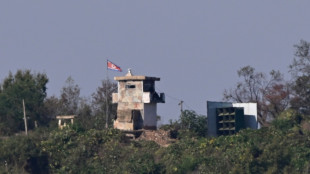 North Korea says 'new firepower units' in place, loudspeakers to return

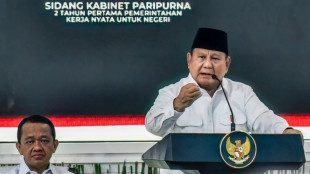 Indonesia leader hits out at market downgrade warning

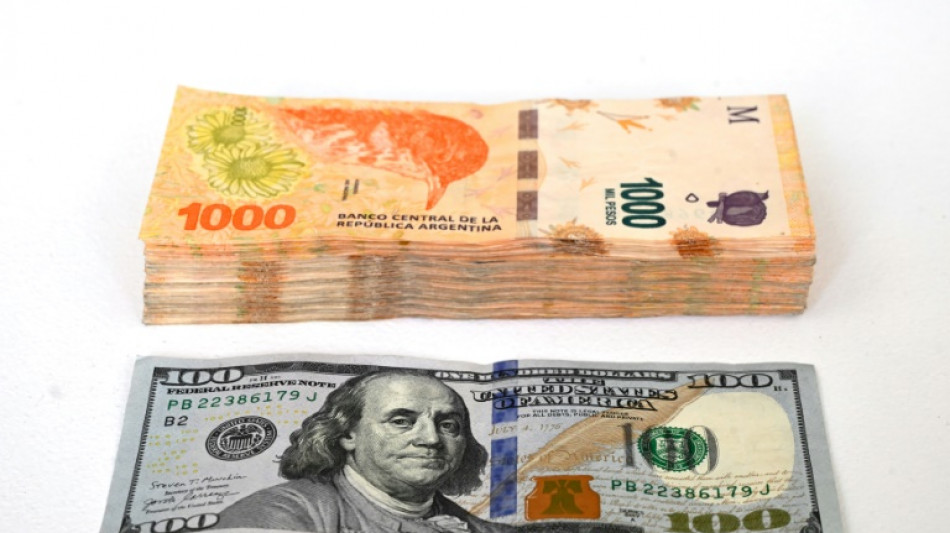
Argentina is Latin America's third-largest economy, bursting with natural resources, but has been unable to claw its way out of decades of economic instability that has brought its population to its knees.
As Argentines head to the polls on Sunday for a first-round election, presidential candidates have campaigned hard on proposed elixirs for the country's economic ills.
Here are the main challenges facing the country as it heads to the polls:
- Record inflation -
Weary Argentines have become accustomed to seeing prices soar from one day to the next, with inflation fueled by rampant money printing used to finance government overspending.
In September, annual inflation hit 138 percent.
"Doing the shopping gives me chills. I went from using a shopping cart to a bag and now I hold what I can buy in one hand," said Lidia Pernilli, 73, who bought two bananas instead of a kilo, after the price more than doubled in a month.
"Argentina has this reputation of a voting public that is just willing to sustain levels of inflation and economic struggle because they are just resilient" and have "learned to live with it", said Benjamin Gedan, director of the Argentina Project at the Washington-based Wilson Center.
"To some degree, that has been true, but no one could live with the conditions they have now."
- The dollar peso tango -
Argentina's peso and a myriad of dollar exchanges have resulted in a currency quagmire that has turned citizens into savvy economists.
The government keeps strict control over the value of the peso, clamping down on the purchase of foreign exchange to protect its dwindling reserves.
This has led to a thriving informal market for the dollar -- with daily rates for the so-called "blue dollar" advertised on television and news sites.
This parallel dollar is now three times the value of the official rate -- meaning the threat of a painful currency devaluation is always looming.
The disparity has led to a plethora of official exchanges: the "Coldplay Dollar" for concert tickets, the "Qatar Dollar" for Argentines traveling abroad, or the "Soy Dollar" for the agriculture sector.
Deeply distrustful of their volatile peso and banks, Argentines convert their cash to dollars on the black market whenever possible, and the Central Bank estimates some $244 billion is stashed away in homes.
- Debt, drought, and dwindling reserves -
Argentina has been bailed out by the International Monetary Fund 22 times, despite several major defaults.
The most recent loan of $44 billion dollars was granted in 2018. The government has been in near constant renegotiations of a refinancing plan agreed in 2022.
A historic drought -- the country's worst in a century -- saw agricultural exports plummet in the past two years, leading to a shortfall in $20 billion in revenue.
The IMF predicts Argentina's economy will contract by 2.5 percent in 2023.
The country has loaned money from Qatar, and has used yuan from a currency swap with China to make payments to the IMF, to avoid touching its dwindling reserves.
The Central Bank says the country has $25 billion in its reserves, but analysts believe the real amount is far lower.
After the election "there will be significant expectation that Argentina gets its house in order as a basis for continued support," said Mark Sobel, US chairman of the Official Monetary and Financial Institutions Forum (OMFIF).
- The painful remedy -
Any candidate seeking to set Argentina on the path to fiscal discipline and economic stability faces an uphill battle in a country heavily dependent on the state, which subsidizes public transport, electricity and water.
"Forty percent of the country is now living in poverty and an unimaginable amount of Argentines depend on the state, either for social welfare programs or direct employment," said Gedan.
"The pain will be acute and spread widely.... That's why the politics of stabilization are so difficult."
- A glimmer of hope -
After the drought, Argentina's agricultural industry is expecting booming harvests of soy and maize between 2023 and 2024.
The next government will also benefit from a savings in energy imports as a new gas pipeline ramps up production from southern Vaca Muerta -- a massive oil and gas reserve.
The country's massive lithium reserves are also predicted to bring in precious dollars.
F.Wilson--AT