Elderly Ukrainians find shelter in metro carriages

 Tech stock lead rout after US inflation fuels rate hike bets
 Al-Fayed survivors say UK police missing 'bigger picture'

 Online 'witch hunt' sweeps up Asians misidentified as US rape accused

 Prospect of Bolsonaro win looms large over Brazil's Indigenous

 Freed from Belarus, founder of Lady Gaga's biggest fan site tells his story

 Behind AI's carbon footprint, a potential climate tool

 Trump's new press secretary faces scrutiny over credentials

 PSG 'got lucky' to win Man City thriller, says Luis Enrique

 Real Madrid comeback stuns Roma as Mourinho enjoys happy reunion

 Shakhtar make winning start at new Champions League 'home'

 Hat-trick hero Barcola primed to shine for Liverpool: Iraola

 Villa put six past Fenerbahce in record rout

 US stocks fall after hot inflation report as leading AI shares tumble
 Government buildings torched in violent Albanian protests

 Wall Street grills Bank of America over money laundering fine

 Mekies extends contract as Red Bull team principal until 2031
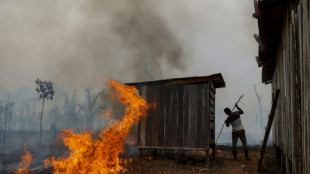
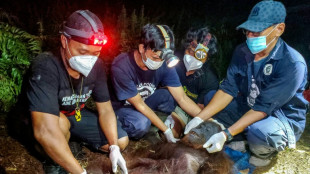 Indonesia rescues starved orangutan from fires: officials

 Real Madrid's Vinicius banned for Clasico after red card

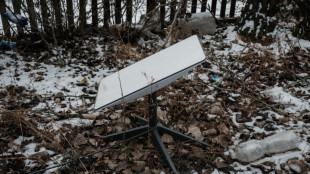
 Restrictions expose Ukraine's Starlink dependency in Russia war: observers
 Espada out as Astros manager while Mattingly stays with Phillies

 Houthis say targeted Saudi oil giant Aramco, vow more attacks

 Govt takes control of Turkey's most-watched news channel

 FIFA to offer members $6.35-billion development fund windfall

 US consumer inflation hotter than expected as midterms loom

 INmune Bio Inc. and Quantum Computing Inc. Partner to Apply Quantum Optimization and AI to Advance Alzheimer’s Drug Research and Explore New Applications for XPro

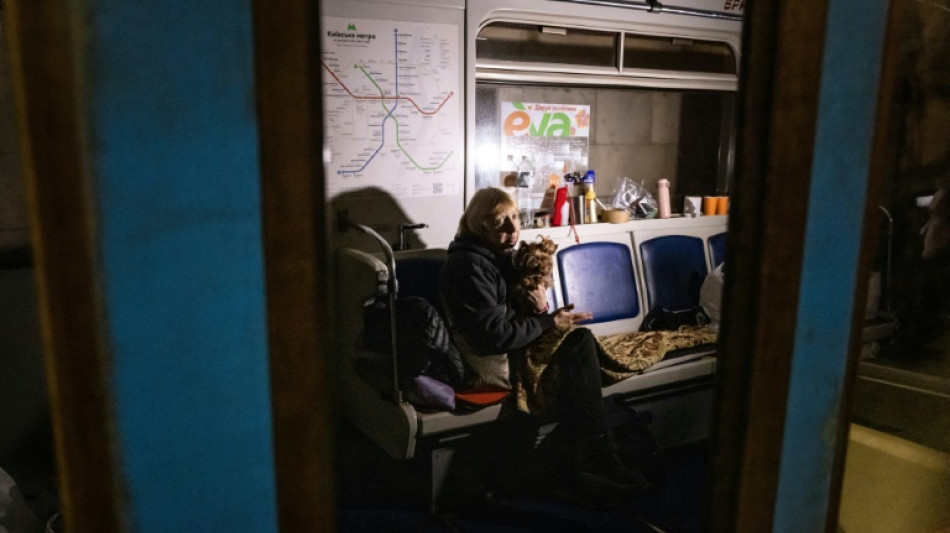
It is not clear what makes Valentyna Katkova cry more: illness and old age, or the fact that she now lives in a Kyiv subway car, fleeing Russian bombing.
The 77-year-old is one of some 200 Kyivans who have found shelter in a metro station in the northwest of the city as Moscow's forces slowly try to encircle the city.
Some of them are elderly people, who prefer the artificial leather seats of the subway car to sleeping on mattresses or in tents on the granite floor of the Syrets station.
Dressed in a lilac coat and a knitted hat, Katkova appears in the sliding doors of a blue subway car with a yellow stripe -- Ukraine's national colours.
She is hard of hearing, speaks unintelligibly and cannot stop crying when asked about how many days and nights she spent in the cold and damp subway dungeon.
"Since February 24," the woman says, the date when Russia launched its invasion of Ukraine.
Her daughter, son-in-law, son and granddaughter have spent their nights on the 100-metre platform of the station for the past three weeks.
"And I, like an old one, am here. That's because I've had a stroke, a heart attack -- so here I am, sleeping in the carriage," Katkova said.
She barely fits on the hard seats inside the car, a plastic water bottle and a cup resting on the window ledge above her.
- 'Life is more important' -
The Kyiv metro, with some of the deepest stations in the world, has been a haven for thousands of Kyivans since the first days of the war.
Train traffic continues on only one of the tracks at each of the stations, while the other now hosts a train for those who want to live there.
Seventy-year-old Nina Piddubna, Katkova's neighbour in the next car, complains of having felt unwell in the first days of her stay here.
"I felt very bad here, I had a fever," says the woman, sitting in the car and wrapped in a blue woollen blanket.
She adds that she even lost consciousness one day, though the "caring" metro staff quickly gave her first aid.
But Piddubna is ready to endure such hardships for the sake of safety, which is provided by the station located 60 metres (197 feet) deep underground.
"We don't have a shelter at all" in her apartment located just a few kilometres (miles) from the fierce fighting in the northwestern outskirts of Kyiv, she laments.
"It is deep here. Though it is damp and you can catch a cold, you still come here, because life is more important."
J.Gomez--AT