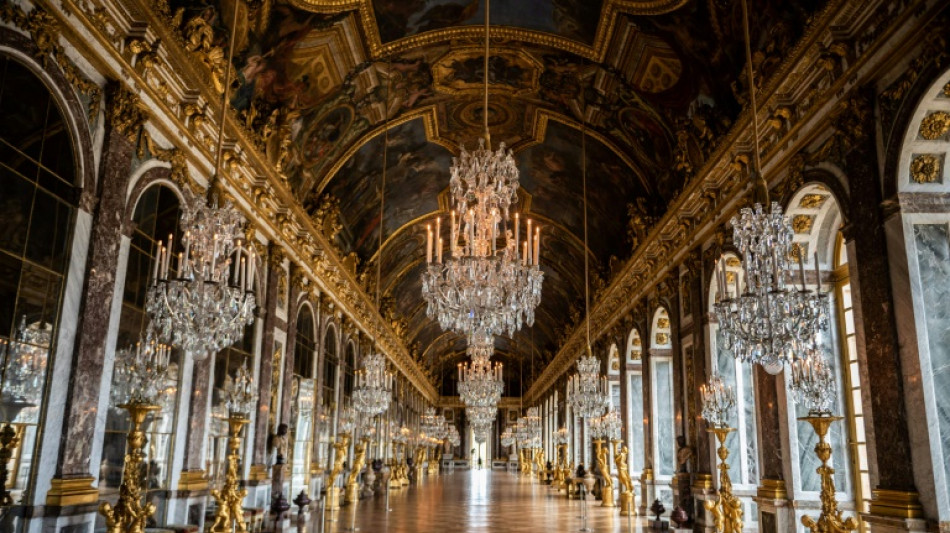
Freud, a 'mad' president and a century of European diplomacy

 Tech stock lead rout after US inflation fuels rate hike bets

 Al-Fayed survivors say UK police missing 'bigger picture'

 Online 'witch hunt' sweeps up Asians misidentified as US rape accused

 Prospect of Bolsonaro win looms large over Brazil's Indigenous

 Freed from Belarus, founder of Lady Gaga's biggest fan site tells his story

 Behind AI's carbon footprint, a potential climate tool
 Trump's new press secretary faces scrutiny over credentials
 PSG 'got lucky' to win Man City thriller, says Luis Enrique

 Real Madrid comeback stuns Roma as Mourinho enjoys happy reunion
 Shakhtar make winning start at new Champions League 'home'

 Hat-trick hero Barcola primed to shine for Liverpool: Iraola

 Villa put six past Fenerbahce in record rout
 US stocks fall after hot inflation report as leading AI shares tumble

 Government buildings torched in violent Albanian protests

 Wall Street grills Bank of America over money laundering fine

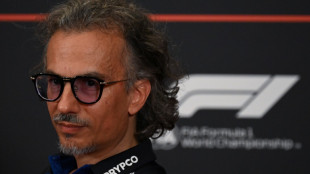 Mekies extends contract as Red Bull team principal until 2031

 Indonesia rescues starved orangutan from fires: officials

 Real Madrid's Vinicius banned for Clasico after red card
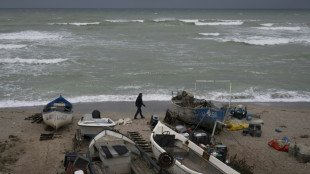
 Restrictions expose Ukraine's Starlink dependency in Russia war: observers

 Espada out as Astros manager while Mattingly stays with Phillies
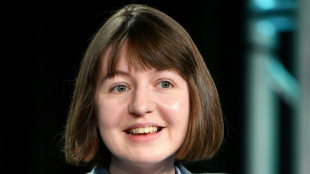
 Houthis say targeted Saudi oil giant Aramco, vow more attacks

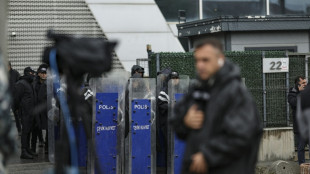 Govt takes control of Turkey's most-watched news channel

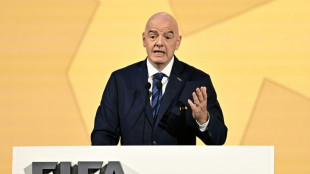 FIFA to offer members $6.35-billion development fund windfall

 US consumer inflation hotter than expected as midterms loom

 INmune Bio Inc. and Quantum Computing Inc. Partner to Apply Quantum Optimization and AI to Advance Alzheimer’s Drug Research and Explore New Applications for XPro

Finding a lost manuscript by Sigmund Freud has caused a French historian to revisit a key moment in European diplomacy 100 years ago that reverberates today as war returns to the continent.
"Le President est-il devenu fou?" (Has the president gone mad?) by Patrick Weil takes a fresh look at US president Woodrow Wilson (1913-21), who helped forge the Treaty of Versailles after World War I and tried to establish lasting peace through the creation of the League of Nations.
Wilson, of course, failed: the treaty's harsh conditions on Germany created resentment that helped fuel the rise of the Nazis.
Nor could he convince his colleagues in Washington to approve the treaty -- it was never ratified by the US, dooming the League of Nations at birth.
Back in the 1930s, Freud, the godfather of psychoanalysis, blamed Wilson's failure on messianic hubris, rooted in his repressed homosexuality and obsession with his father.
His text was not published until the 1960s, long after his death, and was rubbished by US reviewers, with The New Republic calling it either "a mischievous and preposterous joke... or else an awful and unrelenting slander upon a remarkably gifted American president".
But Weil says there may be something to Freud's critique.
- 'Hysteria' -
Whenever things went against Wilson, Weil writes, "he would plunge into hysteria", blaming everyone but himself.
Frequent minor strokes throughout Wilson's life may also have affected his sanity and undermined his ability to conclude the deal.
Certainly, many of his contemporaries, including British leader Winston Churchill and later US president Franklin Roosevelt, considered Wilson to be "crazy", Weil told AFP in an interview.
They kept that quiet, he said, because Wilson's reputation was important in building momentum behind the creation of the United Nations after World War II.
Weil uncovered Freud's original manuscript in an unmarked box in the archives of Yale University.
Freud had co-written his tract with a US diplomat, William Bullitt, and the original shows that some 300 changes were made by Bullitt before it was finally published in the 1960s, cutting many key psychological insights.
Weil uses his finding to help reassess the debate around the Treaty of Versailles -- a story with grim relevance now as the world seeks ways to negotiate with Russia.
"One can't help noticing how the personality of certain leaders plays a role in the dangers faced by the world -- today as much as yesterday," he said.
- 'NATO before the fact' -
France's prime minister in 1919, Georges Clemenceau, is often blamed for pushing too hard to punish Germany, wanting to crush any chance of its resurgence -- a move that spectacularly backfired.
But Weil puts a different spin on events, having dug up documents that show that France's primary aim was to win security guarantees from the US and Britain -- a sort of early form of NATO -- in case of future German aggression.
"It is NATO before the fact, and it is a French request to create it," Weil said.
Wilson's failure to see the importance of a defence pact -- or to convince his colleagues in Washington -- ultimately doomed Europe to more war, he argues.
"It was an obsession of Roosevelt (during World War II) not to commit the same mistakes," said Weil.
"What's important in today's context is that the leaders in 1945 had that experience of 1919. Churchill, Roosevelt -- they were there (at Versailles).
"They had that experience that today's leaders do not."
K.Hill--AT